
Learning to drive is an essential step toward independence, and for learner drivers, time spent behind the wheel plays a crucial role in building confidence and skill. Practice needs to be structured and balanced, as learning to control a vehicle, read traffic conditions, and follow road rules requires focus and mental effort.
Too much driving in one go can lead to fatigue and reduced concentration, while well-planned practice sessions help learners stay alert and improve steadily.
In this blog, we’ll explore how long a learner can drive in one day, including recommended practice limits and safety factors that influence driving time.
Is There a Legal Driving Time Limit for Learners?
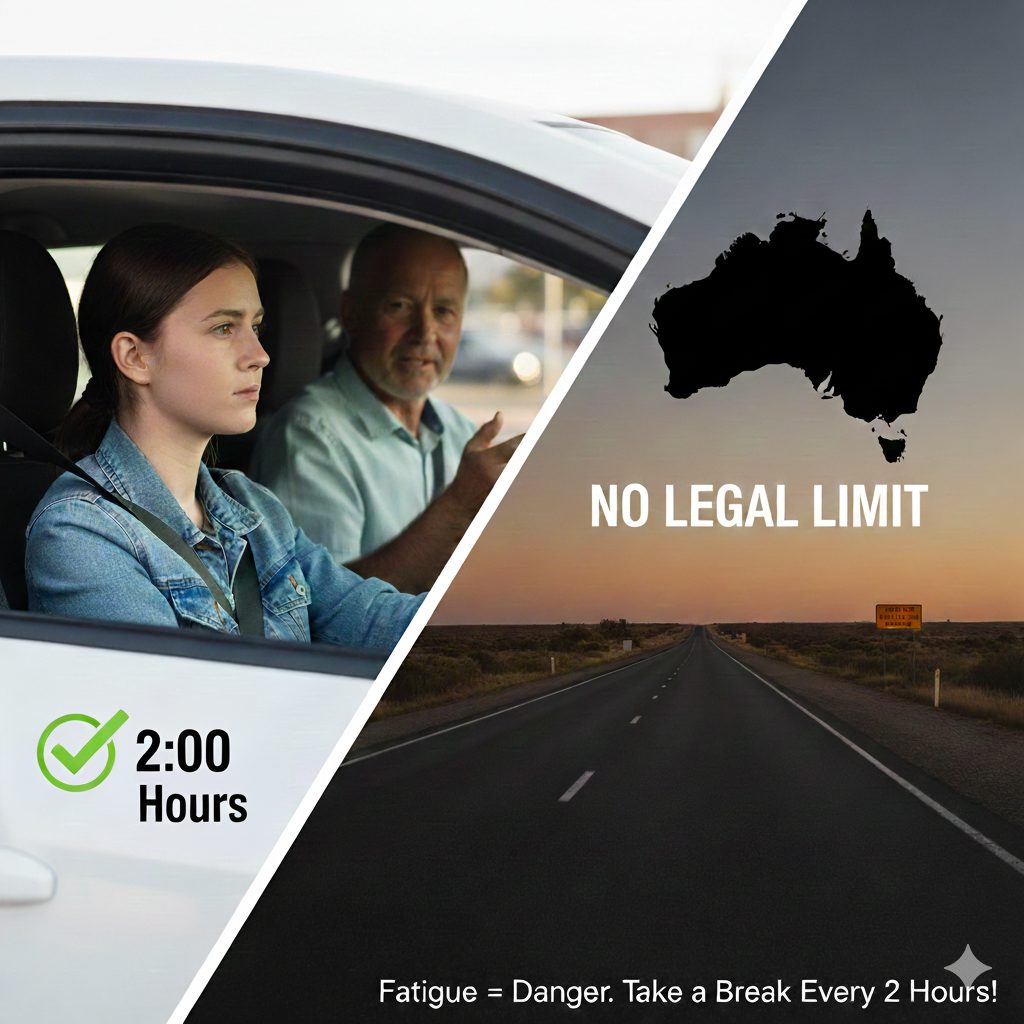
No, there is no specific legal limit on how many hours a learner driver can drive in a single day in Australia. While some people believe that learners are restricted to a set number of driving hours per day, this is a misconception.
The regulations governing learner drivers usually focus on other factors, such as the presence of a supervising driver, the proper display of learner plates, and insurance coverage, rather than a strict limit on daily driving time.
Recommended Daily Driving Time for Learner Drivers
For learner drivers, the recommended daily driving time is usually 1 to 2 hours per session, particularly in the early stages of learning. This duration strikes a balance between providing enough time to practice essential skills, such as steering, braking, and navigating through traffic, while also minimizing the risk of fatigue. Driving for too long can overwhelm a beginner and lead to a decline in concentration, making it harder to react quickly to road situations.
As learners progress, they can gradually increase the time of their driving sessions, but it’s essential to stay mindful of mental and physical fatigue. Ideally, taking breaks every 30-60 minutes is recommended to keep the mind sharp and prevent exhaustion. For longer practice sessions, it’s crucial to ensure that the learner remains focused and rested.
Factors That Affect Driving Duration
- Experience Level: Beginner drivers have less exposure to real road situations, so they may become mentally tired faster than those who have some practice. Shorter, focused sessions are often more effective for skill building.
- Road Conditions: Busy roads, heavy traffic, or complex intersections demand higher focus, which can limit how long a learner can safely drive. Easier routes allow for longer, more productive practice.
- Weather Conditions: Adverse weather, like rain, fog, or snow, can make driving more challenging and stressful for learners. Poor weather conditions require more attention and slower speeds, so it’s best to limit driving time during inclement weather and ensure the learner is comfortable with these conditions before extending driving sessions.
- Time of Day: Night driving demands higher alertness due to reduced visibility and increased hazard perception. Learners may feel tired sooner when driving late in the evening or early morning.
- Quality of Supervision: The behaviour and guidance of the supervising driver can strongly influence a learner’s driving endurance. Calm, clear instructions help learners stay relaxed and focused, while criticism or tension can increase stress and cause mental fatigue, shortening effective driving time.
Logbook Hours Needed by States
1. New South Wales (NSW)
In NSW, learner drivers under 25 must complete at least 120 hours of supervised driving, which must include 20 hours of night driving (between sunset and sunrise), before they can take their driving test. These hours are recorded in a logbook to ensure learners gain experience in a variety of driving conditions.
For learners aged 25 and over, there is no mandatory logbook hour requirement in NSW. While they do not need to submit a logbook to Service NSW, they must still hold their learner licence for the required period and are strongly encouraged to complete plenty of supervised driving practice to build safe driving skills before attempting the driving test.
2. Queensland (QLD)
In Queensland (QLD), learner drivers under 25 years old are required to complete at least 100 hours of supervised driving on Australian roads before they can take the practical driving test. This total must include a minimum of 10 hours of night driving, completed between sunset and sunrise. Learners must accurately record each driving session in an approved learner logbook, and the logbook must be submitted for approval before the driving test can be booked.
Learners who are 25 years old or over are not required to complete or submit a logbook in Queensland. However, completing supervised driving practice and using a logbook is strongly recommended to ensure sufficient experience and confidence before attempting the practical driving test.
3. South Australia (SA)
In South Australia, learner drivers must complete a minimum of 75 hours of supervised driving, including at least 15 hours of night driving. These are compulsory logbook hours and must be completed before progressing to the following licence stage. Learners are also expected to gain experience in a variety of conditions, including different light levels (day, night, dawn, and dusk), weather conditions such as rain or fog, varying traffic volumes, and various road types like highways and gravel roads, to ensure well-rounded driving skills.
Conclusion
The length of time a learner can drive in one day should be carefully managed to balance skill development and safety. While there is no strict legal limit on driving duration, it’s generally recommended that learners aim for 1 to 2 hours per session, with regular breaks to prevent mental and physical fatigue.
At Nirvana Driving, we understand that effective learning is about quality, not just quantity. Our experienced instructors structure lessons to suit each learner’s confidence, experience, and goals, ensuring practice sessions are productive, safe, and aligned with logbook requirements. By focusing on well-paced lessons, regular breaks, and real-world driving conditions, Nirvana Driving helps learners build strong, safe driving habits while progressing confidently toward their driving test and independent driving.
To book your driving lessons, call us on 0450 530 126 or book online.
FAQs
1. Do all learner drivers need to complete logbook hours?
Logbook requirements vary by state and age. In many states, learners under 25 must complete a set number of supervised logbook hours, while learners 25 and over may be exempt but are still encouraged to practise regularly.
Are night driving hours mandatory for learners?
Yes, in most Australian states, learner drivers must complete a minimum number of night driving hours as part of their logbook requirements. Night driving helps learners gain experience in reduced visibility and higher-risk conditions.
Can professional driving lessons count toward logbook hours?
Yes, supervised lessons with a licensed driving instructor can be recorded as logbook hours. In some states, learners may also be eligible for bonus logbook hours when completing approved driving courses or lessons.