
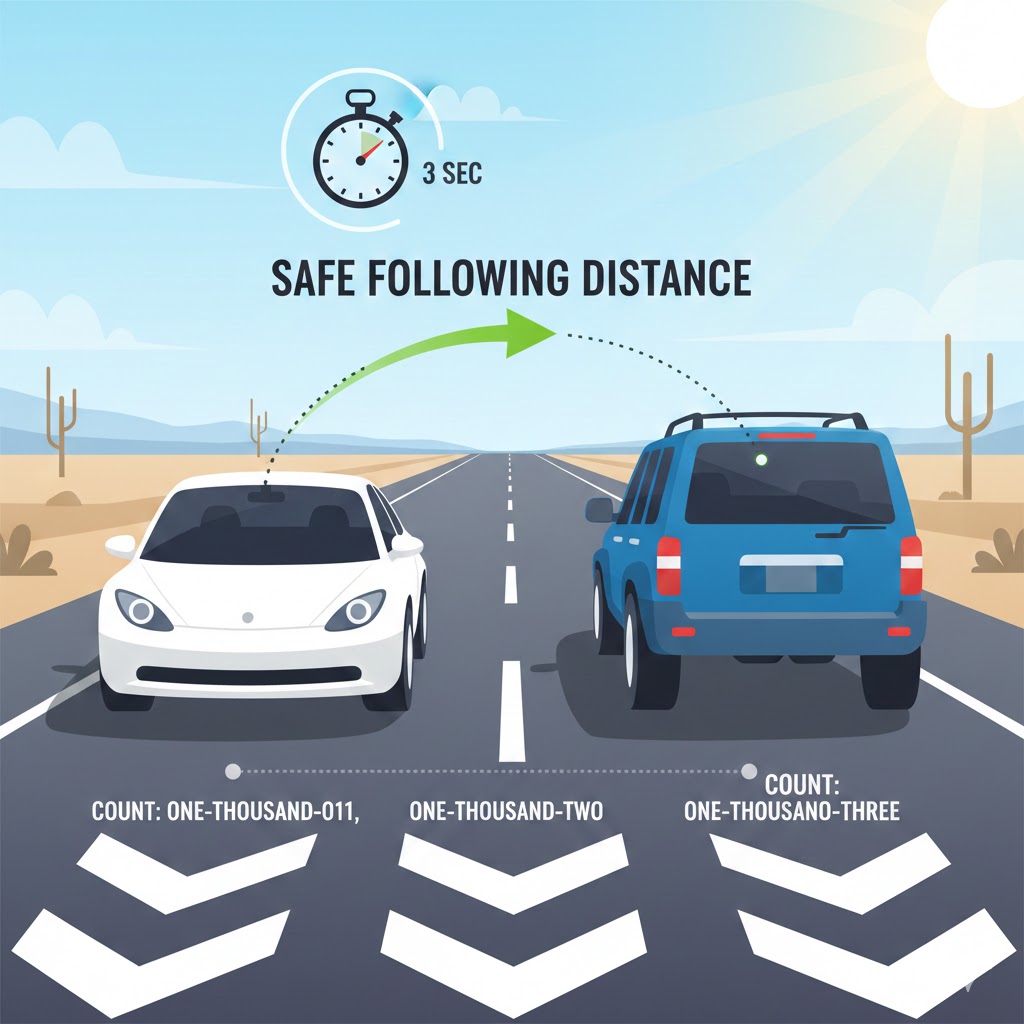
Maintaining a safe following distance is one of the most important yet most misunderstood aspects of driving. Many drivers focus on speed and traffic rules, but forget that the space between vehicles is what truly prevents rear-end collisions.
Whether you’re driving behind a car, a truck, or in poor weather conditions, knowing how far to stay back can make the difference between a close call and a serious accident.
In this blog, we’ll explore what a safe following distance is while driving, how to measure it, and why it matters in different situations.
Highlights
- A safe following distance is the space you keep between your vehicle and the one in front, so you have enough time to react if something unexpected happens. This includes sudden braking, obstacles on the road, or changes in traffic flow.
- Maintaining a safe following distance gives you time to react to sudden changes in traffic and reduces the risk of collisions.
- To maintain a safe following distance, use the three-second rule and increase the gap in bad weather, high speeds, or low visibility to ensure you have enough time to react.
Why You Need to Keep a Safe Following Distance?
Keeping a safe distance from the vehicle in front gives you enough time to respond to sudden changes in traffic, such as sudden braking or road hazards. It also reduces the risk of rear-end collisions, improves your visibility of the road ahead, and helps you stay calm and in control while driving.
- Allows enough reaction time: A safe following distance gives your brain time to recognize danger and respond appropriately. Without enough space, even a quick reaction may not be fast enough to prevent a collision.
- Reduces braking risk: Your vehicle needs a certain distance to stop completely, especially at higher speeds. Keeping enough space ensures you can brake smoothly instead of slamming the brakes in panic.
- Helps avoid rear-end collisions: Most rear-end crashes happen because drivers follow too closely. Maintaining a proper distance lowers the chances of hitting the vehicle in front.
- Improves visibility of the road: With more space, you can see further ahead and anticipate traffic changes. This allows you to make better decisions and react earlier to potential hazards.
- Prepares you for unexpected hazards: Animals, pedestrians, or sudden obstacles can appear without warning. A safe gap gives you time to slow down or steer safely around them.
- Supports defensive driving: Defensive driving means expecting the unexpected, and a safe gap gives you space to react to sudden changes. It also allows you to manoeuvre safely if needed.
- Reduces stress while driving: Driving too close creates constant pressure to react quickly. More space leads to smoother driving and a calmer mindset behind the wheel.
- Increases overall road safety: Safe following distance protects not just you, but everyone around you. It creates a more predictable and controlled traffic flow, reducing accident risk for all road users.
Enhance your driving skills and stay safe on the road by learning proper following distances with expert guidance.
How to Keep a Safe Following Distance When Driving?
To keep a safe following distance, use the three-second rule and make sure there is enough space between you and the vehicle ahead so you have time to react. Increase the gap even more in bad weather, at higher speeds, or when visibility is reduced to stay safe on the road.
1. Use the Three-Second Rule
The three-second rule is a simple way to measure a safe following distance at any speed. Pick a fixed point on the road ahead, and start counting “one thousand one, one thousand two, one thousand three” when the car in front passes it. If you reach the point before finishing the count, you are too close. This helps ensure you have enough time to react if the vehicle suddenly slows or stops.
2. Increase Distance in Poor Conditions
In rain, fog, snow, or on slippery roads, your stopping distance increases and visibility decreases. In these conditions, you should increase your following distance to four seconds or more. This extra space gives you more time to react safely. It also reduces the risk of skidding or losing control.
3. Adjust for Heavy Vehicles
Heavy vehicles like trucks and buses take longer to slow down and stop due to their size and weight. They also have larger blind spots, so the driver may not see you if you’re too close. For these reasons, give them extra space and avoid staying beside them. Keeping a greater distance also improves your visibility of the road ahead.
4. Avoid Tailgating
Tailgating reduces your reaction time and greatly increases the risk of rear-end collisions. If a vehicle is following too closely behind you, don’t feel pressured to speed up. Increase your gap from the car ahead or safely change lanes to let them pass. Keeping a safe distance helps you stay in control and prevents sudden braking accidents.
5. Keep a Safety Bubble
A safety bubble is the space around your vehicle that protects you from sudden hazards, like parked cars, opening doors or cyclists moving into your lane. It also includes leaving enough space from oncoming vehicles in case they drift into your lane. Position your vehicle to maintain this buffer and reduce risk. Staying aware of your surroundings helps you keep a clear and safe space around your car.
Conclusion
Keeping a safe following distance is simple, yet one of the most effective ways to prevent accidents. Using the three-second rule, increasing distance in poor conditions, giving extra space to heavy vehicles, and maintaining a safety bubble all contribute to safer and less stressful driving. Remember: space equals time, and time equals safety.
For learner drivers or anyone looking to improve their driving skills, enrolling in a professional program like Nirvana Driving can make a real difference. Their expert instructors focus on teaching practical techniques, including maintaining safe following distances, defensive driving, and hazard awareness. With proper guidance, you’ll gain the confidence and skills to handle any traffic situation safely. Book your driving lesson with Nirvana Driving today!
FAQs
1. What is the minimum safe following distance for another car?
The minimum safe following distance for another car is at least three seconds in normal driving conditions. Increase this gap in rain, fog, night driving, or slippery surfaces to allow more time to react safely.
2. How many car lengths should you be behind another vehicle?
Instead of counting car lengths, use a three-second time gap, which is more accurate and easier to judge at any speed. Car lengths become unreliable at higher speeds because the stopping distance increases significantly.
3. Should you maintain a two-second following distance in all conditions?
No, a two-second following distance is not recommended for all conditions. It may be too short at higher speeds or in bad weather, so the safer minimum is three seconds or more.
4. What is the minimum safe following distance behind a truck or heavy vehicle?
The minimum safe following distance behind a truck is more than three seconds, as heavy vehicles need extra braking distance and can block your view of the road ahead. Giving them more space also keeps you out of their large blind spots.