
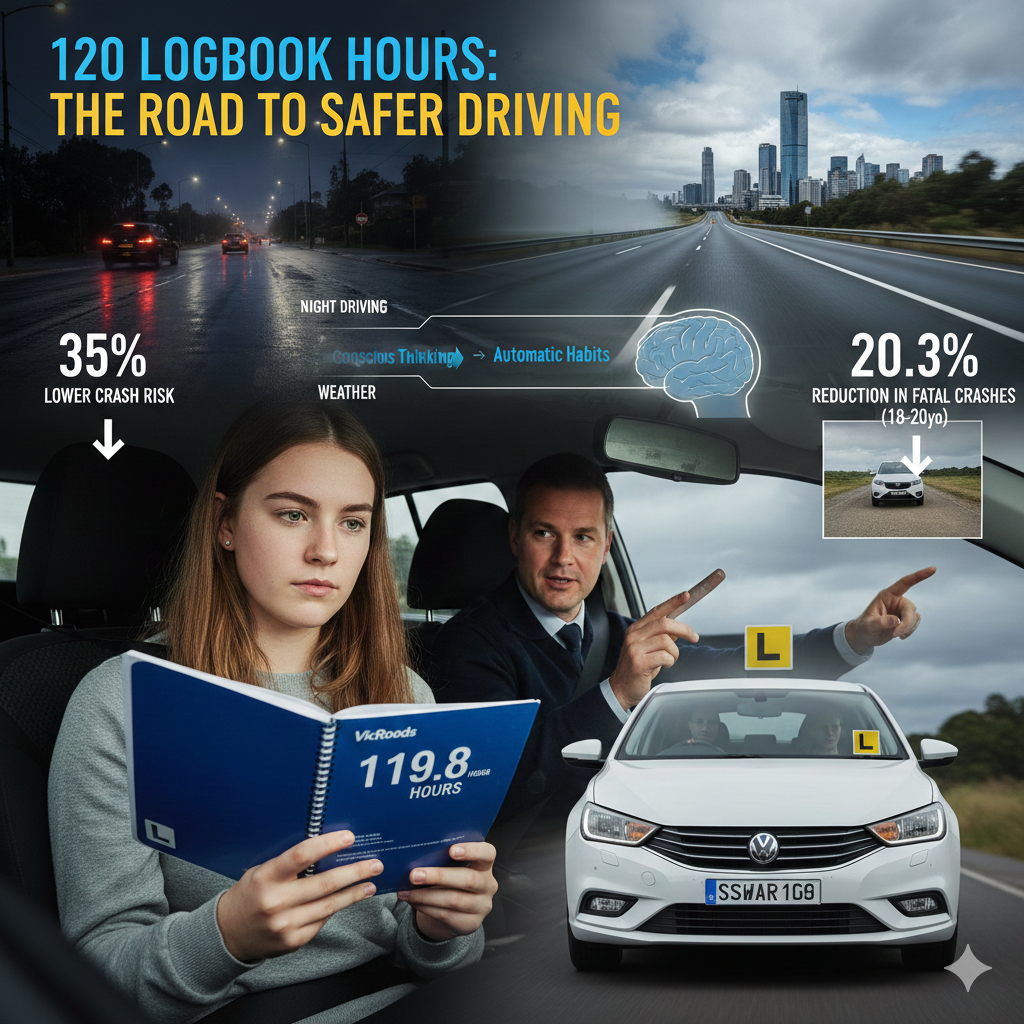
Getting ready for the driving test often raises one big question for learner drivers: why is completing 120 logbook hours mandatory? For many, this requirement can feel time-consuming or unnecessary, especially when they’re confident behind the wheel. However, the 120-hour logbook rule plays a key role in how new drivers are prepared for real-world driving, shaping their skills, confidence, and safety long before test day arrives.
In this blog, we’ll cover everything learners need to know about the Victorian learner logbook 120 hours requirement, including who it applies to and how it works. We’ll also explain why the logbook is essential for building real-world driving skills and preparing for the driving test in Victoria.
Highlights
- Victorian learner drivers under 21 must record 120 supervised hours, including 20 night hours, before attempting the driving test.
- The logbook supports Victoria’s Graduated Licensing System by building real-world driving skills and safe habits over time.
- Hours can be tracked using a paper logbook or the official myLearners app for easier submission and progress monitoring.
- Completing 120 hours helps learners gain confidence, practical skills, and safe driving habits for real-world conditions.
- Structured lessons and consistent practice with qualified instructors can make achieving the required logbook hours faster.
What Is a Learner Driving Logbook?
A learner driving logbook is used to record supervised driving practice completed by learner drivers. It tracks important details such as time spent driving, driving conditions, supervisor details and daytime and night driving hours.
This requirement forms part of Victoria’s Graduated Licensing System, which is designed to give new drivers practical, real-world experience before they begin driving on their own.
Who Needs to Complete 120 Logbook Hours?
In Victoria, learner drivers who are under 21 years old must complete at least 120 hours of supervised driving, including 20 hours of night driving, before attempting the driving test. Learners who are 21 years or over do not need to submit a logbook and do not have a set hour requirement, although practising with supervision is still recommended for skill building and safety.
Why Are 120 Logbook Hours Required Before a Driving Test?
The 120 logbook hours are required to ensure learner drivers gain enough supervised experience to build practical skills, confidence, and safe driving habits in a variety of conditions. This preparation helps reduce crash risk and ensures they are ready to handle real-world driving challenges before taking the driving test.
1. Build Real-World Driving Experience
The 120 hours give learners the opportunity to drive in a variety of conditions, including busy streets, highways, residential areas, and school zones. This gives learners practical experience that cannot be gained in a driving school or during short lessons. Driving in different traffic situations ensures learners are better prepared for everyday driving challenges.
2. Develop Safe Driving Habits
Supervised practice helps learners understand road rules, hazard perception, and defensive driving techniques. Over time, consistent practice reinforces safe habits such as speed management, maintaining safe following distances, and checking mirrors regularly. These habits reduce the risk of accidents once the learner begins driving independently.
You may also read: How to Pass the Hazard Perception Test?
3. Gain Confidence Behind the Wheel
Many new drivers feel nervous in traffic, at night, or in complex driving conditions. Logging 120 hours allows learners to gradually build confidence and reduce driving anxiety. With experience, learners become more comfortable making decisions, handling emergencies, and navigating unfamiliar roads.
4. Prepare for Different Driving Conditions
The logbook requirement includes at least 20 hours of night driving, exposing learners to low visibility, glare, and reduced reaction times. Learners also experience varying weather conditions, such as rain, wind, or slippery roads. This ensures they are capable of handling real-world challenges safely before driving solo.
5. Reduce the Risk of Crashes
Statistics show that learners with more supervised driving hours are less likely to be involved in accidents. The 120-hour requirement gives them sufficient time to practice and correct mistakes under supervision. By the time they take the driving test, learners are generally safer, more competent, and less likely to make critical errors on the road.
Where Can Learner Drivers Get or Replace a Log Book?
Victorian learners receive a paper logbook when they get their learner permit, but many choose to use the myLearners app, which automatically tracks progress and submits hours electronically. If the paper logbook is lost or damaged, a replacement can be collected from a VicRoads Customer Service Centre.
Book professional driving lessons to build confidence, strengthen your skills, and get test-ready sooner.
How to complete your logbook?
To complete the logbook, learners must accurately record each supervised drive. This includes:
- Date and duration of the drive
- Total accumulated hours
- Supervised driver’s details
- Day or night driving status
- Conditions such as traffic levels and road types
Once the 120 hours are completed and the minimum learner period is met, the logbook is checked before the driving test to confirm eligibility.
Tips to Complete Your 120 Logbook Hours Faster
Learners can reach their goals more efficiently by:
- Driving frequently, not only on weekends
- Mixing short and long trips for different skill development
- Driving in varied environments, such as highways, suburbs, and rural roads
- Planning night drives early, instead of saving them for the end
- Booking structured lessons, which build confidence, even though they do not count as bonus hours in Victoria
Conclusion
Victoria’s logbook and supervised driving requirements prepare learners for safe, independent driving. The 120-hour requirement ensures learners experience a wide range of conditions and challenges before taking their driving test. Starting early, practising consistently, and using the myLearners app can make the process easier and more organised.
For learners who want extra support while completing their hours and building skills, driving schools such as Nirvana Driving provide structured lessons that help develop safe driving habits and road awareness. With guidance from qualified instructors, learners can approach the testing stage feeling more prepared and capable behind the wheel. Book your driving lesson with Nirvana Driving today!!
FAQs
1. What happens if your logbook is incomplete or incorrect?
If your logbook is incomplete, contains false entries, or is missing supervisor details, VicRoads may reject your drive test application, delay your test eligibility or require further supervised practice.
2. Who can supervise learner drivers in Victoria?
In Victoria, a learner driver must be supervised by someone who holds a full Victorian or Australian licence and has held it for at least 4 years. The supervisor must sit in the front passenger seat and maintain a blood alcohol concentration of zero while supervising.
3. Does completing 120 hours guarantee I’ll pass the test?
No. Completing 120 hours does not guarantee passing. It ensures you have enough supervised experience, but success depends on your driving skills, hazard awareness, and ability to follow road rules during the test.
4. Why do some of the logbook hours have to be completed at night?
20 of the 120 hours must be night driving to ensure learners gain experience in low visibility, reduced lighting, and nighttime traffic conditions, which require different skills and awareness than daytime driving.
5. What happens if I don’t complete all 120 hours?
If you haven’t completed the required 120 hours, VicRoads will not allow you to book or take your driving test unless you qualify for a specific exemption.
6. How long does it usually take to complete 120 hours?
The time varies depending on how often and consistently you practice. Most learners complete it in 6–12 months, balancing lessons with everyday driving practice.
7. What happens if a learner cheats on their logbook?
Falsifying logbook hours is illegal. If caught, VicRoads may reject your test application, impose fines, or delay your eligibility for a driving test. So, it’s important to record all hours honestly and accurately.
8. When should learner drivers start logging their hours?
Victorian learners can begin logging their hours as soon as they obtain their learner permit. If the learner is under 21, they must hold their permit for at least 12 months before taking the driving test, so starting early helps spread the hours across different seasons, weather, and road conditions.