
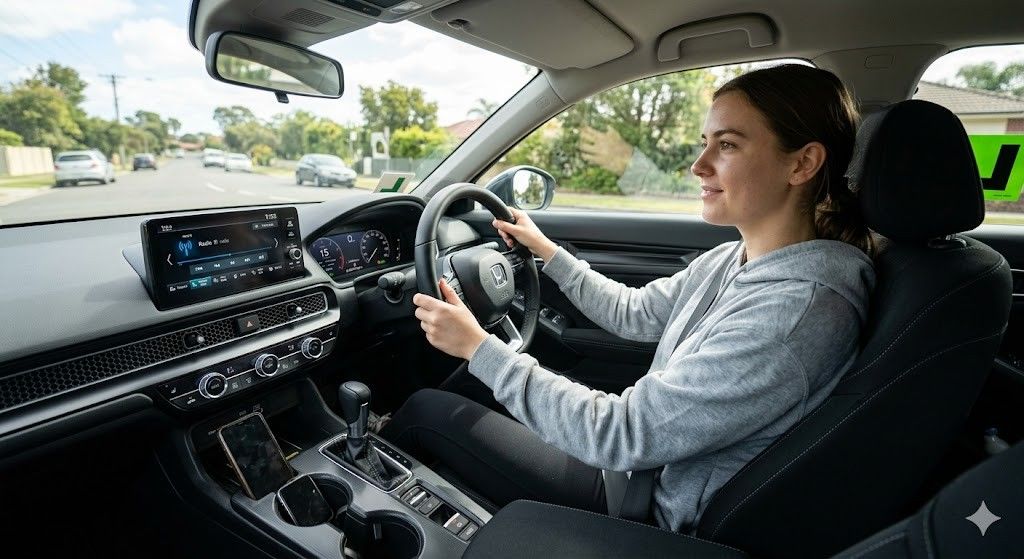
Learning to drive an automatic car is often the easiest way for beginners to start their driving journey. Unlike manual vehicles, automatic cars do not require clutch control or constant gear shifting, making the driving process simpler and less stressful. However, many new drivers still feel unsure about the basic controls, gear positions, and correct steps to operate the car safely.
In this blog, you’ll learn how to drive an automatic car step by step, including understanding the gear positions, starting the car, moving safely, and parking correctly.
What Is an Automatic Car?
An automatic car is a type of vehicle that changes gears automatically while driving, so the driver does not need to manually shift gears or operate a clutch pedal. Unlike manual cars, where drivers must control the clutch and gear stick to change speeds, automatic vehicles use an automatic transmission system that selects the appropriate gear based on the car’s speed and engine performance.
How do You Drive an Automatic Car?
To drive an automatic car, press the brake, start the engine, shift the gear to Drive (D), and slowly release the brake while gently pressing the accelerator. Use the accelerator to move forward and the brake to slow down or stop the car safely.
Step 1: Adjust Your Seat and Mirrors
Before starting the car, make sure your driving position is comfortable and safe. Adjust the seat so you can easily reach the pedals and steering wheel. Then adjust the rearview and side mirrors to ensure you have a clear view of the road and surrounding traffic.
Step 2: Start the Car
Insert the key into the ignition or press the start button while keeping your foot on the brake pedal. Most automatic cars require the brake to be pressed before the engine can start.
Step 3: Select the Correct Gear
With your foot still on the brake, move the gear selector to the appropriate gear:
- P (Park): Used when the car is parked.
- R (Reverse): Used when moving the car backward.
- N (Neutral): Disconnects the engine from the wheels.
- D (Drive): Used for normal forward driving.
To begin moving forward, shift the gear into Drive (D).
Step 4: Release the Brake Slowly
After selecting Drive, gently release the brake pedal. In many automatic cars, the vehicle will start to move slowly on its own due to engine idle power.
Step 5: Press the Accelerator Gently
Once the car begins to move, slowly press the accelerator to increase speed. Avoid pressing the pedal too hard, especially when you are still learning.
Step 6: Control Speed with the Brake
To slow down or stop the car, gently press the brake pedal. Smooth braking helps maintain control and ensures a comfortable driving experience.
Step 7: Stop the Car Safely
When you want to stop, gradually press the brake until the vehicle comes to a complete stop. Keep your foot on the brake while waiting in traffic or at signals.
Step 8: Park the Car
When you reach your destination:
- Bring the car to a full stop.
- Shift the gear into Park (P).
- Apply the handbrake.
- Turn off the engine.
Secure Your Automatic Driving Lesson Online Today!
Book an affordable automatic driving lesson online today and start building safe, confident driving skills with professional instructors.
Common Mistakes Beginners Make When Driving Automatic Cars
Learner drivers often make mistakes like using both feet for the pedals or pressing the accelerator too hard, which can cause sudden or unsafe movements. They may also shift gears while the car is still moving or forget to check mirrors and blind spots, increasing the risk of accidents.
Using Both Feet for the Pedals
One of the most common mistakes beginners make is using both feet to control the accelerator and brake. In automatic cars, drivers should use only the right foot for both pedals. Using the left foot for braking can lead to sudden stops or accidental braking.
Pressing the Accelerator Too Hard
New drivers sometimes press the accelerator too quickly, which can cause the car to speed up suddenly. Smooth and gentle acceleration is important for maintaining control and ensuring a comfortable driving experience.
Shifting Gears While the Car Is Moving
Changing the gear from Drive (D) to Reverse (R) or Park (P) while the vehicle is still moving can damage the transmission and create a safety risk. Always make sure the car has come to a complete stop before changing gears.
Not Using the Handbrake When Parking
Some beginners rely only on the Park (P) gear when stopping the car. However, it is safer to apply the handbrake as well, especially when parking on slopes or uneven surfaces.
Riding the Brake Pedal
Keeping the foot constantly on the brake pedal, also known as riding the brake, can cause unnecessary wear on the braking system and may confuse drivers behind you.
Not Checking Mirrors and Blind Spots
Focusing only on controlling the car and forgetting to check mirrors and blind spots is another common mistake. Safe driving requires constant awareness of surrounding vehicles and road conditions.
Panic Braking
Beginners may panic and press the brake suddenly in stressful situations. While braking is necessary for safety, it should be done smoothly and with control whenever possible.
You may also read: What Is the Best Car for a Learner Driver?
Conclusion
Driving an automatic car is easier for beginners because it removes the need for manual gear shifting and clutch control. By understanding the basic controls, following the correct steps, and practicing regularly, new drivers can quickly build confidence and develop safe driving habits.
For learners who want proper guidance and hands-on training, Nirvana Driving provides professional driving lessons designed especially for beginners. With experienced instructors and practical training in real driving conditions, Nirvana Driving helps new drivers learn how to drive an automatic car safely and pass their driving test.
Call 045-053-0126 or book online with Nirvana Driving to start your automatic driving lessons with experienced instructors today and learn to drive safely and confidently.
Frequently Asked Questions
How to drive an automatic transmission?
To drive an automatic transmission, press the brake pedal, start the car, and shift the gear from Park (P) to Drive (D). Then slowly press the accelerator to move and use the brake to slow down or stop the car.
What is a semi-automatic car transmission?
A semi-automatic car transmission is a type of transmission that allows drivers to change gears manually without using a clutch pedal. The system automatically controls the clutch, making gear shifting easier while still giving the driver some control over the gears.
Is driving an automatic car easy for beginners?
Yes, automatic cars are generally easier for beginners because they do not require clutch control or manual gear shifting. This allows new drivers to focus more on steering, braking, and road awareness.
How long does it take to learn to drive an automatic car?
The time varies depending on the learner, but many beginners can learn the basics of automatic driving within a few lessons. Regular practice and professional training can help build confidence faster.