
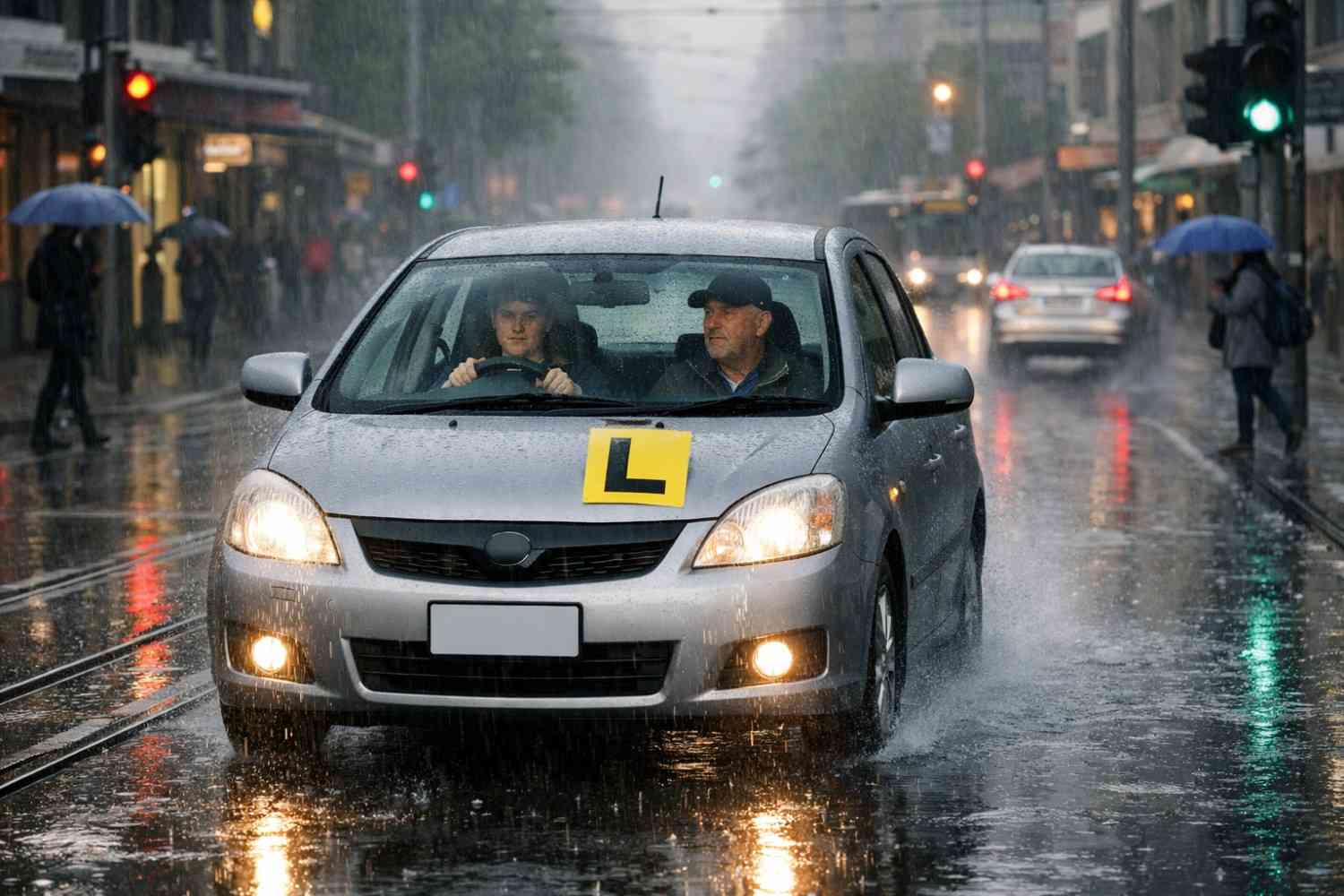
Driving in the rain in Melbourne isn’t just about slowing down; it’s about adapting to roads that can change within minutes. One moment you’re driving on dry asphalt, and the next you’re dealing with reduced visibility, slippery surfaces, and unpredictable traffic behaviour.
For new drivers, these changing conditions can feel overwhelming. Small mistakes like braking too late or following too closely can lead to loss of control on slippery roads. That’s why understanding how to adjust your driving in wet weather isn’t optional; it’s essential.
In this blog, we’ll explore tips for driving in wet weather, specifically for Melbourne conditions. You’ll learn how to stay in control on slippery roads, improve visibility during heavy rain, and handle common situations like intersections, turns, and heavy traffic with confidence.
Highlights
- Wet weather driving requires slower speeds, smooth control, and constant awareness to maintain safety on slippery roads.
- Keeping a safe following distance and braking early helps reduce the risk of losing control in the rain.
- Maintaining clear visibility with working wipers, lights, and clean windows is essential for safe driving in the rain.
- Avoid hazards like puddles, sudden movements, and aquaplaning by driving carefully and staying alert.
Wet Weather Driving Techniques Every Learner Should Know
Driving in the rain requires slower speeds, smooth control, and greater awareness to maintain traction and visibility on wet roads. By adjusting your driving habits and avoiding sudden movements, you can reduce risks and stay in control even in challenging conditions.
Reduce Your Driving Speed Based on Conditions
Driving at the posted speed limit isn’t always safe when it’s raining. Wet roads reduce tyre grip, making it harder for your car to respond quickly. Slowing down gives you more time to react to sudden hazards and keeps your vehicle stable. Always adjust your speed depending on how heavy the rain is and how slippery the road feels.
Increase Your Following Distance
In rainy conditions, your stopping distance can increase significantly due to reduced tyre grip. Maintaining a safe following distance ensures you have enough time to react if the vehicle ahead brakes suddenly. Keeping at least a four-second gap gives you better control and lowers the risk of collisions.
Brake Earlier and More Gently
Braking suddenly on wet roads can cause your tyres to lose grip and lead to skidding. Instead, start slowing down earlier than you normally would. Apply steady and gentle pressure to the brakes to maintain control. Smooth braking helps your vehicle stay balanced and predictable.
Use Smooth Steering and Acceleration
Quick or aggressive movements can easily destabilise your car in the rain. Turning the steering wheel sharply or accelerating too fast may cause the tyres to slip. Instead, keep all movements gradual and controlled. This helps maintain traction and keeps the car steady on wet surfaces.
Turn On Your Headlights
Rain reduces visibility, even during the daytime. Turning on your headlights helps you see the road more clearly and ensures other drivers can see you. Always use low beams, as high beams can reflect off rain and make visibility worse. Being visible is just as important as being able to see.
Keep Your Windscreen Clear at All Times
A clear view of the road is essential for safe driving in the rain. Use your wipers, demister, and air conditioning to prevent fogging and streaks. Even slight visibility issues can delay your reaction time. Always ensure your windscreen is fully clear before and during your drive.
Avoid Standing Water and Puddles
Puddles can hide potholes or uneven road surfaces that may damage your car. Driving through water can also reduce tyre grip and affect your control. If the water is deep, it may even enter the engine and cause serious damage. It’s always safer to avoid puddles whenever possible.
Understand and Prevent Aquaplaning
Aquaplaning occurs when your tyres lose contact with the road and glide over water. This can make steering and braking ineffective for a short time. To reduce the risk, keep your speed low and avoid sudden movements. If it happens, stay calm, ease off the accelerator, and allow the tyres to regain grip naturally.
Watch for Pedestrians and Cyclists
Rain reduces visibility and makes it harder for pedestrians and cyclists to judge traffic. They may also act unpredictably while trying to avoid getting wet. Always slow down near crossings, schools, and busy areas. Staying alert helps you respond safely to sudden movements.
Avoid Using Cruise Control
Cruise control keeps your car at a constant speed, regardless of road conditions. In wet weather, this can be dangerous because it reduces your ability to react quickly. You need full control over your speed to adjust to changing grip levels. It’s best to avoid using cruise control in the rain.
Avoid Sudden Lane Changes
Quick lane changes can cause your tyres to lose grip on wet roads. Always signal early and change lanes slowly and smoothly. Make sure there is enough space before moving across. Controlled movements reduce the risk of skidding.
Pull Over if Conditions Become Unsafe
Sometimes rain becomes so heavy that visibility is almost zero. In these situations, continuing to drive can be extremely dangerous. If you can’t see clearly, find a safe place to pull over and wait. Turning on your hazard lights will help other drivers notice you.
Simple Checks That Make Driving in the Rain Safer
Before driving in the rain, simple checks like tyres, wipers, lights, and visibility systems can greatly improve your safety. Taking a few minutes to prepare your vehicle and check conditions helps you stay in control and reduce risks on wet roads.
Check Your Tyre Condition and Pressure
Your tyres are the only part of the car that touches the road, so their condition is critical in wet weather. Worn tyres or low tread depth reduce grip and increase the risk of aquaplaning. Make sure your tyres are properly inflated and have enough tread to channel water away. Good tyres significantly improve control and braking performance in the rain.
Make Sure Your Windscreen Wipers Work Properly
Wiper blades that leave streaks or don’t clear water effectively can seriously reduce your visibility. In heavy rain, even a small delay in visibility can affect your reaction time. Replace worn-out wipers before they become a problem. Clear vision is essential for safe driving in wet conditions.
Make Sure All Lights are Working Properly
Your headlights, brake lights, and indicators help you see and be seen by others. In rainy conditions, visibility drops, making working lights even more important. Always use low-beam headlights to improve visibility without causing glare. Checking your lights before driving can prevent dangerous situations.
Keep Your Windscreen Clean Inside and Out
A dirty windscreen can make glare and reflections worse in rainy conditions. Water combined with dirt or oil can create streaks that reduce visibility. Cleaning both the inside and outside of your windscreen improves clarity. This simple step can make a big difference, especially at night.
Check your Demister and Air Conditioning
In wet weather, communication with other drivers becomes more important. Faulty brake lights or indicators can make it harder for others to understand your actions. Make sure all lights are working properly before driving. Clear signals help prevent confusion and reduce accident risk.
Check the Weather and Road Conditions Before Leaving
Weather conditions can change quickly, especially in places like Melbourne. Checking forecasts and road updates helps you prepare for what to expect. This allows you to adjust your travel plans if conditions are severe. Being informed helps you stay in control before you even start driving.
You may also read: How to Drive Safely on Dirt Roads in Australia?
Conclusion
Driving in the rain requires extra control, awareness, and patience. Simple habits like keeping a safe following distance, braking smoothly, and staying alert can greatly reduce risks. For learner drivers, practising these techniques early helps build confidence and safer driving habits.
Developing these skills is much easier with the right guidance and real-world practice. At Nirvana Driving, learners are trained to handle not just ideal conditions, but also challenging situations like wet weather driving on Melbourne roads. With structured lessons and experienced instructors, you can build the confidence to stay in control, make better decisions, and drive safely in all conditions.
Call 045-053-0126 or book your driving lesson online with Nirvana Driving today!
Frequently Asked Questions
Is it safe to drive in heavy rain in Melbourne?
Driving in heavy rain is safe only if you reduce speed, maintain distance, and stop if visibility becomes too poor.
How much should I slow down on wet roads?
You should drive at least 10–20 km/h below the speed limit or slower, depending on visibility and road conditions.
Why does my car feel slippery in the rain?
Your car feels slippery because water reduces tyre grip and mixes with oil on the road, making surfaces more slippery.
What to do if your car loses control in the rain?
If your car loses control, ease off the accelerator, avoid sudden braking, and steer smoothly until traction returns.
What is aquaplaning and how can I avoid it?
Aquaplaning occurs when your tyres lose contact with the road due to water, and it can be avoided by driving slower, maintaining proper tyre tread, and avoiding sudden movements.