
Reverse parallel parking can be one of the trickiest maneuvers for new drivers, especially when you’re preparing for your driving test. However, with the right approach and a bit of practice, it can become second nature.
In this guide, we’ll break down the essential steps of reverse parallel parking, provide useful tips to avoid common mistakes, and explain why mastering this skill is crucial for both everyday driving and test success.
Highlights
- Reverse parallel parking is a maneuver where a driver reverses into a narrow space between two vehicles or along a curb, positioning the car parallel to it.
- Learning reverse parallel parking is essential for handling tight urban parking spaces and is a key skill often tested during driving exams.
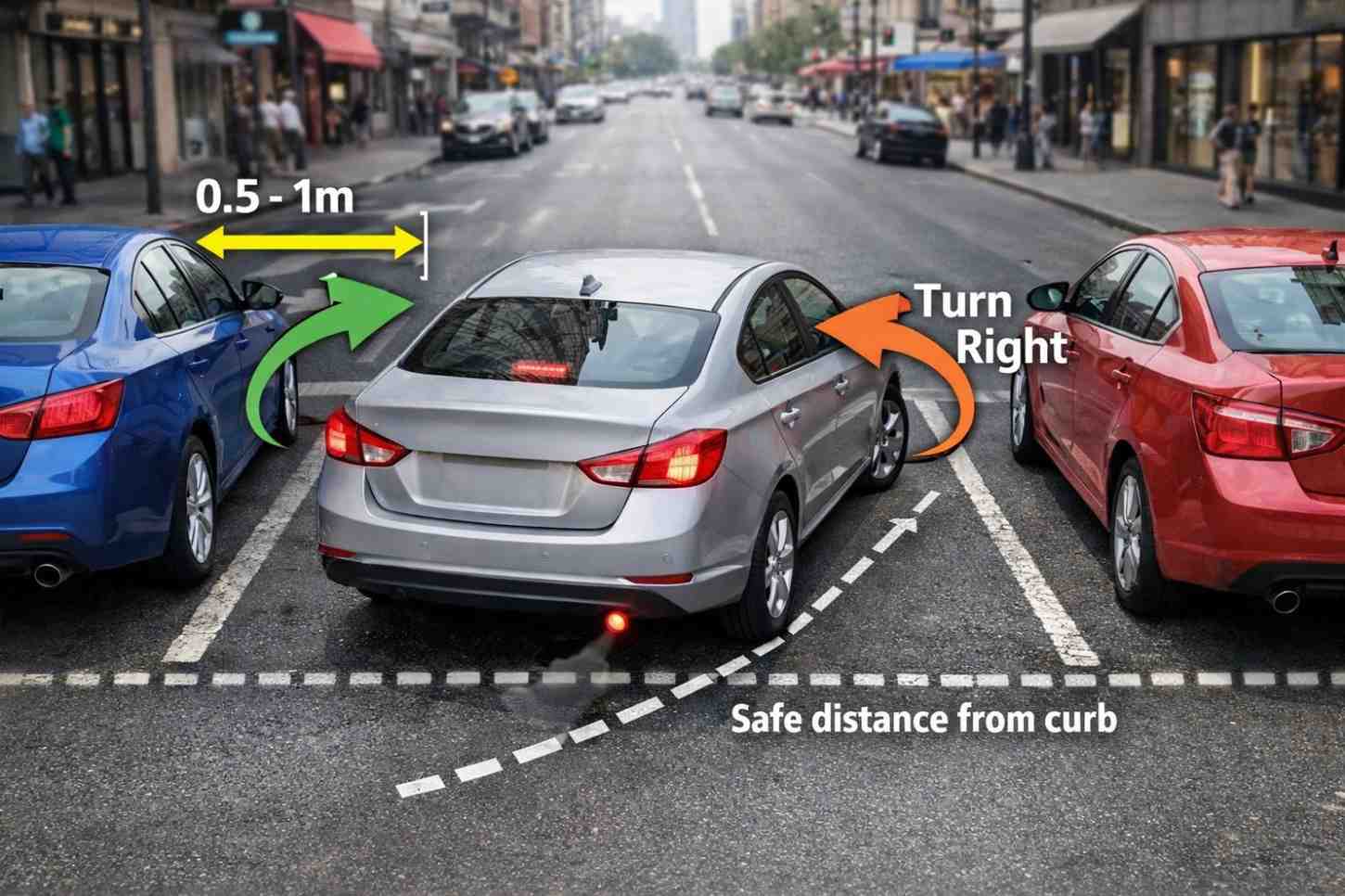
- To perform a perfect reverse parallel park, pull up parallel to the car in front of the empty spot, 0.5-1 meter away, and reverse slowly while turning the wheel fully to the left. Then, straighten the wheels and turn fully right to align with the curb.
- Common mistakes to avoid when reverse parallel parking include relying too much on mirrors without checking blind spots, forgetting to signal, and turning the steering wheel too early or too late.
What is Reverse Parallel Parking?
Reverse parallel parking is the technique of parking your car in a space parallel to the curb or another vehicle by reversing into it. Unlike standard parallel parking, where you drive forward into the parking spot, reverse parallel parking requires you to back into the space while ensuring that your vehicle stays aligned with the curb and other parked cars.
This maneuver is often considered more challenging because it involves precise control of your car’s movement while backing up, as well as accurate judgment of the available space.
Why Learn Reverse Parallel Parking?
Learning reverse parallel parking is essential for handling tight urban parking spaces and is a key skill often tested during driving exams. It improves vehicle control, boosts safety awareness, and increases your confidence on the road by ensuring you can park in various situations, even in crowded or narrow spots.
Essential for Urban Driving
Reverse parallel parking is a vital skill for navigating busy city streets, where parking spaces are often limited and tight. Being able to park efficiently in these spaces ensures that you can confidently handle urban driving situations without feeling stressed.
A Key Skill for Driving Tests
Many driving tests require you to demonstrate reverse parallel parking as part of the evaluation. Mastering this maneuver ensures you’re fully prepared for your test and increases your chances of passing on the first attempt.
Improves Vehicle Control
Learning reverse parallel parking helps improve your overall control of the vehicle, especially when reversing. It teaches you to use your mirrors, adjust your steering, and manage your speed, skills that are essential for safe driving.
Helps with Parking in Tight Spaces
This skill is incredibly useful in situations where parallel parking is the only available option. Being able to reverse park into narrow spaces ensures you can park in most spots, even in crowded parking lots or along busy streets.
Enhances Safety Awareness
When performing reverse parallel parking, you need to check your mirrors, blind spots, and the surroundings constantly. This process sharpens your awareness of other vehicles, pedestrians, and obstacles, making you a safer driver overall.
Boosts Confidence
Successfully mastering reverse parallel parking gives you more confidence on the road. It removes the anxiety of parking in tight spaces, letting you focus on other important aspects of driving.
What is the Difference Between Reverse Parking and Parallel Parking?
The difference between reverse parking and parallel parking is that reverse parking involves backing your vehicle into a parking space. This is usually done in larger parking lots or driveways where you drive forward into the space and then reverse in. Reverse parking is often preferred because it allows for a safer and easier departure, as you can drive forward out of the spot without having to reverse into traffic.
On the other hand, parallel parking is a more specific maneuver where you park your vehicle parallel to the curb, usually between two other parked vehicles. This often involves either driving forward or backing into a tight spot along the street. Parallel parking is trickier due to the limited space and requires more precision, making it a skill commonly tested during driving exams.
How to Do a Perfect Reverse Parallel Park?
To perform a perfect reverse parallel park, pull up parallel to the car in front of the empty spot, 0.5–1 meter away, aligning your rear bumper with theirs. Reverse slowly, turning the wheel fully to the left (lock) until your car is at a 45-degree angle, then straighten the wheels while backing in, finally turning the wheel fully right to align with the curb.
Position Your Car
Begin by pulling up alongside the car you want to park behind, leaving a gap of about 0.5 to 1 meter. Align your front door or side mirror with the front wheels of the parked car, ensuring you’re parallel to it. Make sure you’re not too close, as you need enough space to maneuver.
Start Reversing (The “1”)
Engage reverse and check your mirrors and blind spots for any pedestrians, cyclists, or other vehicles. Begin reversing slowly in a straight line. Keep an eye on your rear wheels and stop when they are level with the other car’s back bumper. This is when you should begin turning the steering wheel one full turn to the left (toward the curb).
Find the Right Angle
Continue reversing slowly as your car begins to move at an angle toward the curb. A good reference point is when you can see the entire front headlight of the car behind you in your left side mirror, or when your car’s rear bumper aligns with the rear bumper of the parked car. This indicates that you’re about 45 degrees to the curb.
Swing the Front In (The “2”)
Now, turn the steering wheel fully to the right (full lock) while continuing to reverse. This action will swing the front of your car into the parking space, avoiding contact with the car in front. Make sure to keep your speed slow and steady as you reverse into the space.
Straighten Your Wheels (The “1”)
Once the front of your car has cleared the other vehicle and your car is nearly parallel to the curb, straighten your steering wheel by turning it one full turn to the left. This will align your wheels, helping you move straight back into the space.
Make Final Adjustments
Now, check your position. If needed, move forward or backward slightly to ensure your car is perfectly centered within the lines. Leave about 1 to 2 meters of space between your car and those parked in front and behind to allow easy access.
Key Tips for Mastering Reverse Parallel Parking
To master reverse parallel parking, practice in spacious areas first, take it slow, and use your mirrors and reference points to guide your movements. Stay calm, make small adjustments as needed, and focus on your steering to park safely and confidently, overcoming any fear of driving with practice.
Practice in a Spacious Area First
Before attempting reverse parallel parking in tight spots, practice in a wide, empty parking lot. This will give you room to practice maneuvering without the pressure of being near other vehicles. Once you’re comfortable, gradually move to tighter spaces.
Take It Slow and Steady
Don’t rush the process. Reverse parking requires patience and precision. Move slowly and carefully to avoid misjudging the space or making sudden movements that could lead to bumps or accidents. It’s better to take your time and get it right than rush and make mistakes.
Use Your Mirrors and Check Blind Spots
Always use your side mirrors and rearview mirror to monitor your surroundings while reversing. Additionally, turn your head and check your blind spots. This will help you stay aware of any pedestrians or other vehicles around you that might not be visible in the mirrors alone.
Use Reference Points for Better Alignment
Reference points can help you gauge when you’re in the right position. For example, when your rear wheels are aligned with the car’s back bumper ahead of you, you know it’s time to start turning the steering wheel. Using visual markers, like the appearance of the front of the car you’re parking behind in your rearview mirror, will also guide your movements.
Make Small Adjustments as Needed
If you’re not perfectly aligned after the first attempt, don’t worry. Simply move forward or backward slightly to correct your position. Small adjustments will ensure you’re parked properly and safely in the space without being too close to other vehicles or the curb.
Keep the Steering Wheel in Mind
When turning the steering wheel, remember the following:
- One full turn to the left when you first start reversing to angle the back of the car into the space.
- Two full turns to the right to swing the front of the car into the space.
- One full turn back to the left to straighten the wheels and complete the maneuver.
Stay Calm and Confident
If you feel nervous, take a deep breath. Staying calm and focused will help you perform better and overcome the fear of driving. If you make a mistake, don’t get discouraged. Just try again, and with each attempt, you’ll become more confident and skilled at reverse parallel parking.
Common Mistakes to Avoid When Reverse Parallel Parking
Common mistakes to avoid when reverse parallel parking include relying too much on mirrors without checking blind spots, and failing to signal your intent, which can confuse other drivers. Additionally, starting the turn too early or too late, poor initial alignment, and rushing the maneuver are all factors that can lead to mistakes and a poorly parked vehicle.
- Mirror Tunnel Vision: Relying solely on mirrors is a frequent mistake. You must perform a 360-degree check before starting and keep looking over your shoulder to check blind spots for pedestrians, cyclists, or overtaking cars.
- Forgetting to Signal: Not using your indicator to signal your intent to park can confuse drivers behind you, leading to them tailgating and blocking your space.
- Ignoring the Front Swing: Many drivers focus so much on the rear of the car that they forget the front end swings out into the road during the final turn. Failing to check your front-right blind spot can lead to a collision with passing traffic.
- Turning Too Early or Late: Starting the initial turn too soon can cause your rear wheel to hit the curb. Turning too late often results in the car being too far from the curb or angled poorly.
- Poor Starting Alignment: If you begin too close to the car in front (less than 2 feet), you risk hitting their rear bumper as you swing in. If you start too far away, you won’t reach the curb at the correct angle.
- Dry Steering: Turning the wheel while the car is completely stationary. This causes unnecessary wear on your tires and steering components.
- Speed Mismanagement: Rushing the maneuver is a leading cause of errors. The “perfect” park is done at a slow crawl, using only the brake or clutch for control, which gives you time to make tiny steering adjustments.
Conclusion
Mastering reverse parallel parking is a crucial skill for any driver, particularly in urban environments where parking can be tight and stressful. By understanding key reference points, practicing patience, and being mindful of your surroundings, you can park with ease and confidence.
For those looking to improve their parking skills, a structured approach can make all the difference. This is where expert guidance can help, and driving schools like Nirvana Driving offer tailored lessons designed to build confidence and proficiency behind the wheel.
With the support of experienced instructors, you’ll gain the skills needed to navigate tight spaces, master reverse parallel parking, and become a more confident and capable driver. Call 045-053-0126 or book your driving lesson online with Nirvana Driving!
Frequently Asked Questions
Do you have to indicate when parallel parking in reverse?
Yes, you should indicate when parallel parking to signal your intention to stop and reverse into a space. Use your turn signal towards the curb (left or right, depending on the side of the road) as you approach and stop, and keep it on while reversing to inform other drivers and pedestrians of your maneuver.
How to reverse parallel park between two cars?
To reverse parallel park, align your car parallel to the front vehicle (about 1–2 feet apart) with bumpers aligned or rear mirrors matched. Reverse while turning the wheel fully toward the curb until your car is at a 45-degree angle. Straighten the wheels, continue reversing, then turn the wheel fully away from the curb to swing the front in.
What are reverse parallel park reference points?
Reverse parallel parking reference points are visual cues used to align a car correctly, typically involving positioning the car to meter beside the front vehicle, turning the wheel full lock left when the rear windows or mirrors align with the other car, and straightening the wheels at a
-degree angle.
How to reverse parallel park with an automatic car?
Reverse parallel parking reference points are visual cues that help you align your car correctly in a parking space. Key points include positioning your car 0.5 to 1 meter beside the other vehicle, aligning your mirrors with the rear of the car, and turning the wheel full lock to steer into the space before straightening the wheels at a 45-degree angle.
Is parallel parking and reverse parking the same?
Parallel parking and reverse parking are not the same, though they are closely related. Parallel parking is a specific maneuver to park between two cars lengthwise along a curb, whereas reverse parking is a general term for backing into any parking space, often perpendicular to the road.