
Taking the driving test is a major milestone in every learner’s journey, but the reality is that many people fail on their first attempt. If you’re feeling frustrated or discouraged after a failed driving test, don’t worry, you’re not alone. In fact, failing a driving test is quite common, and it doesn’t mean you’re not ready to be on the road.
Whether it’s due to nervousness, a simple mistake, or missing a key detail, there are several reasons why learners fail.
In this blog, we’ll explore the top reasons learners fail their driving test, provide expert tips on how to prepare and pass next time,
Highlights
- Failing a driving test means you will not receive your driver’s license, your learner’s permit remains valid (usually), and you must pay a retest fee to schedule a new exam.
- Common reasons to fail a driving test include failing to make effective observations at junctions, incorrect mirror usage, improper signal usage, and poor lane positioning.
- Immediate failures often occur due to failing to stop completely at stop signs, excessive speeding, causing an accident, or needing instructor intervention to avoid a collision
What Happens If You Fail Your Driving Test?
Failing your driving test can be disappointing, but it’s important to remember that it’s a common part of the learning process. If you don’t pass on your first attempt, it’s not the end of the road. In fact, many successful drivers have failed at least once before they passed. Here’s what happens after you fail your driving test:
You’ll Be Given Feedback
After your test, the examiner will provide you with specific feedback on why you failed. This feedback can be incredibly valuable because it highlights the areas where you need improvement. Whether it’s an issue with your steering control, mirror checks, or parking, understanding your mistakes helps you target those weaknesses during your practice.
You’ll Need to Wait to Retake the Test
Depending on the rules in your area, you may have to wait a certain period before scheduling a retest. This waiting period allows you time to practice and improve on the areas you struggled with. Typically, the waiting time could range from a few days to a few weeks. However, you should use this time wisely by focusing on the areas that caused you to fail.
Pay Retest Fees
Most driving authorities charge a retest fee if you fail the test. The fee is usually lower than the initial test fee, but it varies depending on your location. Be sure to check with your local licensing office to find out the exact cost.
Stay Positive and Reflect
While failing your test can feel discouraging, it’s important to stay positive and reflect on the experience. Failing doesn’t mean you’re a bad driver; it simply means there’s something you need to work on. Many successful drivers had to take the test more than once. The key is to learn from your mistakes, practice more, and approach the next test with a positive attitude.
When You’re Ready, Schedule Your Retest
Once you’ve practiced and feel confident about your abilities, schedule your retest. Make sure you’re mentally prepared and ready to take the test again. By improving your driving skills and focusing on your weaknesses, you’ll be much more likely to pass the next time.
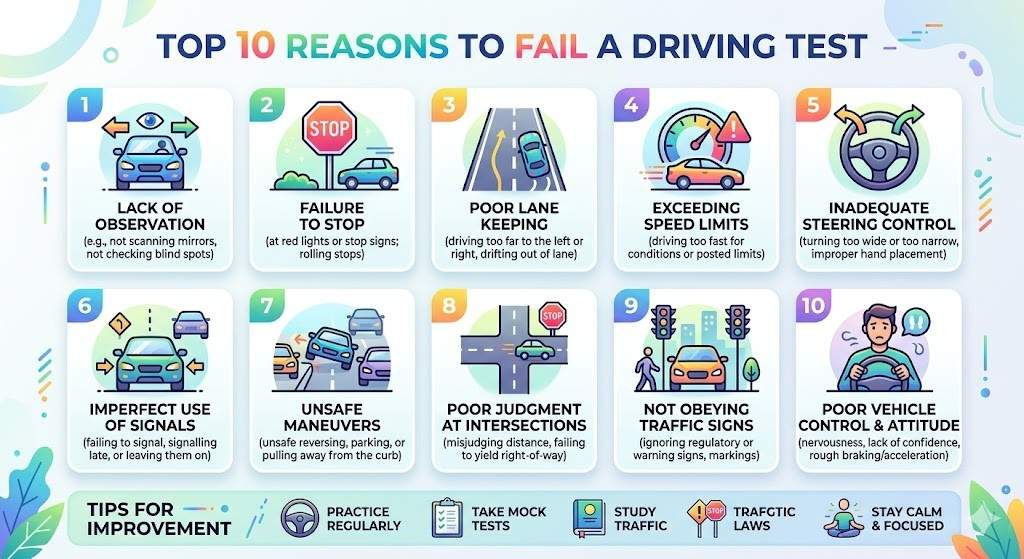
Top 10 Reasons to Fail a Driving Test
Most learners fail their driving test due to common mistakes like not following road signs, poor steering control, failing to check mirrors, improper parking, incorrect speed, and not using turn signals properly. Nervousness, overthinking, improper lane discipline, and failing to give way also contribute, so mastering these key driving skills is essential to passing your driving test successfully.
Not Following Road Signs and Signals
One of the most basic yet crucial reasons for driving test failure is not following road signs and traffic signals. Whether it’s failing to stop at a stop sign, running a red light, or not yielding when required, ignoring road signs can immediately result in failure. Always stay alert and make sure you’re following traffic rules closely.
Poor Steering Control
Poor steering control is a common failure point, especially if you’re jerking the wheel, oversteering, or driving too fast through turns. Test examiners are looking for smooth and controlled movements, so it’s essential to practice steady steering and avoid sudden jerks.
Failure to Check Mirrors Regularly
Consistently checking your mirrors is critical for safe driving and is an essential part of the driving test. If you fail to check your side mirrors or rearview mirror while driving, changing lanes, or making turns, it could lead to failure.
Not Performing Proper Parking
Whether it’s parallel parking or angle parking, failing to park your vehicle correctly can result in an immediate fail. Common mistakes include not parking within the lines, taking too long to park, or making multiple attempts to park.
Going Too Fast or Too Slow
Driving at an inappropriate speed, either going too fast or too slow, can make you fail your test. Speeding is dangerous, and driving too slowly can disrupt the flow of traffic and lead to safety concerns.
Not Using Turn Signals Properly
Failing to use your turn signals or using them incorrectly (like signaling too late) is a frequent reason for failure. Proper signaling indicates your intentions to other drivers and ensures safe lane changes or turns.
Nervousness or Overthinking
While it’s normal to feel nervous, test anxiety can lead to poor decision-making, hesitation, or overthinking your actions. This often results in mistakes such as driving too cautiously or not reacting quickly enough in certain situations.
Improper Lane Discipline
Straddling lanes, unnecessary lane changes, or failing to stay in the correct lane can lead to test failure. Always maintain proper lane positioning and signal clearly when switching lanes.
Failing to Give Way
Not yielding the right-of-way when required, such as at roundabouts, junctions, or pedestrian crossings, is a serious error. Understanding and following right-of-way rules is essential to pass.
How to Pass Your Driving Test Next Time (Pro Tips)
To pass your driving test next time, focus on mastering fundamental safety habits: exaggerate mirror checks and blind-spot turns, stop completely behind white lines, obey speed limits, and keep calm. Treat the test as a routine drive, not a high-stakes exam.
Understand the Test Structure
Know exactly what the test involves, including the practical driving maneuvers and any theory or hazard perception components. Familiarize yourself with your local licensing authority’s guidelines to avoid surprises. Understanding the format reduces anxiety and helps you focus on performance.
Analyze Past Mistakes
Review your previous test results carefully to identify weak areas. Ask your instructor or examiner for specific feedback if possible. Focusing on these mistakes ensures you don’t repeat them.
Improve Your Driving Skills
Practice essential maneuvers like parallel parking, hill starts, and reversing around corners. Pay attention to lane positioning, speed limits, and observation skills. Regular practice builds consistency and confidence behind the wheel.
Take Mock Tests
Simulate real test conditions with mock exams to get used to the pressure. Time yourself and treat each practice seriously. Review mistakes immediately and repeat until you feel confident.
Mental Preparation
Stay calm with deep breathing and positive visualization before your test. Imagine completing maneuvers successfully to build confidence. Being mentally prepared helps you react calmly and make better decisions.
Day of the Test Tips
Arrive early to give yourself time to relax and check your vehicle. Listen carefully to the examiner’s instructions and ask for clarification if needed. Drive steadily, don’t rush, and focus on safety and control.
Extra Support
Consider taking a few extra lessons to address lingering weak spots. Driving simulators or apps can help with hazard perception and decision-making. Getting additional guidance can make a big difference in performance.
Conclusion
Failing a driving test is more common than many learners realize, and it doesn’t mean you’re not ready to be on the road. The key is to identify your weak areas, practice consistently, and approach the next test with confidence and focus. With preparation and the right guidance, passing your next driving test is within reach.
At Nirvana Driving, we make passing your driving test easier and more achievable. Our experienced instructors provide personalized lessons, guide you through challenging maneuvers, and teach practical strategies to build confidence behind the wheel. By practicing with us under real test conditions, you can overcome past mistakes and greatly improve your chances of success on your next attempt. Call 045-053-0126 or book your driving lesson online with Nirvana Driving!
Frequently Asked Questions
Can practicing with a friend or family member help me pass the test?
Yes, practicing with a friend or family member can significantly help you pass your driving test, as learners who do so are up to 1.5 times more likely to pass. It builds confidence and familiarity, and provides crucial extra hours beyond formal lessons, although it is recommended to use them alongside professional instruction to avoid adopting bad habits.
How long after failing can I realistically expect to pass the next time?
A realistic expectation for passing a retake is generally 2 to 6 weeks for professional exams and 1 to 2 weeks for driver’s tests, provided the failure was close to the passing score.
What are the most overlooked skills that cause learners to fail?
Commonly overlooked skills that cause learners to fail include checking blind spots, proper clutch control (for manual cars), and smooth speed adjustment in curves or roundabouts.