
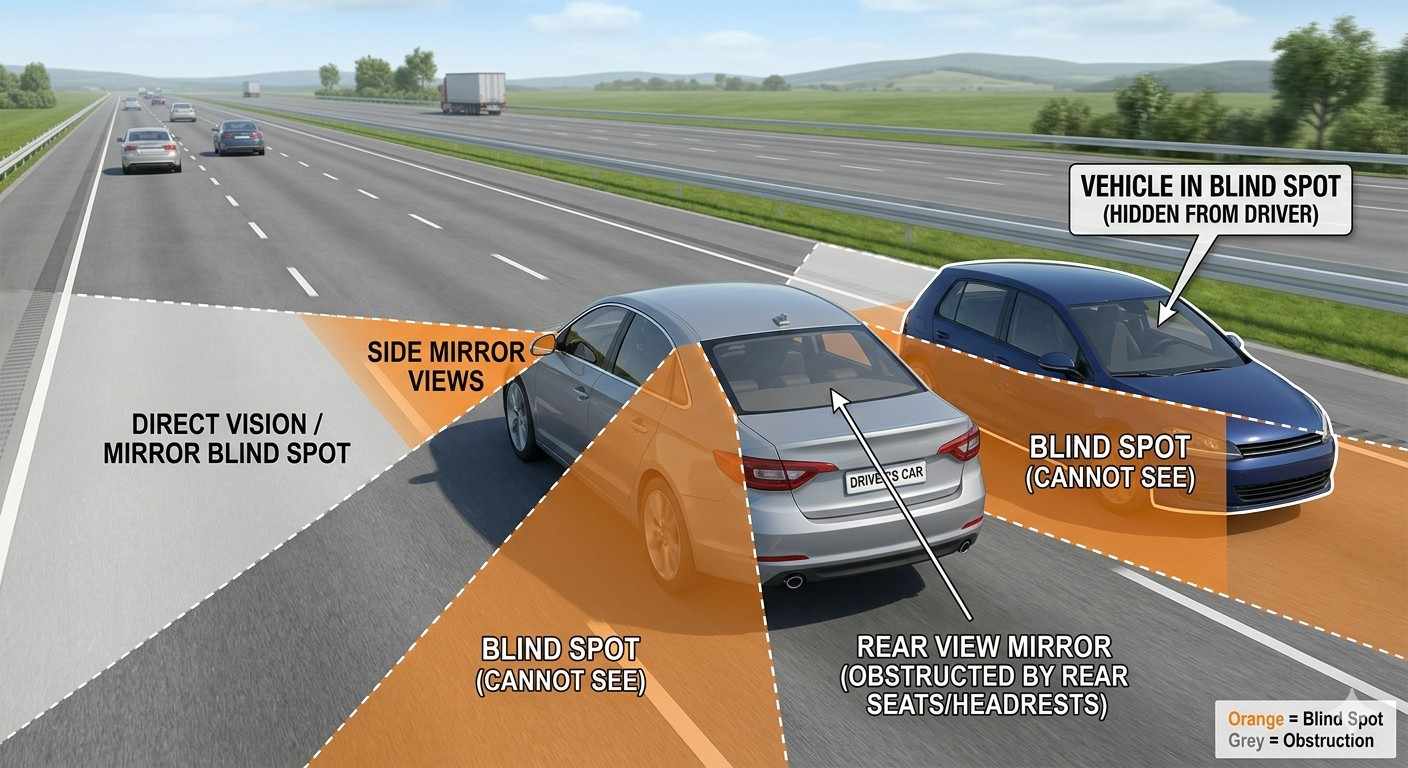
Blind spots are one of the most overlooked yet important aspects of safe driving. While mirrors help drivers monitor the traffic around them, they cannot provide a complete view of every area surrounding a vehicle. As a result, certain road users, including cars, motorcycles, cyclists, and pedestrians, may remain out of sight during critical driving manoeuvres.
Failing to account for blind spots can increase the risk of accidents, particularly when changing lanes, merging into traffic, turning, or reversing. Even experienced drivers can miss nearby hazards if they rely solely on their mirrors without performing additional visual checks.
In this guide, we’ll explain the meaning of a blind spot in driving, what causes blind spots, when you should check them, and how to reduce the risks while driving.
Key Highlights
- A blind spot is an area around your vehicle that cannot be clearly seen through mirrors or direct vision.
- Blind spots can hide cars, motorbikes, cyclists, pedestrians, and road obstacles.
- Common causes include vehicle design, poor mirror adjustment, seating position, vehicle size, and blocked visibility.
- Drivers should check blind spots before changing lanes, merging, turning, reversing, parking, or moving off.
- Mirror checks, head checks, shoulder checks, and correct mirror adjustment help reduce blind spot risks.
- Blind spot sensors and cameras can help, but they should not replace safe observation habits.
What Is a Blind Spot in Driving?
A blind spot in driving is an area around your vehicle that you cannot clearly see by looking through your windscreen, rear-view mirror, or side mirrors. These areas are usually found beside and slightly behind the vehicle, but they can also appear at the front or rear, depending on the vehicle’s size, shape, and mirror position.
Blind spots are dangerous because another car, motorbike, cyclist, pedestrian, or object may be close to your vehicle but still outside your normal view. This is why drivers need to use mirrors, head checks, and shoulder checks before changing lanes, merging, reversing, turning, or moving off from the kerb.
Build Confidence with Blind Spot Checks
Book a professional driving lesson and learn how to check mirrors, manage blind spots and drive with confidence on Australian roads.
Book Your Lesson TodayWhat Causes Blind Spots in Driving?
Blind spots in driving are caused by vehicle design, poor mirror adjustment, driver seating position, vehicle size, obstructions, and limited visibility from weather, glare, or low light.
1. Vehicle Design and Body Structure
Blind spots are often caused by the design of the vehicle itself. Parts such as roof pillars, doors, headrests, mirrors, and the rear body shape can block the driver’s view from certain angles. Vehicles with small windows or high rear sections may also make it harder to see nearby road users.
2. Poor Mirror Adjustment
Incorrectly adjusted mirrors can increase blind spots around the vehicle. If the side mirrors show too much of your own car, they may not show enough of the lanes beside you. Proper mirror adjustment helps reduce hidden areas, but it does not remove the need for head and shoulder checks.
3. Driver Seating Position
The driver’s seating position can affect how much of the road is visible. Sitting too low, too far back, or at an awkward angle may limit the view through the mirrors and windows. A correct seating position helps the driver see more clearly around the vehicle.
4. Vehicle Size and Height
Larger vehicles usually have bigger blind spots than smaller cars. Trucks, buses, vans, SUVs, and utes may have wider hidden areas beside, behind, or in front of the vehicle. This is why extra care is needed when driving near large vehicles or when driving one yourself.
5. Obstructions, Weather, and Lighting Conditions
Passengers, luggage, child seats, dirty windows, rain, fog, glare, or poor lighting can make blind spots worse. These conditions can reduce visibility and make it harder to notice cyclists, pedestrians, motorbikes, or other vehicles nearby.
When Should You Check for Blind Spots?
You should check your blind spots whenever you are about to change your vehicle’s position on the road. Mirrors give you a good view of traffic behind and beside you, but they may not show everything. A quick head or shoulder check helps you confirm that no car, motorbike, cyclist, pedestrian, or obstacle is hidden beside your vehicle.
1. Before Changing Lanes: Always check your mirrors and blind spot before moving into another lane. A vehicle may be travelling beside or slightly behind you, where it cannot be seen clearly in your mirrors.
2. Before Merging into Traffic: When joining a road, motorway, or busy lane, check your blind spot before merging. This helps you avoid moving into the path of another vehicle.
3. Before Turning or Overtaking: Blind spot checks are important before turning, especially when cyclists or motorbikes may be beside you. You should also check before overtaking to make sure the lane is clear.
4. Before Reversing or Parking: When reversing from a driveway, parking space, or kerbside position, check around the vehicle carefully. Blind spots behind and beside the car can hide pedestrians, cyclists, small children, or obstacles.
5. Before Moving Off or Pulling Over: Check your blind spots before leaving the kerb, pulling out from a parked position, or returning to the side of the road. This helps you move safely without cutting off nearby traffic.
You may also read: How to Avoid Rear-End Collisions When Driving in Australia?
How to Minimise the Risk of Blind Spots?
You cannot remove blind spots completely, but you can reduce their risk by improving your visibility and observation habits. Safe drivers use a combination of correct mirror setup, regular scanning, shoulder checks, and careful positioning before changing direction or moving into another lane.
1. Adjust Your Mirrors Correctly
Set your rear-view and side mirrors before you start driving. Your mirrors should give you a wide view of the road behind and beside your vehicle, not just show the side of your own car.
2. Use Head and Shoulder Checks
Mirrors are helpful, but they do not show every area around the vehicle. Before changing lanes, merging, turning, reversing, or moving off, make a quick head or shoulder check in the direction you plan to move.
3. Keep Windows and Mirrors Clean
Dirty windows, mirrors, or windscreens can make blind spots worse. Keep them clean so you can clearly see nearby vehicles, cyclists, pedestrians, and road hazards.
4. Avoid Driving in Other Vehicles’ Blind Spots
Do not stay beside large vehicles such as trucks, buses, or vans for too long. Move through safely when permitted, or stay back where the driver is more likely to see you.
5. Do Not Rely Only on Technology
Blind spot sensors, cameras, and warning lights can help, but they should not replace safe observation. Always use mirrors and shoulder checks before changing your vehicle’s position.
You may also read: What happens if you Crash During a Driving Lesson?
Conclusion
Blind spots are an important safety concern for every driver because they can hide vehicles, cyclists, pedestrians, or obstacles from view. By adjusting your mirrors properly, using quick head and shoulder checks, staying alert, and checking before changing lanes, merging, turning, reversing, or moving off, you can reduce blind spot risks and drive more safely and confidently.
If you are still learning how to manage blind spots in real driving situations, professional guidance can make a big difference. At Nirvaan Driving School, learners can build safer observation habits, improve mirror and shoulder-check techniques, and gain confidence in handling everyday road situations. Book your driving lesson today with Nirvana Driving!
FAQs
1. What is a common example of a blind spot while driving?
A common example of a blind spot while driving is when another vehicle is travelling beside and slightly behind your car while you are preparing to change lanes. The vehicle may not appear clearly in your side mirror, so a quick shoulder check is needed before moving.
2. Why are blind spots dangerous?
Blind spots are dangerous because they can hide nearby vehicles, cyclists, pedestrians, or obstacles. If a driver moves without checking, they may accidentally cut off another road user or cause a collision.
3. Do larger vehicles have bigger blind spots?
Yes. Larger vehicles such as trucks, buses, vans, SUVs, and utes usually have bigger blind spots than smaller cars. Drivers should take extra care when driving near large vehicles and avoid staying beside them for too long.
4. Can blind spots affect a driving test?
Yes. Failing to check blind spots during a driving test can lead to mistakes or lost marks, especially when changing lanes, merging, reversing, turning, or moving off from the kerb. Examiners look for safe observation before you change your road position.
5. How can I improve blind spot checks?
You can improve by practising correct mirror use, checking over the shoulder at the right time, keeping their head checks quick and controlled, and learning from a qualified driving instructor in real traffic situations
6. What is a blind spot in a driving test?
In a driving test, a blind spot is an area around your vehicle that you cannot clearly see in your mirrors, so examiners expect you to check it with a quick head or shoulder check before changing lanes, merging, turning, reversing, parking, or moving off from the kerb.