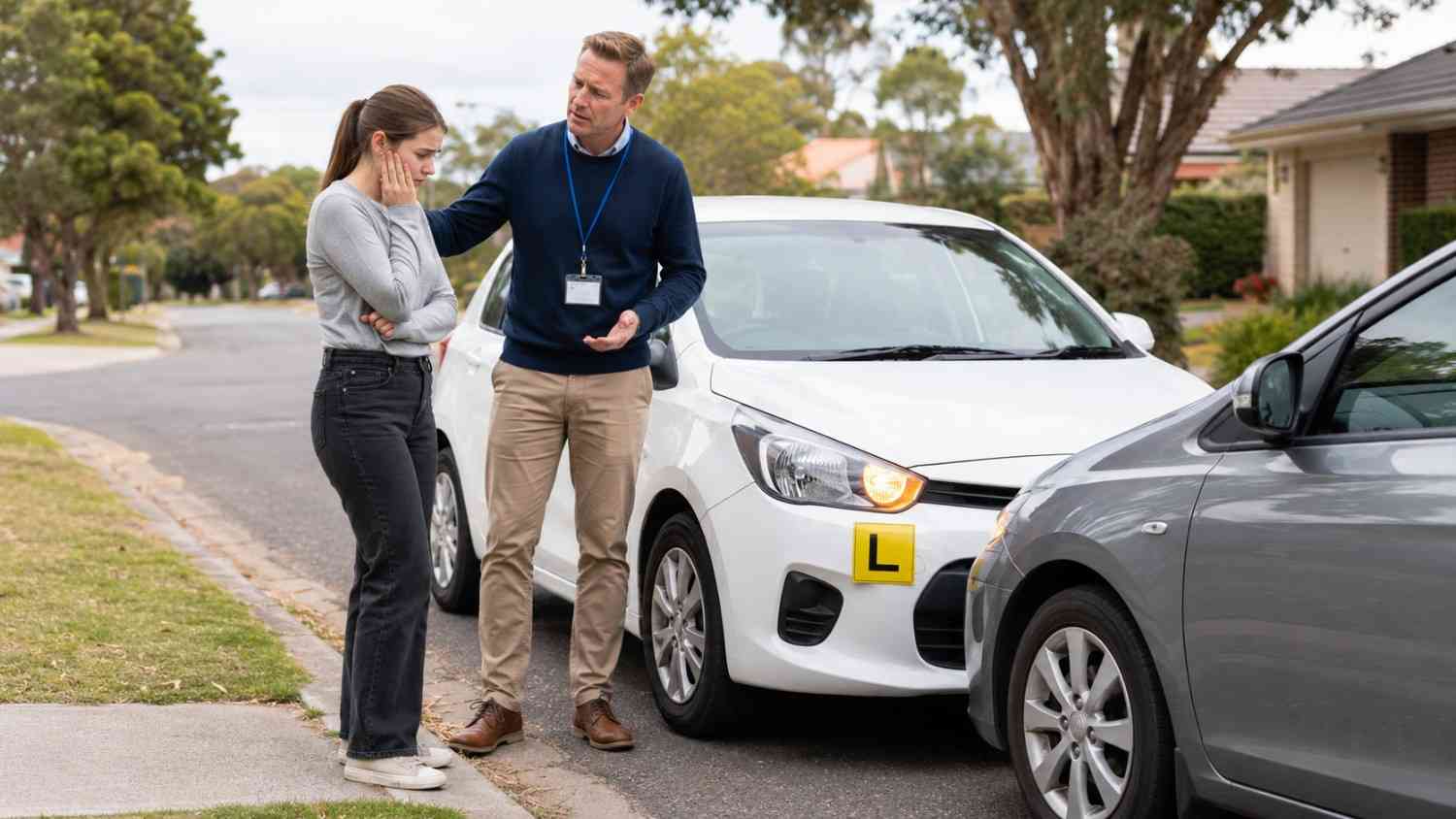
An accident during a driving lesson can feel stressful, especially for a learner driver. You may feel confused about what to do next, who is responsible, and whether insurance will cover the damage.
In Australia, responsibility depends on how the accident happened. The learner, instructor, driving school, another driver, or more than one person may share responsibility. So, it is important to stay calm, follow the right steps, exchange details, avoid admitting fault, and report the accident when required.
This guide explains what to do after an accident during a driving lesson, who may be responsible, how insurance works, and how learners can reduce risks during future lessons.
Key Highlights
- A learner driver may be responsible if they break road rules, ignore instructions, or drive carelessly.
- The instructor or supervising driver may also share responsibility if poor guidance or unsafe supervision contributed to the crash.
- If another driver caused the accident, their actions may be reviewed when deciding fault.
- Insurance cover depends on whether the crash happened in a driving school car or a private vehicle.
- After an accident, stay calm, check for injuries, exchange details, take photos, and avoid admitting fault.
- Learners should always check the driving school’s accident and insurance policy before starting lessons.
Who Is Responsible If a Learner Driver Crashes?
If a learner driver crashes during a lesson, responsibility depends on what caused the accident. The learner may be responsible if they break road rules, ignore clear instructions, speed, fail to give way, or drive without proper care. However, another driver may be at fault if they caused the crash by running a red light, tailgating, or changing lanes unsafely.
The driving instructor or supervising driver may also share responsibility in some cases. Their role is to guide the learner, give clear instructions, and step in when it is safe to do so. If they allow the learner to drive in unsafe conditions, give poor guidance, or fail to supervise properly, their actions may be reviewed when fault is decided.
Who pays for the damage usually depends on the vehicle, insurance policy, and who caused the crash. If the accident happens in a driving school car, the school’s insurance may apply. If it happens in a family or private car, the car owner’s insurance is usually checked. So, each case must be reviewed based on the accident details and policy terms.
Learn to Handle Real Road Situations With Confidence
Nervous after a driving mistake or accident? Get calm, structured, and safety-focused lessons that help you understand road rules, manage pressure, and build better driving habits.
Book Your Driving LessonThings to Do After an Accident During a Driving Lesson
After an accident during a driving lesson, stop safely, check for injuries, exchange details, collect evidence, and report the crash if needed. Then, inform the driving school or vehicle owner, contact the insurer, and continue the lesson only if the car is safe and the learner feels ready.
1. Stop Safely and Secure the Area
The first step after any accident is to stop the vehicle safely. Turn on the hazard lights and make sure the learner, instructor, passengers, and other road users are out of immediate danger. If the car is creating a risk and can be moved safely, shift it to a safer nearby location.
2. Check for Injuries
Before thinking about damage or responsibility, check whether anyone has been hurt. This includes people in both vehicles, pedestrians, cyclists, and passengers. If there is any injury or serious concern, call 000 for emergency help.
3. Stay Calm and Follow the Instructor’s Guidance
A learner driver may feel shocked or nervous after a crash, so the instructor or supervising driver should take the lead. They can help the learner understand what to do next and prevent panic. Clear guidance is especially important when an accident happens on a busy road.
4. Exchange Required Details
After everyone is safe, exchange details with the other driver or property owner. Record names, phone numbers, addresses, registration numbers, licence details, and insurance information if available. These details are usually needed for police reports, insurance claims, and repair arrangements.
5. Collect Evidence from the Scene
Take photos of the vehicles, damage, number plates, road signs, traffic lights, lane markings, and the surrounding area. It is also useful to note the time, location, weather, traffic conditions, and direction each vehicle was travelling. If there are witnesses, politely ask for their contact details.
6. Avoid Admitting Fault Immediately
It is best not to argue or accept blame at the accident scene. Fault is usually decided later, after the evidence is reviewed by insurers, police, or other relevant parties. Stay polite, provide the required details, and avoid making statements that could be misunderstood.
7. Report the Accident If Required
Some accidents must be reported, especially if someone is injured, a driver refuses to provide details, property is damaged, or a vehicle cannot be driven safely. Reporting rules can vary between Australian states and territories. In Victoria, drivers involved in a crash must stop, assist where needed, and exchange details.
8. Notify the Driving School or Vehicle Owner
If the accident happened in a driving school car, the driving school should be informed as soon as possible. They may have a set process for handling damage, insurance, and replacement lessons. If the vehicle belongs to a parent, family member, or private owner, that person should be told quickly.
9. Contact the Relevant Insurer
The insurance company will usually need accident details, photos, driver information, and any witness statements. For a driving school vehicle, the school’s business insurance may be involved. For a private car, the owner’s policy will determine whether the learner is covered and whether an excess applies.
10. Decide Whether the Lesson Should Continue
The lesson should only continue if the vehicle is safe, the learner feels settled, and the instructor or supervisor believes it is appropriate. Damage to lights, mirrors, tyres, brakes, or steering can make the car unsafe to drive. In many cases, ending the lesson and dealing with the accident properly is the better option.
Conclusion
An accident during a driving lesson can be stressful for any learner, but knowing what to do can make the situation much easier to handle. The most important steps are to stay calm, check for injuries, exchange details, take photos, collect witness information if available, avoid admitting fault at the scene, and report the accident when required.
Responsibility may depend on several factors, including the learner’s actions, the instructor’s guidance, the supervising driver’s role, another road user’s behaviour, the vehicle being used, and the insurance policy involved.
This is why choosing the right driving school matters from the beginning. With calm, structured, and safety-focused lessons, Nirvana Driving helps learners build confidence, understand road rules, practise safe decision-making, and prepare for real driving situations on Australian roads. Learning with experienced instructors can reduce confusion, improve awareness, and give new drivers the support they need to become safer and more responsible behind the wheel. Book your driving lesson today with Nirvana Driving!
FAQs
1. Can a driving instructor cancel the lesson after an accident?
Yes, the instructor can stop the lesson after an accident if the car is unsafe or the learner feels too nervous to continue. This helps protect the learner, instructor, and other road users.
2. Will a crash during a driving lesson affect my learner’s permit?
A crash alone may not affect your learner permit. However, if you broke road rules, the police may issue a fine or apply penalties based on the offence.
3. Do I still need to pay for the full lesson after an accident?
This depends on the driving school’s booking policy. Some schools may charge for the full lesson, while others may review the situation based on the accident and remaining lesson time.
4. Can I change instructors after a driving lesson accident?
Yes, you can change instructors if you feel uncomfortable continuing with the same one. A supportive instructor should help you rebuild confidence without pressure.
5. Can a learner driver practise again soon after a crash?
Yes, but only when they feel ready. It is better to restart on quiet roads with calm guidance instead of going straight back into heavy traffic.
6. Should I tell my next instructor about a past driving lesson accident?
Yes, it is a good idea to tell your instructor. This helps them understand your confidence level and plan lessons that support your progress