
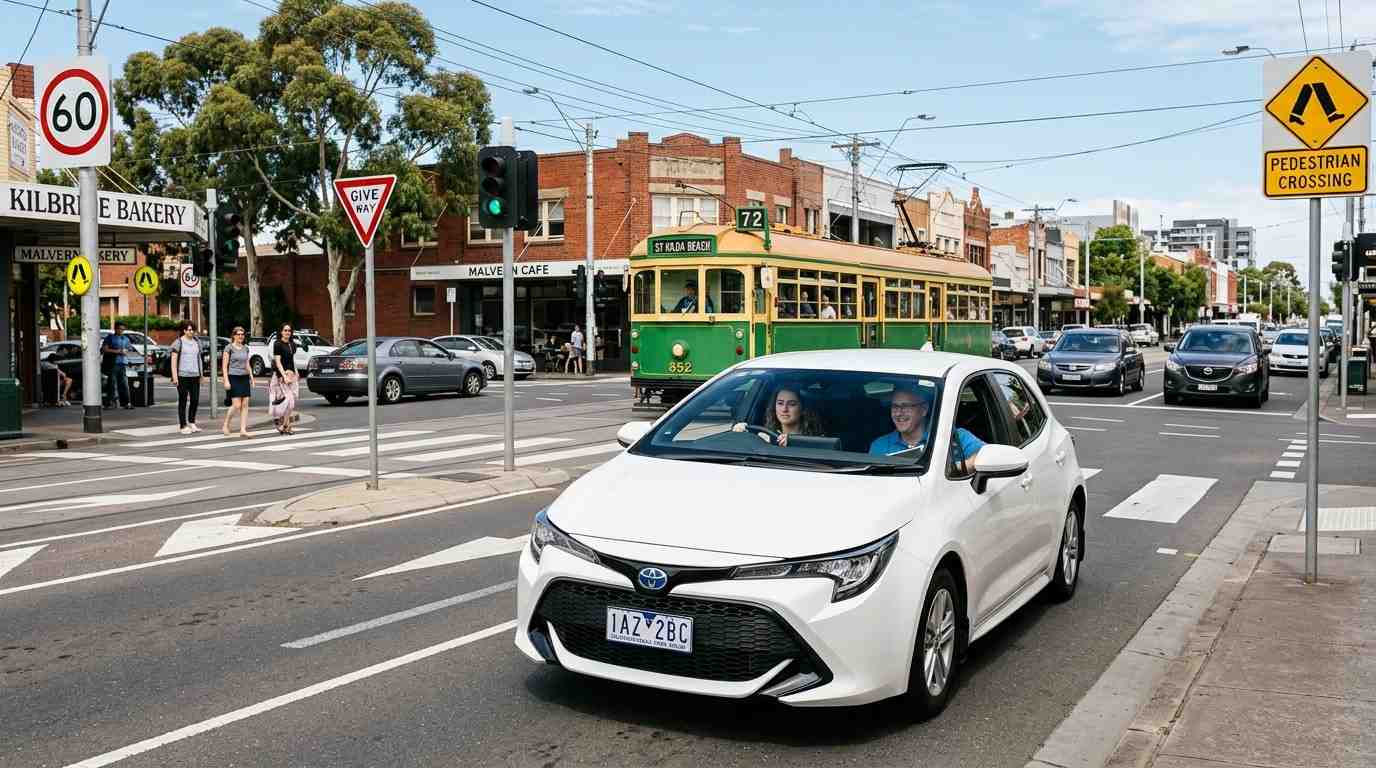
Driving in Melbourne requires you to recognise a variety of road signs, traffic signals and road markings, from Stop and Give Way signs to tram signals, pedestrian crossings and lane indicators. Knowing how to respond to these signs helps you follow Victorian road rules and make safer decisions in different traffic situations.
For learner drivers, simply recognising a road sign is not enough. You need to know when to stop, slow down, give way, turn, change lanes or continue driving.
This guide covers the key road signs, traffic signals and road markings you may encounter on Melbourne roads, helping you build the knowledge and confidence needed for everyday driving.
What Are the Main Types of Road Signs in Melbourne?
1. Regulatory Road Signs
Regulatory signs set rules that drivers must follow. They can require you to stop or give way, restrict certain movements or specify conditions such as speed and parking. Failing to follow these signs can create safety risks and may result in penalties.
i. Stop Signs
A Stop sign requires you to come to a complete stop at the stop line before proceeding. After stopping, check the road carefully and continue only when it is safe and permitted to do so. Do not treat a Stop sign as a suggestion to slow down; you must stop.
ii. Give Way Signs
A Give Way sign requires you to slow down and give way to vehicles or other road users who have priority. Be prepared to stop if necessary and make sure there is a safe gap before entering or crossing the road.
iii. Speed Limit Signs
Speed limit signs display the maximum legal speed for that section of road under the conditions shown. Drivers should check for changes in the speed limit and adjust their speed promptly rather than waiting until they have travelled further along the road.
iv. No Entry Signs
No Entry signs indicate that you cannot enter the road or area from that direction. Pay close attention to these signs when approaching unfamiliar streets, one-way roads and restricted areas.
v. One Way Signs
One Way signs indicate that traffic is permitted to travel in a particular direction. They are especially important on busy streets and intersections where entering from the wrong direction could create a serious collision risk.
vi. Keep Left Signs
Keep Left signs require drivers to pass an obstruction or traffic island on the indicated side. Check the sign and road layout before proceeding so that you position your vehicle correctly.
vii. Keep Left Unless Overtaking
On roads where this rule applies, drivers should generally remain in the left lane unless overtaking, turning right or another permitted exception applies. This is particularly important on higher-speed roads and freeways.
viii. No U-Turn Signs
A No U-Turn sign prohibits drivers from making a U-turn at that location. Check for this restriction before attempting to change direction, particularly around intersections and busy roads.
ix. Parking Signs
Parking signs specify where and when you can park or stop and may include time limits, conditions or restrictions. Always read the entire sign rather than relying on a single number or symbol, as different restrictions can apply at different times.
2. Warning Road Signs
Warning signs alert drivers to hazards, road conditions or changes ahead. They give you time to prepare by adjusting your speed, checking your surroundings and positioning your vehicle appropriately.
i. Curves and Bends
Curve and bend signs warn you that the road ahead changes direction. Reduce your speed when necessary and maintain control of your vehicle as you approach and travel through the bend.
ii. Pedestrians and Children
Pedestrian and children-related warning signs alert drivers to areas where people may cross or move close to the road. Slow down, scan the surrounding area and be prepared to stop when required.
iii. Railway Crossings
Railway crossing signs warn drivers that railway tracks are approaching. Check for trains, follow the signals and crossing controls, and do not enter the crossing unless there is enough space to clear it safely.
iv. Roadworks
Roadwork signs alert drivers to temporary changes in traffic conditions, such as lane closures, road workers, reduced speed limits or altered traffic flow. Slow down and follow the temporary signs and directions through the work area.
v. Changing Road Conditions
Some warning signs alert drivers to conditions that may affect vehicle control, such as slippery surfaces, steep sections or uneven roads. Adjust your speed and driving accordingly when approaching these areas.
vi. Changing Road Layout
Signs can warn you about changes to the road layout, including lanes merging, narrowing or changing direction. Check your mirrors and blind spots and move into the appropriate lane when it is safe to do so.
vii. Intersections
Intersection warning signs alert drivers to an upcoming junction, roundabout or other change in traffic movement. Approach with care and watch for vehicles, pedestrians and other road users.
viii. Animals
Animal warning signs indicate that animals may be present or cross the road in the area. Stay alert and reduce your speed when necessary, particularly on roads near parks, open areas or locations where wildlife is common.
ix. Traffic Signals Ahead
Traffic signal warning signs alert drivers to upcoming traffic lights. They provide additional time to prepare for changing traffic conditions, especially when the intersection is not immediately visible.
3. Guide, Tourist and Service Signs
Guide, tourist and service signs help drivers navigate Melbourne, locate destinations and find useful facilities. They provide information about routes, attractions and services rather than imposing specific driving restrictions.
i. Direction Signs
Direction signs help drivers identify roads, suburbs, destinations and routes. Check them early so you have enough time to choose the correct lane or turn without making a sudden manoeuvre.
ii. Freeway and Guide Signs
Freeway and guide signs provide information about destinations, exits, routes and upcoming road connections. Reading them early is particularly important on busy Melbourne roads, where missing an exit can require a significant detour.
iii. Tourist Signs
Tourist signs direct drivers towards recognised attractions, landmarks and other destinations of interest. They can be useful when travelling through unfamiliar areas of Melbourne and its surrounding regions.
iv. Service Signs
Service signs help drivers locate facilities such as fuel stations, parking areas, food outlets and other essential services. They make it easier to identify nearby facilities while continuing to follow the road safely.
v. Emergency-Related Signs
Emergency-related signs can direct drivers towards important facilities or provide information during specific road situations. Follow any instructions shown and remain alert to changes in traffic conditions.
What Do Melbourne Traffic Lights Mean?
Traffic lights control the movement of vehicles, pedestrians and other road users at intersections and crossings throughout Melbourne. While the basic red, yellow and green signals are familiar to most drivers, Victorian roads also use arrows, flashing yellow signals and special tram, bus, pedestrian and bicycle signals. Understanding each signal helps you respond correctly and avoid common mistakes at intersections.
1. Red Traffic Light
A red traffic light requires you to stop before entering the intersection. Stop at the stop line or, where there is no stop line, at the appropriate position before the intersection. Remain stopped until the signal changes and you are permitted to proceed.
You should never enter an intersection simply because the road ahead appears clear. A red light gives priority to other traffic movements, pedestrians or cyclists, so entering against the signal can create a serious safety risk and may result in a penalty.
2. Yellow Traffic Light
A yellow traffic light indicates that the signal is changing to red. You must stop if you can do so safely before reaching the intersection.
However, you should not brake suddenly if you have already entered the intersection or are so close to the stop line that stopping safely is not possible. In that situation, continue through the intersection and clear it safely rather than creating a collision risk by stopping abruptly.
3. Green Traffic Light
A green traffic light allows you to proceed when the intersection is clear, and it is safe to do so. Before moving, check for pedestrians, cyclists, turning vehicles and other road users who may still be clearing the intersection.
A green light does not give you permission to enter an intersection that is blocked. If there is no room for your vehicle on the other side, wait until you can proceed without obstructing cross traffic or other road users.
4. Red and Green Arrows
Arrow signals control specific turning or movement directions at an intersection.
A red arrow indicates that you must not proceed in the direction shown by the arrow. Wait until the red arrow changes to a signal that permits your movement.
A green arrow allows you to move in the direction shown, provided you follow any other applicable signs and give way where required. Check the intersection carefully before turning because pedestrians, cyclists or other permitted road users may still be present.
5. Flashing Yellow Traffic Lights
A flashing yellow traffic light requires drivers to proceed with caution and follow the applicable road rules. Slow down, check for other traffic and give way where required.
Do not assume that a flashing yellow signal gives you unrestricted priority. Treat the intersection carefully and make sure your movement is safe before proceeding.
6. Tram and Bus Traffic Signals
Melbourne uses special traffic signals for trams and buses. These signals can display symbols such as a white T for trams and a white B for buses.
These signals apply to the relevant tram or bus movement rather than ordinary vehicles. If you are driving a car, follow the traffic signals and road signs that apply to your lane and vehicle.
When driving near trams, pay particular attention to dedicated signals, tram tracks, stops and intersections because tram movements can differ from ordinary traffic.
7. Pedestrian and Bicycle Signals
Pedestrian signals control when people can cross a road at designated crossings. Drivers should watch for pedestrians when approaching intersections and turning across a pedestrian crossing or shared movement.
Bicycle signals are used at some intersections and crossings to control bicycle movements separately from general traffic. Drivers should follow the signal applicable to their lane or movement and remain alert for cyclists entering or crossing the road.
When turning at an intersection, always check for pedestrians and cyclists who may have priority. A green light for your vehicle does not remove your responsibility to give way where Victorian road rules require it.
Road Markings Every Melbourne Learner Should Know
Road markings provide important instructions about lane use, stopping positions, turning movements and traffic flow. Melbourne roads use different lines, arrows and painted areas to guide drivers and separate traffic. Understanding these markings can help learner drivers position their vehicles correctly and avoid unsafe or illegal manoeuvres.
i. Broken Dividing Lines
Broken dividing lines separate traffic travelling in opposite directions or mark lanes where movement between lanes may be permitted. Before crossing a broken line, check your mirrors and blind spots and make sure the movement is safe and permitted.
ii. Single Unbroken Lines
A single continuous line can restrict where a vehicle may cross or change position, depending on its location and the applicable road rules. Learners should not assume that every continuous line can be crossed simply because there is enough space. Check the road signs and surrounding markings before making a manoeuvre.
iii. Double Dividing Lines
Double dividing lines separate opposing traffic and can include combinations of broken and continuous lines. Whether you can cross them depends on the specific marking and the direction from which you are approaching. Always check the line closest to your vehicle before crossing.
iv. Lane Lines
Lane lines separate traffic travelling in the same direction and help drivers maintain their position within a multi-lane road. When changing lanes, check your mirrors and blind spots, indicate in advance and move only when there is a safe gap.
v. Stop Lines
A stop line indicates where a driver must stop when required by a Stop sign, traffic light or other applicable traffic control. Stop before the line rather than stopping over it, so your vehicle does not interfere with pedestrians, cyclists or cross traffic.
vi. Give Way Lines
Give Way lines indicate where drivers need to give way to other road users. Slow down as you approach the line and be prepared to stop if necessary. Check both directions and proceed only when it is safe and you have complied with the applicable give-way rule.
vii. Traffic Lane Arrows
Lane arrows show the movement or movements permitted from a particular lane. An arrow may indicate that a lane is for turning, going straight ahead or carrying out more than one movement. Check the arrows early and position your vehicle in the correct lane before reaching the intersection.
viii. Painted Traffic Islands
Painted traffic islands mark areas that separate or guide traffic movements. Drivers should not use these areas as ordinary driving lanes or cut across them where the road rules prohibit doing so. Follow the surrounding signs, arrows and lane markings when navigating an intersection or traffic island.
ix. Overhead Lane Signals
Overhead lane signals are used to control whether a particular lane is available for traffic. A green arrow indicates that the lane is open for use, while a red X indicates that drivers must not use that lane. Pay attention to these signals on freeways and other multi-lane roads because lane availability can change with traffic conditions.
Melbourne Tram Signs and Signals You Need to Know
Trams are a regular part of Melbourne traffic, and driving safely around them requires more than simply watching the traffic lights. Tram tracks, dedicated signals, tram stops, and hook turns can all affect how you approach an intersection or position your vehicle. Learner drivers should understand these situations before driving on roads where trams operate.
i. Tram Traffic Signals
Melbourne uses special traffic signals to control tram movements at some intersections. Tram signals can display a white T and are intended for tram drivers rather than ordinary motorists.
As a car driver, follow the standard traffic lights, road signs and lane signals that apply to your vehicle. When approaching an intersection with tram tracks, stay alert for trams crossing or moving alongside your lane and avoid making assumptions based solely on the tram’s signal.
ii. Tram Stops and Road Signs
Tram stops are often positioned alongside or within the road environment, so drivers need to pay attention to signs, road markings and the movement of passengers.
When approaching a stopped tram, look for passengers who may be crossing between the tram and the kerb or entering the roadway. Slow down and be prepared to stop when required. Never assume that passengers will wait for your vehicle to pass before crossing.
iii. Driving Near Tram Tracks
When driving on a road with tram tracks, maintain a safe position and be aware of the tram’s movement and your surroundings. Avoid stopping or parking where your vehicle could interfere with tram operations.
Before changing lanes across or near tram tracks, check your mirrors and blind spots and indicate your intention. Make sure there is sufficient space to complete the manoeuvre safely without cutting off a tram or another road user.
iv. Giving Way Around Trams
Trams can have priority in specific traffic situations, so drivers should understand the applicable Victorian give-way rules rather than assuming that cars always have priority.
When approaching an intersection, tram stop or turning movement involving a tram, check the signs, signals, road markings and position of other road users. Give way whenever the applicable road rule requires you to do so, and never attempt to pass a tram when doing so would be unsafe.
v. Understanding Hook Turns in Melbourne
Hook turns are a distinctive feature of driving in central Melbourne and are used at some signalised intersections to make a right turn from the left lane.
When a hook-turn sign is displayed, follow the marked procedure rather than moving into the right lane to make the turn. Enter the intersection when permitted, position your vehicle as directed by the road markings and wait for the appropriate traffic signal before completing the right turn.
Learners should practise hook turns with an instructor before attempting them independently in busy areas, as the procedure can initially feel unfamiliar.
Road Signs Around Schools and Pedestrian Areas
School areas and pedestrian zones require extra attention because children and pedestrians can enter or cross the road unexpectedly. Signs, crossings and road markings help drivers identify these areas and adjust their speed and behaviour. Learner drivers should scan ahead for these signs and be prepared to slow down or stop when required.
i. School Zone Signs
School-related signs alert drivers that they are approaching an area where children may be walking, crossing or entering the road. Check the displayed signs carefully, as speed restrictions and operating times can vary depending on the location.
Approach school areas at an appropriate speed and remain alert for children near entrances, crossings, parked vehicles and the edge of the road. Do not rely solely on the absence of children in the immediate area; continue watching the surroundings as you drive through.
ii. Pedestrian Crossing Signs
Pedestrian crossing signs identify areas where pedestrians may cross the road. Slow down as you approach a crossing and watch for people who are waiting to cross or are already crossing.
Be prepared to stop and give way when required under Victorian road rules. Avoid overtaking another vehicle that has stopped or slowed at a pedestrian crossing, as the vehicle may be stopping for a pedestrian you cannot see.
iii. Children’s Crossing Signs
Children’s crossings are designed for areas where children regularly cross the road, particularly near schools and other facilities. They may operate at specific times and are generally identified by distinctive signs and road markings.
When a children’s crossing is operating, approach carefully and be prepared to stop for pedestrians. Remain stopped until pedestrians have safely cleared the crossing and you are permitted to continue.
iv. Shared Zones
Shared zones are areas where pedestrians and vehicles share the same road space. Signs identify the beginning of a shared zone and indicate the special conditions that apply.
Drivers should reduce their speed, remain alert, and give pedestrians sufficient space. People walking in a shared zone may change direction or move across the road, so avoid assuming that they will remain at the edge of the roadway.
Roadwork and Temporary Traffic Signs
Temporary road signs and traffic controls are common around Melbourne when roadworks, maintenance or unexpected hazards affect normal traffic conditions. These signs may change the usual speed limit, lane arrangement or traffic flow, so drivers need to follow the temporary instructions rather than relying on what they normally expect on that road.
i. Temporary Speed Limits
Temporary speed limit signs are used when road conditions require drivers to travel at a lower speed, such as through roadwork areas or near workers and changed traffic conditions. The temporary limit applies for the section of road indicated by the signs.
Always check the displayed speed limit and adjust your speed before entering the affected area. Do not continue at the permanent speed limit simply because you are familiar with the road.
ii. Roadwork Signs
Roadwork signs warn drivers about construction, maintenance, or other changes ahead. You may encounter signs for workers, changed road surfaces, detours, lane changes, reduced speeds or other temporary hazards.
Slow down as you approach the work area and look beyond the first sign for additional instructions. Conditions can change quickly, so be prepared for narrowed lanes, stopped vehicles, workers or construction equipment.
iii. Lane Closures
Lane closure signs indicate that a lane is unavailable or that traffic needs to merge into another lane. Temporary barriers, cones and arrows may also guide drivers through the changed road layout.
Move into the appropriate lane early when it is safe to do so, and check your mirrors and blind spots before changing lanes. Avoid sudden merging or accelerating to pass other vehicles near a lane closure.
iv. Traffic Controllers
Traffic controllers may direct vehicles through roadwork areas when normal traffic movement has been changed. Their instructions can include stopping, slowing down or proceeding through a controlled section.
Follow the traffic controller’s directions and remain alert for other temporary signs, cones and road markings. Do not assume that the usual traffic lights or lane arrangements apply when a person is actively controlling traffic.
v. Temporary Traffic Signals
Temporary traffic signals may be installed when roadworks or other changes affect an intersection or section of road. They control traffic flow while the normal road layout is unavailable or altered.
Treat temporary traffic lights like other traffic signals and follow the displayed instructions. Approach cautiously because lanes may be narrower, traffic may be moving differently, and pedestrians or workers may be nearby.
Freeway Signs and Overhead Lane Signals in Melbourne
Freeways in Melbourne use large directional signs and overhead lane signals to help drivers choose the correct route and respond to changing traffic conditions. Learner drivers should check these signs early, especially when approaching exits, lane splits and busy interchanges.
i. Freeway Direction Signs
Freeway direction signs show drivers which route, suburb, city or major destination can be reached from the current road. They help you identify the correct direction before reaching an interchange or major junction.
Check the sign well before the decision point and position your vehicle in the appropriate lane when it is safe. Avoid making a sudden lane change if you realise too late that you are heading toward the wrong destination.
ii. Exit Signs
Exit signs identify upcoming freeway exits and help drivers prepare to leave the main carriageway. Some exits may lead toward suburbs, connecting roads, services or other major routes.
Pay attention to the exit information and allow enough time to move into the correct lane. If you miss an exit, continue driving safely and use the next suitable route rather than attempting a sudden turn or lane change.
iii. Lane Direction Signs
Lane direction signs show where individual lanes lead, particularly where a freeway splits into different routes. They can help you determine whether a lane continues straight, leads toward an exit or connects with another major road.
Read the signs early and select your lane based on your intended route. Maintain your lane where possible instead of making last-second changes when traffic is moving quickly.
iv. Overhead Green Arrows
A green or white overhead arrow indicates that the lane is available for traffic to use. These signals are particularly useful where lane availability can change because of traffic management or road conditions.
Continue in the lane when the signal permits its use, while still following the speed limit and other road rules. Keep checking the overhead signals as you travel because the lane status can change further ahead.
v. Red X Lane Signals
A red X above a lane indicates that the lane is closed and must not be used. You may see these signals when a lane is closed because of an incident, roadworks, congestion management or another hazard.
Move out of the closed lane safely when there is an opportunity to do so. Never continue underneath a red X simply because the lane appears clear, as the closure may relate to conditions further ahead.
Conclusion
Understanding Melbourne road signs, traffic signals and road markings is an essential part of becoming a safe and confident driver. From regulatory and warning signs to tram signals, school crossings, temporary roadwork signs and freeway lane signals, each one helps you make the right decision in changing traffic situations.
Knowing what to look for is only the first step. You also need to apply these rules while driving, recognise hazards early and respond calmly to unfamiliar road conditions. Nirvana Driving can help you turn this road-rule knowledge into practical driving skills through structured lessons focused on real Melbourne traffic situations, road positioning, intersections, tram areas and drive-test preparation.
With consistent practice and the right guidance, you can become more confident in recognising signs, responding to traffic signals and making safer decisions behind the wheel.
FAQs
1. How Can I Learn Road Signs for the Victorian Learner Permit Test?
You can learn road signs for the Victorian Learner Permit Test by studying the official learner course, which covers road signs, markings, traffic rules, and safe driving. You can also use the official VicRoads practice test to check your knowledge and identify areas that need further study.
2. What Is the Difference Between Road Signs and Road Markings?
Road signs use symbols, words, shapes, and colours to give drivers instructions, warnings, or information, while road markings are lines, arrows, and other markings placed directly on the road. Both help control traffic and guide drivers, and Victorian road rules require drivers to follow applicable signs and markings.
3. What Are the Most Common Road Sign Mistakes Learner Drivers Make?
Common mistakes include missing speed-limit changes, misunderstanding Stop or Give Way signs, overlooking warning signs, and failing to follow parking or lane-control signs. Learner drivers can also struggle to recognise signs while managing other hazards, particularly at intersections, during lane changes, and in busy Melbourne traffic.
4. What Are the Most Important Road Signs for Learner Drivers in Melbourne?
The most important signs include Stop, Give Way, speed limit, Keep Left, No Entry, parking, pedestrian, school, roadworks, railway crossing, and freeway or guide signs. Learner drivers should also become familiar with Melbourne-specific signs and situations involving trams, hook turns, and busy city intersections.
5. What Do Red X and Green Arrow Lane Signals Mean?
A red X above a lane means you must not drive in that lane, while a green or white arrow indicates that the lane is available for travel. Overhead lane signals can change, so drivers should follow the current signal and safely move out of a lane when an arrow directs them to do so.