
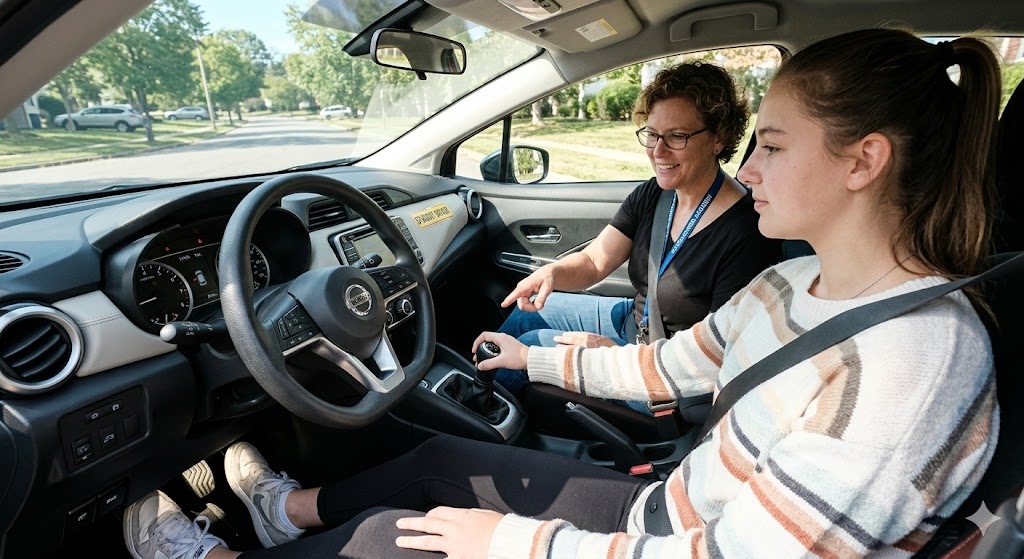
Learning how to drive a manual car can seem challenging at first, especially if you’ve never used a clutch pedal or shifted gears before. Many beginners feel nervous about stalling the engine, rolling back on hills, or changing gears smoothly. The good news is that manual driving is a skill anyone can learn with the right understanding and consistent practice.
In this blog, you will learn the basics of manual driving, including how the controls work and the step-by-step process of driving a manual car smoothly.
Highlights
- Learning to drive a manual car involves mastering the clutch, brake, and accelerator pedals while smoothly shifting gears, which can feel challenging at first but becomes easier with practice.
- Beginners gain better control, confidence, and a deeper understanding of how a car operates through consistent manual stick shift driving lessons and real-world practice.
- With guidance from experienced instructors, practice on hills, and awareness of common beginner mistakes, learners can safely drive a manual car and pass the driving test.
What is Manual Driving?
Manual driving refers to operating a vehicle with a manual transmission, where the driver is responsible for changing gears using a gear stick and clutch pedal. Unlike automatic cars, which shift gears on their own, a manual car requires the driver to manually control gear changes based on speed and road conditions.
In a manual car, there are three pedals:
- Clutch (far left)
- Brake (middle)
- Accelerator (right)
The clutch pedal is what makes manual driving different from automatic driving. When you press the clutch, you temporarily disconnect the engine from the wheels, allowing you to change gears smoothly. Releasing the clutch slowly while applying gentle acceleration helps the car move without stalling.
Why Learn to Drive a Manual Car?
Learning to drive a manual car gives you greater control over speed and acceleration, while also helping you better understand how a vehicle works. It also allows you to legally drive both manual and automatic cars in many places and can build stronger driving confidence.
- More Control Over the Vehicle: Manual driving allows you to choose when to change gears, giving you better control over acceleration and speed. This is especially helpful when driving on hills, highways, or in changing traffic conditions.
- Ability to Drive Both Manual and Automatic Cars: If you learn in a manual car and pass your driving test, you can legally drive both manual and automatic vehicles. However, if you test in an automatic car, you may be restricted from driving a manual vehicle (depending on local licensing rules).
- Better Understanding of How a Car Works: When learning how to drive a manual shift car, you develop a deeper understanding of engine performance, gear ratios, and clutch control. This knowledge can make you a more aware and responsible driver.
- Improved Driving Confidence: Manual drivers often feel more engaged and in control behind the wheel. Once you master clutch control and smooth gear changes, driving becomes more intuitive and less intimidating.
You may also read: Manual vs Automatic Driving – Which Should You Learn in 2026?
How to Drive a Manual Shift Car?
To drive a manual car, adjust your seat and mirrors, learn the pedals and gear positions, and practice smooth clutch control for starting, stopping, and changing gears. Regular practice, including hill starts and gradual acceleration, builds confidence and ensures safe, comfortable driving.
Step 1: Adjust Your Seat and Mirrors
Before starting the car, make sure your seat is positioned so you can comfortably reach all three pedals, clutch, brake, and accelerator. Adjust your mirrors for full visibility to ensure safe driving.
Step 2: Understand the Pedals and Gear Stick
- Clutch (left pedal): Press to disengage the engine from the wheels for smooth gear changes.
- Brake (middle pedal): Use to slow down or stop.
- Accelerator (right pedal): Controls your speed.
- Gear Stick: Learn the positions for first to fifth gear (or more in some cars) and reverse.
Step 3: Starting the Car
- Press the clutch fully.
- Make sure the gear stick is in neutral.
- Turn on the ignition.
- Keep the clutch pressed while preparing to move off.
Step 4: Moving Off Smoothly
- Press the clutch fully and shift into first gear.
- Slowly release the clutch until you reach the bite point (the point where the car starts to move).
- Gently press the accelerator while continuing to release the clutch.
- Once moving, release the clutch completely.
Step 5: Changing Gears
- Accelerate to the appropriate speed for the next gear.
- Press the clutch, shift to the next gear, then release the clutch smoothly.
- Avoid sudden movements to prevent stalling or jerky rides.
Step 6: Slowing Down and Stopping
- Press the clutch fully before the car slows too much to prevent stalling.
- Apply the brake to slow down.
- Shift down through the gears if necessary.
- Bring the car to a full stop and put it in neutral.
Step 7: Hill Starts
- Use the handbrake or clutch control method to prevent rolling backward.
- Press the clutch, shift into first gear, gently release the clutch to the bite point, and slowly press the accelerator while releasing the handbrake.
Step 8: Practice Regularly
The key to mastering manual driving is practice. Start in a quiet area, focus on smooth clutch control, and gradually move to busier streets as your confidence improves.
Book your manual stick shift driving lessons today!
Enroll in manual stick shift driving lessons at certified driving schools for manual transmission and gain confidence with professional guidance.
Common Mistakes Beginners Make in Manual Driving
Beginners often make mistakes like releasing the clutch too quickly, riding the clutch, or choosing the wrong gear, which can lead to stalling or jerky driving. Being aware of these errors and practicing smooth clutch control and proper gear changes helps build confidence and safer driving habits.
- Releasing the Clutch Too Quickly: One of the most common mistakes is letting go of the clutch too fast. This often causes the car to stall, especially when moving off from a stop. Always release the clutch slowly while applying gentle acceleration.
- Riding the Clutch: Keeping your foot partially on the clutch while driving is called “riding the clutch.” This can damage the clutch over time and make gear changes jerky. Make sure your foot is fully off the clutch when not shifting gears.
- Not Observing the Road: Focusing only on the gear stick or pedals while driving can be dangerous. Always check mirrors, blind spots, and traffic before changing gears or moving off.
- Incorrect Gear Selection: Shifting to the wrong gear can make the car struggle, jerk, or stall. Beginners sometimes stay in first gear too long or shift too early. Learn the correct speed range for each gear to drive smoothly.
- Panicking During Stalls: Stalling is normal when learning. Beginners often panic and release the clutch abruptly or try to start moving too quickly. Stay calm, press the clutch fully, put the car in neutral, and restart slowly.
- Poor Hill Starts: Rolling backward on hills is a common issue. Failing to use proper clutch control or handbrake technique can make hill starts stressful. Practice slowly on quiet inclines to build confidence.
Conclusion
Learning how to drive a manual car may feel challenging at first, but with patience and consistent practice, it becomes a valuable and rewarding skill. By understanding clutch control, smooth gear changes, and proper coordination between the pedals, beginners can gradually build confidence and control behind the wheel.
For learners who want extra guidance, Nirvana Driving offers professional manual driving lessons designed to help students gain real road experience and build the skills needed to pass the driving test with confidence. With the support of experienced instructors, beginners can improve their technique and become safe, capable manual drivers.
Call 045-053-0126 or book online with Nirvana Driving to start your manual stick shift driving lessons with experienced instructors today.
Frequently Asked Questions
How hard is it to drive a Manual car?
Driving a manual car (stick shift) is generally considered easy to learn once you understand the clutch and gear coordination, usually taking a few lessons for beginners to feel comfortable. It is more engaging and requires more concentration than automatic driving, particularly in heavy traffic or on hills, but it is not inherently difficult once it becomes second nature.
How to learn to drive Manual without a Manual car?
To learn to drive a manual driving without a manual car relies on building conceptual understanding and muscle memory through simulations, videos, and renting. Focus on understanding the clutch’s “bite point,” practicing gear sequences, and using racing simulators with a wheel/pedal setup.
How to drive a car with a manual transmission?
To drive a car with a manual transmission, press the clutch pedal, shift the gear into first gear, and slowly release the clutch while gently pressing the accelerator to move the car. As the speed increases, press the clutch again to shift into higher gears and release it smoothly while applying light acceleration.
How to drive Manual on a automatic car?
Driving a manual car involves mastering the clutch pedal (left) to switch gears with the gearstick while coordinating with the accelerator and brake. Start in neutral, depress the clutch, and turn the ignition. Release the clutch slowly to the “bite point” while gently pressing the gas to move forward.
How Long does it take to drive a Manual car?
Learning to drive a manual car generally takes between 20 and 30 hours of practice to feel confident, though basic, shaky operation can be learned in just a few hours. While some pick it up in a single day, achieving smooth, instinctive, and confident driving, especially in traffic or on hills, usually takes a few weeks of consistent practice.