
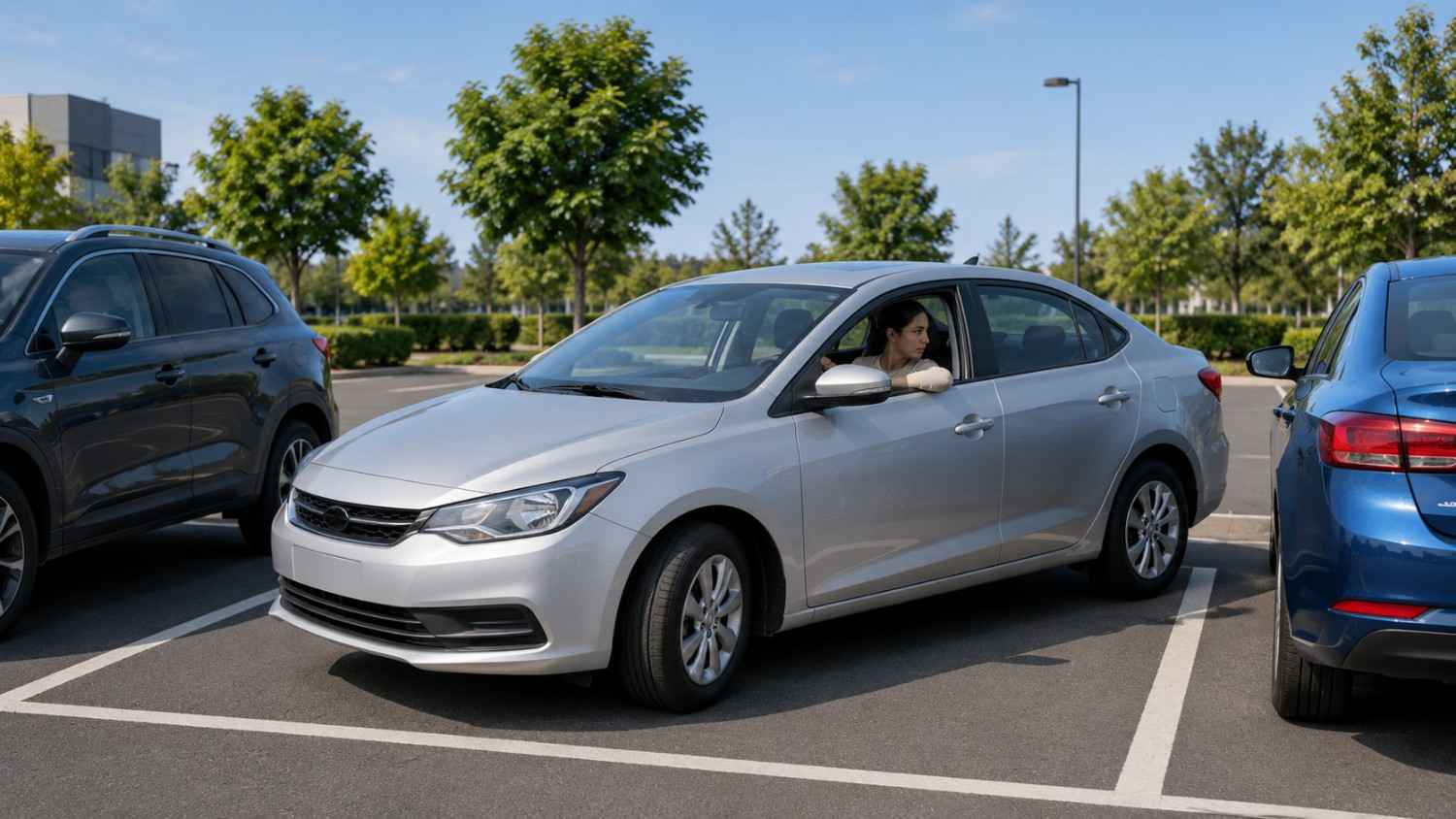
Parking is one of the most important driving skills every motorist needs to master. Whether you’re a new driver preparing for your driving test or someone looking to improve your confidence behind the wheel, learning how to park a car correctly can make driving safer and less stressful.
Many drivers find parking challenging at first, especially when dealing with tight spaces, busy streets, or different parking layouts. However, with the right techniques and enough practice, anyone can learn to park smoothly and accurately.
In this guide, you’ll learn how to park a car step by step. We’ll also explain how parking procedures differ between automatic and manual cars and highlight common mistakes to avoid.
Key Highlights
- Parking is an essential driving skill that helps improve safety, control, and confidence.
- The most common types of car parking include parallel parking, angle parking, and perpendicular or bay parking.
- Automatic cars are usually parked by stopping fully, shifting to Park, and applying the parking brake.
- Manual cars should be secured with the parking brake and the correct gear, especially when parking on a slope.
- Beginners should always check mirrors, blind spots, pedestrians, road signs, and nearby vehicles before parking.
What are the Types of Car Parking?
The types of car parking include parallel parking, angle parking, and perpendicular parking.
1. Parallel Parking
Parallel parking is a type of parking where the car is parked in line with the road, usually between two vehicles and close to the curb. This type of parking is commonly used on streets, near homes, shops, schools, and busy city areas where parking spaces are limited.
How to do parallel parking:
Step 1: Find a Suitable Parking Space
Choose a space that is longer than your car and legal to park in. Make sure there are no “No Parking” signs, driveways, fire hydrants, or restricted areas.
Step 2: Signal and Slow Down
Turn on your indicator to show other drivers that you are going to park. Slow down and approach the space carefully.
Step 3: Position Your Car Beside the Front Vehicle
Stop next to the car parked in front of the empty space. Keep a safe distance between your car and the parked car, usually about 2 to 3 feet.
Step 4: Check Mirrors and Blind Spots
Before reversing, check your mirrors, look over your shoulder, and make sure there are no pedestrians, cyclists, or vehicles behind you.
Step 5: Reverse Slowly and Turn the Steering Wheel
Begin reversing slowly. Turn your steering wheel toward the curb so the back of your car starts moving into the parking space.
Step 6: Straighten the Steering Wheel
When your car is angled into the space, straighten the steering wheel and continue reversing slowly.
Step 7: Turn the Wheel the Opposite Way
Turn the steering wheel away from the curb to bring the front of your car into the space.
Step 8: Adjust Your Position
Move forward or backward slightly if needed. Make sure your car is straight, close to the curb, and not too close to the vehicles in front or behind.
Step 9: Secure the Car
Once parked, shift to Park if you drive an automatic car, or select the correct gear if you drive a manual car. Apply the parking brake before leaving the vehicle.
You may also read: What is Reverse Parallel Parking?
2. Angle Parking
Angle parking is when a car is parked at an angle instead of straight forward or parallel to the road. This type of parking is often seen in parking lots, shopping areas, one-way streets, and places where vehicles are arranged diagonally.
How to do angle parking:
Step 1: Choose an Empty Angled Space
Look for a space that is wide enough for your car. Make sure there are no people, carts, or obstacles in the way.
Step 2: Signal Your Intention
Use your indicator to show that you are turning into the parking space.
Step 3: Approach Slowly
Drive slowly toward the parking space. Keep enough distance from the parked cars so you can turn smoothly.
Step 4: Turn Into the Space
When the front of your car reaches the space, gently turn the steering wheel into the parking bay. Follow the angle of the lines.
Step 5: Center the Car
As you enter the space, keep your car between the parking lines. Avoid getting too close to either side.
Step 6: Straighten the Wheels
Once your car is fully inside the space, straighten the steering wheel.
Step 7: Stop Safely
Stop before your car reaches the curb, wall, parking block, or vehicle in front.
Step 8: Secure the Vehicle
Put the car in Park if it is automatic, or select the correct gear if it is manual. Apply the parking brake.
Step 9: Be Careful When Reversing Out
When leaving an angled parking space, reverse slowly. Check mirrors, blind spots, and both sides carefully because your view may be blocked by nearby vehicles.
3. Perpendicular Parking (Bay Parking)
Perpendicular parking, also called bay parking, is when a car is parked at a 90-degree angle to the road, curb, wall, or parking-lot lane. This is one of the most common types of parking in malls, supermarkets, schools, offices, apartment buildings, and public parking areas.
How to do perpendicular or bay parking:
Step 1: Find a Suitable Bay
Choose an empty parking bay that is wide enough for your car. Check that the space is legal and free from obstacles.
Step 2: Slow Down and Signal
Reduce your speed and use your indicator if needed. Let other drivers know you are going to park.
Step 3: Position Your Car Correctly
Keep enough space between your car and the row of parked cars. This gives you more room to turn into the bay.
Step 4: Check Your Surroundings
Look for pedestrians, cyclists, shopping carts, moving vehicles, and other obstacles before turning.
Step 5: Turn Into the Parking Bay
When your car reaches the right turning point, turn the steering wheel toward the parking space. Move slowly and carefully.
Step 6: Straighten the Car
As your car enters the bay, straighten the steering wheel. Try to keep the car centered between the lines.
Step 7: Stop Fully Inside the Space
Move forward until your car is completely inside the parking bay. Stop before touching the curb, wall, parking block, or another vehicle.
Step 8: Adjust If Needed
If your car is not straight or is too close to one line, stop and correct your position carefully. It is better to adjust than to leave the car badly parked.
Step 9: Secure the Car
Shift into Park in an automatic car, or select the correct gear in a manual car. Apply the parking brake before getting out.
Learn to Park with Confidence
Book a professional driving lesson and learn how to parallel park, angle park, bay park, and prepare for your driving test with confidence.
Book Your Lesson TodayHow to Park an Automatic Car?
Parking an automatic car is generally easier than parking a manual vehicle because the transmission handles gear changes automatically. However, following the correct parking procedure is important to ensure your vehicle remains secure and to prevent unnecessary wear on the transmission.
Step-by-Step Guide to Parking an Automatic Car
Step 1: Find a Suitable Parking Space
Choose a parking space that provides enough room for your vehicle. Check for signs, parking restrictions, pedestrians, cyclists, and nearby vehicles before maneuvering into the space.
Step 2: Position Your Vehicle
Slow down and align your car with the parking space. Depending on the situation, you may need to perform parallel parking, angle parking, or perpendicular parking.
Step 3: Stop the Vehicle Completely
Once your car is properly positioned within the parking lines or alongside the curb, press the brake pedal and bring the vehicle to a complete stop.
Step 4: Shift the Gear Lever to Park (P)
Move the gear selector into the “Park” (P) position. This locks the transmission and helps prevent the vehicle from rolling.
Step 5: Engage the Parking Brake
Even when the transmission is in Park, it is recommended to apply the parking brake. This provides an additional layer of security and reduces stress on the transmission’s parking mechanism.
Step 6: Turn Off the Engine
After engaging the parking brake and shifting into Park, switch off the engine and remove the key if applicable.
Step 7: Check Your Surroundings Before Exiting
Before opening the door, check mirrors and blind spots for passing vehicles, cyclists, or pedestrians.
How to Park a Manual Car?
Parking a manual car requires a few additional steps because the transmission does not have a dedicated Park (P) position like an automatic vehicle. Drivers must rely on the parking brake and gear selection to keep the vehicle securely parked.
Step-by-Step Guide to Parking a Manual Car
Step 1: Choose a Safe Parking Spot
Ensure the parking area is legal, safe, and large enough for your vehicle. Check for traffic, pedestrians, and parking restrictions before parking.
Step 2: Position the Vehicle Correctly
Carefully maneuver your car into the parking space using the appropriate parking method. Keep the vehicle centered and within the marked boundaries.
Step 3: Stop the Vehicle Completely
Press the brake pedal and bring the vehicle to a complete stop before taking further action.
Step 4: Apply the Parking Brake
Engage the handbrake or parking brake firmly. This is the primary mechanism that prevents a manual vehicle from rolling when parked.
Step 5: Select the Appropriate Gear
Unlike automatic cars, manual vehicles should be left in gear after parking.
- On level ground: Leave the car in first gear or reverse gear.
- When facing uphill: Leave the car in first gear.
- When facing downhill: Leave the car in reverse gear.
The selected gear helps prevent unintended vehicle movement if the parking brake fails.
Step 6: Turn Off the Engine
Once the parking brake is engaged and the vehicle is in gear, switch off the engine and remove the key.
Step 7: Position the Wheels on Hills
If parking on a slope, turn the front wheels toward or away from the curb, depending on whether the vehicle is facing uphill or downhill. This helps prevent the car from rolling into traffic if it moves unexpectedly.
You may also read: Manual vs. Automatic – Which Car Driving Should You Learn?
Common Parking Mistakes to Avoid
Common parking mistakes include ignoring restrictive signage, blocking driveways, and parking too far from the curb. In parking lots, failing to stay within the lines, pulling into restricted spaces like disabled spots, and driving at excessive speeds lead to expensive fines or minor accidents.
1. Failing to Check Mirrors and Blind Spots
One of the most common parking mistakes is relying solely on the front view while ignoring mirrors and blind spots. Pedestrians, cyclists, vehicles, or obstacles may be hidden from direct view, increasing the risk of a collision.
How to avoid it:
- Check all mirrors before and during parking.
- Perform shoulder checks when necessary.
- Stay aware of pedestrians and moving vehicles nearby.
2. Parking Too Quickly
Many drivers rush the parking process, especially in busy areas where they feel pressure from other motorists. Parking too quickly can lead to poor positioning, curb damage, or contact with nearby vehicles.
How to avoid it:
- Slow down before entering a parking space.
- Take your time to align the vehicle properly.
- Make adjustments if needed instead of forcing the maneuver.
3. Misjudging the Size of the Parking Space
Attempting to park in a space that is too small can result in multiple corrections, blocked traffic, or accidental damage to surrounding vehicles.
How to avoid it:
- Assess the available space before parking.
- Choose a larger spot if you’re unsure.
- Allow enough room to open doors and maneuver safely.
4. Ignoring Parking Lines
Parking outside the designated lines can make it difficult for neighboring vehicles to park or exit their spaces. It may also result in warnings or fines in some parking facilities.
How to avoid it:
- Center your vehicle within the parking space.
- Use mirrors or parking cameras to check alignment.
- Reposition the vehicle if necessary.
5. Forgetting to Use Turn Signals
Failing to signal before parking can confuse other road users and increase the likelihood of accidents, particularly on busy roads or in crowded parking lots.
How to avoid it:
- Activate your turn signal well before slowing down.
- Clearly communicate your intention to park.
- Keep the signal on until the maneuver is complete.
6. Not Using the Parking Brake
Some drivers rely entirely on the transmission to hold the vehicle in place, especially when driving automatic cars. This can place unnecessary stress on the transmission and increase the risk of vehicle movement.
How to avoid it:
- Always engage the parking brake after parking.
- Use the parking brake on both flat surfaces and hills.
- Ensure the brake is fully applied before leaving the vehicle.
7. Parking Too Close to Other Vehicles
Parking too close to neighboring vehicles can make it difficult for drivers and passengers to enter or exit their cars. It also increases the risk of scratches, dents, and door dings.
How to avoid it:
- Leave sufficient space on both sides of your vehicle.
- Position the car in the center of the parking space.
- Avoid squeezing into extremely tight spaces when possible.
8. Neglecting Hill Parking Procedures
Improper hill parking can cause a vehicle to roll if the parking brake fails. This is particularly dangerous on steep roads and inclines.
How to avoid it:
- Apply the parking brake firmly.
- Leave a manual vehicle in gear.
- Turn the wheels correctly when parking uphill or downhill.
9. Relying Too Much on Parking Sensors and Cameras
Parking sensors and backup cameras are useful tools, but they should not replace proper observation and driving judgment. Some obstacles may not be detected by these systems.
How to avoid it:
- Use mirrors and direct visual checks.
- Treat parking technology as an aid, not a substitute.
- Remain aware of your surroundings at all times.
10. Failing to Check Surroundings Before Exiting
Many accidents occur after parking when drivers or passengers open doors without checking for approaching cyclists, pedestrians, or vehicles.
How to avoid it:
- Look in mirrors before opening the door.
- Check for traffic, cyclists, and pedestrians.
- Exit the vehicle carefully and safely.
11. Parking in Restricted Areas
Parking in prohibited zones can result in fines, towing, or legal penalties. Common examples include fire lanes, loading zones, disabled parking spaces without authorization, and no-parking areas.
How to avoid it:
- Read all parking signs carefully.
- Follow local parking regulations.
- Verify time restrictions before leaving your vehicle.
12. Leaving the Vehicle Unsecured
Forgetting to lock the doors, close windows, or secure valuables can increase the risk of theft or unauthorized access.
How to avoid it:
- Lock all doors before walking away.
- Close windows completely.
- Avoid leaving valuable items visible inside the vehicle.
You may also read: What Is a Safe Following Distance When Driving?
Conclusion
Learning how to park a car is an important part of becoming a safe and confident driver. At first, parking may feel confusing because you need to control the steering, brakes, mirrors, blind spots, and vehicle position at the same time. However, with regular practice and the right technique, parking becomes much easier.
If you want to improve your parking skills faster and prepare for your driving test, learning with a professional driving school can make a big difference. Nirvana Driving School helps beginner drivers understand parking techniques step by step, including parallel parking, angle parking, bay parking, and safe vehicle control.
With proper guidance and regular practice, you can avoid common parking mistakes, build confidence behind the wheel, and increase your chances of passing your driving test. Book your driving lesson today with Nirvana Driving!
FAQs
1. What to do when someone hits your parked car in Australia?
If someone hits your parked car in Australia, first check if anyone is injured. If there is an emergency, call 000. If it is safe, take photos of the damage, note the time and location, collect the other driver’s details, and contact your insurance provider. If the other driver leaves without sharing details, report the incident to the police.
2. What to do if you hit a parked car in Australia?
If you hit a parked car, stop immediately and check for damage. Try to find the owner of the vehicle and share your name, contact details, vehicle registration number, and insurance details. If the owner is not nearby, leave a clear note with your details and report the accident to the police if required in your state or territory. Do not leave the scene without taking responsible action.
3. Can you park an unregistered car on the street?
In many areas of Australia, an unregistered car should not be parked on a public street. Public roads are generally for registered and legally parked vehicles. Rules can vary by state, territory, and local council, so it is best to check your local transport authority or council website before leaving an unregistered vehicle on the road.
4. Does insurance cover a car park accident?
Insurance covers a car park accident depending on your policy type and the situation. Comprehensive car insurance usually covers accidental damage to your own vehicle, while third-party property insurance may cover damage you cause to someone else’s vehicle or property. Always check your policy details and contact your insurer after an accident.
5. Where do I park my car?
You should park your car in a legal, safe, and clearly marked parking space. Look for parking signs, road markings, time limits, permit requirements, and restricted areas before leaving your vehicle. Avoid parking in driveways, disabled spaces without a valid permit, fire lanes, loading zones, bus stops, or areas marked “No Parking.”