
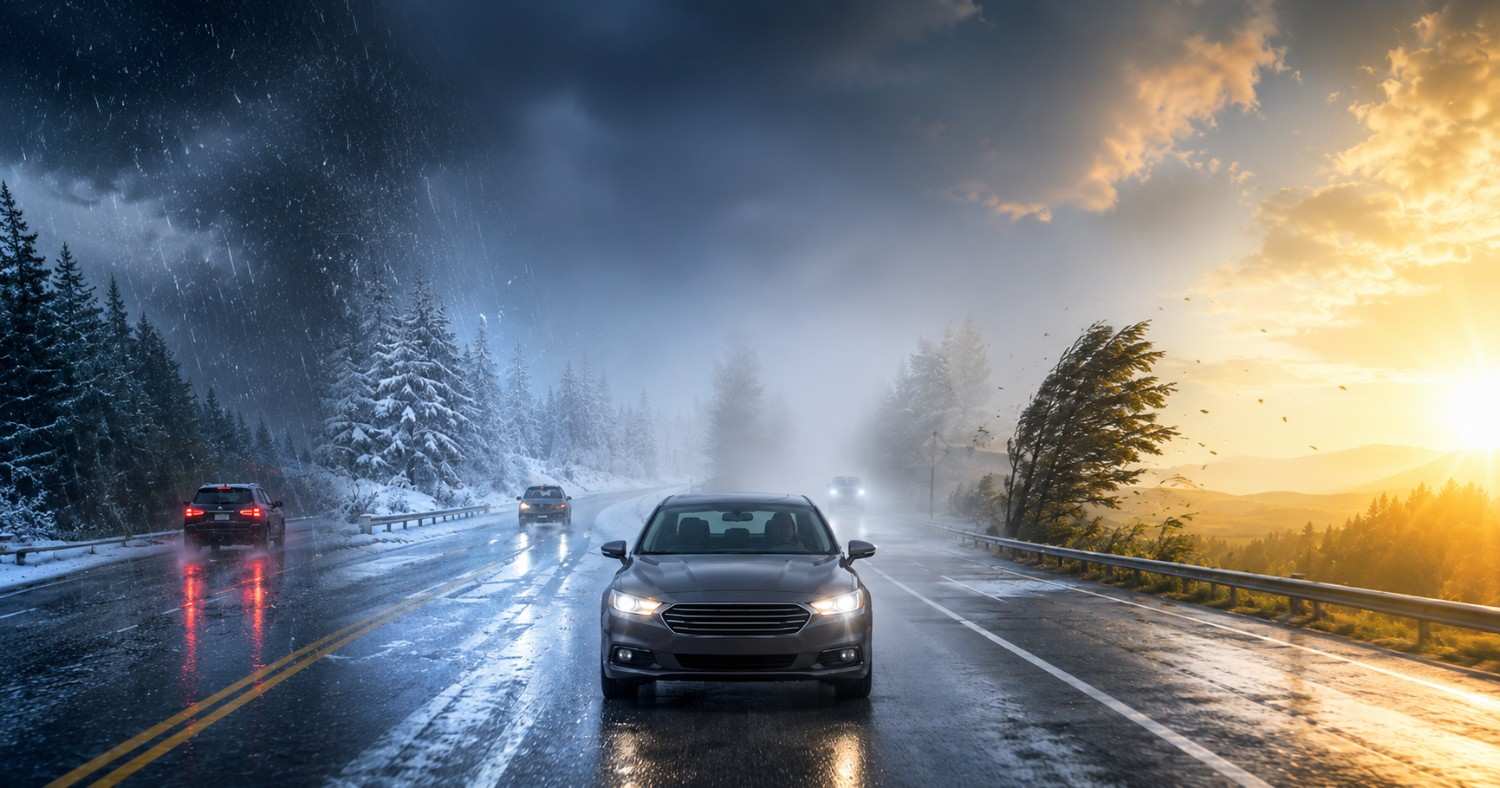
Driving in different weather conditions can be challenging for both new and experienced drivers. Rain, snow, fog, strong winds, storms, and bright sunlight can change how your vehicle reacts on the road. These conditions can reduce visibility, weaken tyre grip, and increase stopping distance.
You need to adjust your speed, steering, braking, and following distance based on the weather. A road that feels safe in clear weather can become risky when it is wet, icy, foggy, or windy. Therefore, understanding how to drive in different weather conditions helps you stay alert, avoid sudden mistakes, and make safer decisions behind the wheel.
In this guide, you will learn to drive in different weather conditions. You will also discover common mistakes drivers make in bad weather and how to avoid them.
Key Highlight
- Driving in different weather conditions requires you to slow down, stay alert, and adjust your driving style according to the road situation.
- Rain, snow, fog, wind, storms, and bright sunlight can reduce visibility, lower tyre grip, and increase stopping distance.
- Drivers should keep extra space from other vehicles, brake smoothly, use the correct lights, and avoid sudden steering movements in bad weather.
- Proper driving lessons can help learners understand weather-related risks and build the confidence needed to handle real road conditions safely.
Why Driving in Different Weather Conditions Requires Extra Caution
Driving in different weather conditions requires extra caution because the weather can quickly change how your vehicle handles the road. Rain can make roads slippery, snow and ice can reduce tyre grip, fog can limit your view, and strong winds can affect steering control.
You need to adjust your driving style based on the weather around you. Slowing down, keeping more distance, braking smoothly, and using the right lights can help you stay in control and react safely to sudden hazards.
Driving in Different Weather Conditions
Driving in different weather conditions requires adjusting your speed, increasing following distance, and staying alert to changing road conditions. Safe driving habits and proper vehicle preparation help reduce the risk of accidents in rain, snow, fog, or strong winds.
1. Driving in Rain and Wet Roads
Rain makes roads slippery and reduces tyre grip, especially when water mixes with oil, dust, and dirt on the road surface. Wet roads can increase braking distance and make it harder for drivers to stop safely in an emergency.
Heavy rain can also reduce visibility and increase the risk of hydroplaning, where the tyres lose contact with the road because of standing water. Drivers should stay calm, avoid sudden movements, and drive slower than usual.
Safety tips for driving in rain and wet roads:
- Reduce your speed.
- Increase the distance between your vehicle and the one ahead.
- Turn on the headlights to improve visibility.
- Use windshield wipers properly.
- Avoid sudden braking or sharp turns.
- Do not use cruise control on wet roads.
- Avoid driving through deep water or flooded areas.
2. Driving in Snow and Ice
Snow and ice can make roads extremely slippery, reducing traction and making it difficult to steer, brake, or accelerate safely. Even a small amount of ice can cause a vehicle to skid, especially on bridges, hills, and shaded areas.
Before driving in snow or ice, drivers should clear snow from the windshield, windows, mirrors, roof, and lights. Driving slowly and smoothly is important because sudden braking, acceleration, or steering can cause loss of control.
Safety tips for driving in snow and ice:
- Drive slowly and carefully.
- Leave much more space than usual.
- Brake gently and avoid sudden stops.
- Accelerate slowly to prevent wheel spin.
- Watch for black ice on bridges and shaded roads.
- Clear all snow and ice from your vehicle before driving.
- Carry a winter emergency kit.
3. Driving in Fog and Low Visibility
Fog can make driving dangerous because it reduces how far drivers can see ahead. It can also make it difficult to judge the speed and distance of other vehicles, road signs, pedestrians, and lane markings.
When driving in fog, drivers should slow down and use low-beam headlights. High-beam headlights should be avoided because they reflect off the fog and create glare, making visibility even worse.
Safety tips for driving in fog and low visibility:
- Slow down before entering fog.
- Use low-beam headlights.
- Use fog lights when visibility is very poor.
- Do not use high-beam headlights.
- Keep a safe distance from other vehicles.
- Follow road markings carefully.
- Pull over safely if visibility becomes too poor.
4. Driving in High Winds and Storms
High winds can make it difficult to keep a vehicle steady, especially on bridges, open roads, and highways. Strong gusts may push vehicles out of their lane, and larger vehicles such as trucks, vans, and buses can be affected even more.
Storms can also bring heavy rain, falling branches, debris, and poor visibility. Drivers should reduce speed, hold the steering wheel firmly, and avoid driving near trees, power lines, or objects that could fall onto the road.
Safety tips for driving in high winds and storms:
- Hold the steering wheel firmly with both hands.
- Reduce speed on open roads and bridges.
- Keep extra distance from large vehicles.
- Watch for debris, fallen branches, and power lines.
- Avoid sudden steering movements.
- Do not overtake large vehicles during strong winds.
- Delay travel if the storm is severe.
5. Driving in Hot Weather and Bright Sunlight
Hot weather can affect both the driver and the vehicle. High temperatures can cause tiredness, dehydration, engine overheating, and tyre pressure problems, especially during long journeys.
Bright sunlight can also create glare, making it harder to see traffic lights, road signs, pedestrians, and other vehicles. Drivers should keep the windshield clean, use sun visors or sunglasses, and slow down if sunlight affects their vision.
Safety tips for driving in hot weather and bright sunlight:
- Keep the vehicle cool and well ventilated.
- Use sunglasses or sun visors to reduce glare.
- Check tyre pressure and tyre condition.
- Monitor coolant levels and engine temperature.
- Carry drinking water on long trips.
- Keep the windshield clean.
- Never leave children, pets, or passengers inside a parked car.
Build Confidence in Different Weather Conditions
Learn safe speed control, smooth braking, proper following distance, and better hazard awareness for rain, fog, wind, and wet roads.
Book Your Driving LessonCommon Mistakes Drivers Make in Bad Weather
Bad weather increases the risk of accidents when drivers fail to adjust their driving or ignore safety precautions. Slowing down, staying alert, and preparing your vehicle can help keep you safe.
1. Driving Too Fast for the Conditions
One of the biggest mistakes drivers make in bad weather is driving too fast. Even if the speed limit allows it, rain, snow, fog, or strong winds may require a much slower speed to stay safe.
2. Following Other Vehicles Too Closely
Bad weather increases stopping distance, especially on wet, icy, or slippery roads. Drivers should leave extra space between their vehicle and the one ahead to avoid rear-end collisions.
3. Using the Wrong Headlights
Using high beams in fog, heavy rain, or snow can make visibility worse because the light reflects back toward the driver. Low-beam headlights or fog lights are usually safer in poor visibility.
4. Braking Suddenly
Sudden braking can cause the vehicle to skid, especially on wet, snowy, or icy roads. Drivers should brake gently and slow down early when approaching turns, traffic, or intersections.
5. Using Cruise Control on Slippery Roads
Cruise control can be risky in rain, snow, or ice because the driver may need quick control over speed. It is better to keep full control of the accelerator and adjust speed manually.
6. Ignoring Tire Condition
Worn or underinflated tyres reduce grip and make it harder to stop safely in bad weather. Drivers should check tyre tread and pressure regularly, especially before long trips or seasonal weather changes.
7. Driving Through Flooded Roads
Many drivers underestimate the danger of floodwater. Even shallow-looking water can hide road damage, stall the engine, or sweep a vehicle away.
8. Not Clearing Snow or Ice from the Vehicle
Driving with snow or ice on the windshield, mirrors, lights, or roof reduces visibility and creates hazards for other road users. Drivers should clear the entire vehicle before starting the journey.
9. Overcorrecting During a Skid
When a vehicle begins to skid, some drivers panic and turn the steering wheel too sharply. This can make the skid worse, so it is important to stay calm, ease off the accelerator, and steer gently.
10. Ignoring Weather Warnings
Some drivers continue travelling even when weather warnings suggest dangerous conditions. If the weather is severe, delaying the trip or choosing a safer route can prevent unnecessary risk.
Conclusion
Driving in different weather conditions becomes safer when you understand how to adjust your driving before the situation becomes risky. Rain, snow, fog, wind, and bright sunlight can all affect visibility, braking distance, and vehicle control. That is why drivers should slow down, keep more distance, brake smoothly, use the right lights, and stay alert to changing road conditions.
Every weather condition requires a different driving approach, and learning these skills can help drivers stay calm, avoid sudden mistakes, and make safer decisions on the road. This is where Nirvana Driving can help.
With structured driving lessons, practical safety guidance, and real-world road awareness training, Nirvana Driving prepares learners to handle different weather conditions confidently while also building the skills needed to pass the driving test. Book your driving lesson today with Nirvana Driving!
FAQs
1. Can bad weather affect my driving test?
Yes, bad weather can affect your driving test because rain, fog, wind, or poor visibility may make road conditions more challenging. During the test, the examiner will expect you to adjust your speed, use the correct lights, keep a safe distance, and drive according to the conditions.
2. Will my driving test be cancelled because of bad weather?
A driving test may be cancelled if the weather makes roads unsafe, such as heavy snow, flooding, thick fog, or icy conditions. If the weather is only mild, the test may still go ahead, and you will need to show safe control of the vehicle.
3. How can driving lessons help me prepare for bad weather?
Driving lessons can help you learn how to control the vehicle safely in rain, fog, wind, and other difficult conditions. A driving instructor can teach you how to slow down safely, improve observation, use lights correctly, and make better decisions in changing weather.
4. What should learner drivers do when the weather changes suddenly?
Learner drivers should stay calm, reduce speed, increase following distance, and listen carefully to their instructor or examiner. Sudden weather changes are a good test of awareness, planning, and safe decision-making.
5. Is it better to practice driving in different weather conditions?
Yes, supervised practice in different weather conditions can help learners become more confident and prepared. Practising in light rain, windy conditions, or low visibility helps drivers understand how the car reacts and how to adjust safely.
6. How does poor weather affect hazard perception?
Poor weather can make hazards harder to see and reduce the time a driver has to react. Learners should scan the road carefully, check mirrors more often, and look out for pedestrians, cyclists, road markings, and vehicles that may appear suddenly.
7. What should I do if I feel nervous driving in bad weather?
If you feel nervous, slow down, keep extra space, and avoid rushing. Nervous drivers can benefit from professional driving lessons because an instructor can help build confidence through safe, guided practice.