
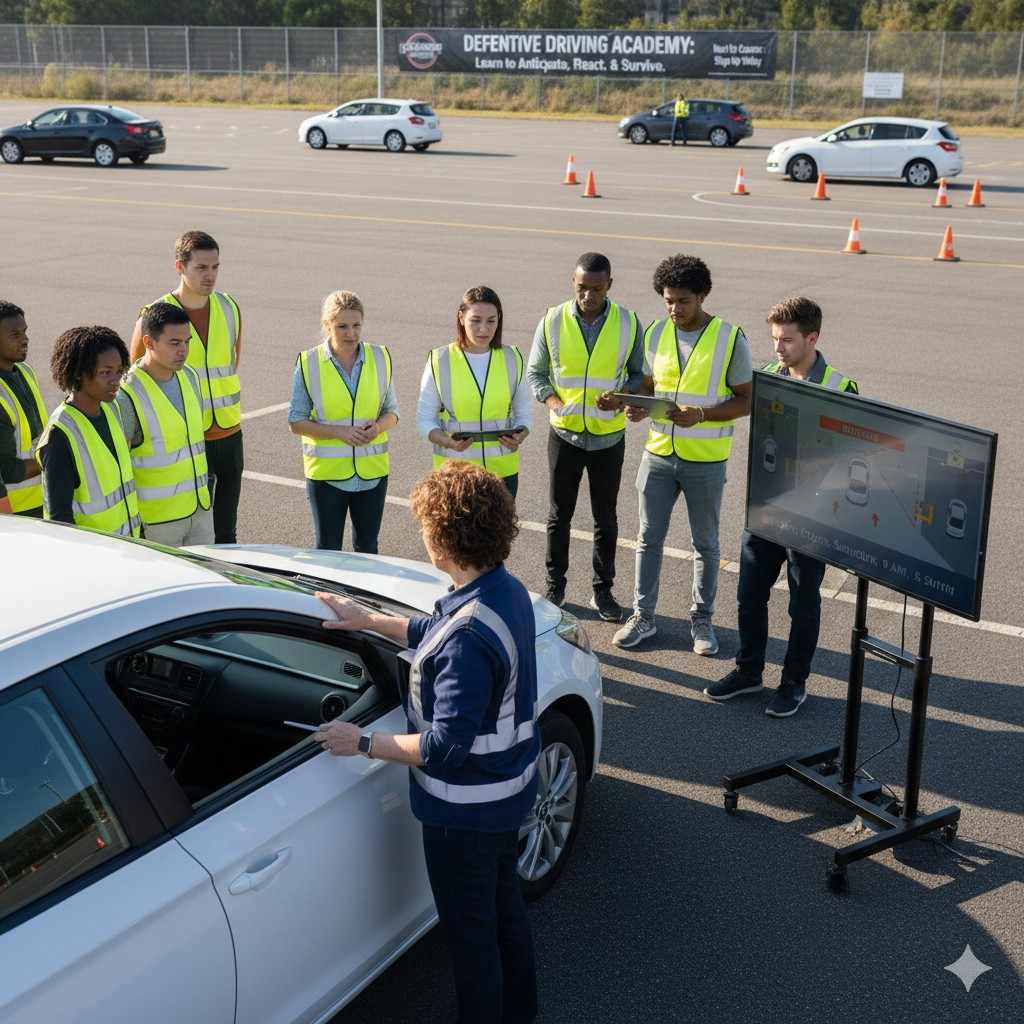
Road conditions, traffic density, and unpredictable driver behavior make driving more challenging than ever. Learning how to stay in control, reduce risk, and respond calmly to unexpected situations is essential for every driver, which is why understanding defensive driving and how to develop these skills has become an important part of modern driver education.
In this blog, we explore the key principles of defensive driving, practical techniques that help reduce risks on the road, and the benefits of adopting a safety-focused driving mindset.
Highlights
- Defensive driving is a smart and proactive way of driving that helps you avoid potential hazards, stay alert to changing road conditions, and make safe decisions behind the wheel.
- Defensive driving techniques include hazard perception, safe spacing, speed control, mirror and blind-spot checks, avoiding distractions, and anticipating other drivers’ actions.
- Defensive driving helps reduce the risk of accidents, improves road awareness, and boosts confidence by teaching safer decision-making behind the wheel.
- You can learn to drive defensively through professional driving courses, online resources, and safety videos that teach hazard awareness, vehicle control, and smarter decision-making on the road.
What Is Defensive Driving?
Defensive driving is a driving method that prioritizes safety by anticipating risks, adjusting to road conditions, and responding calmly to other road users’ mistakes. In simple terms, it means driving in a way that helps you avoid collisions even when others make errors.
Defensive Driving Techniques You Should Know
Defensive driving techniques include maintaining a safe following distance of three seconds or more, continuously monitoring the road, and using indicators correctly to communicate intentions. They also involve managing space around the vehicle, adjusting speed to suit road and weather conditions, regularly checking blind spots, and anticipating that other drivers may act unpredictably.
Some of the most effective techniques include:
- Stay Alert & Scan: Frequently check mirrors, and look 20-30 seconds ahead for potential problems, not just the car in front.
- Manage Space: Use the 3-second rule (or more in bad weather/traffic) for following distance and maintain space to the sides and rear to give yourself escape routes.
- Minimize Distractions: Put your phone away, avoid eating, and keep passenger conversations brief to keep your full attention on driving.
- Control Speed: Obey speed limits and reduce speed for rain, fog, or heavy traffic to improve control and reaction time.
- Signal Clearly: Always use your turn signals well in advance to communicate your intentions to others.
- Anticipate & Expect the Unexpected: Assume other drivers might be distracted or make errors; slow down for potential turns at intersections, don’t assume they see you.
- Check Blind Spots: Always shoulder-check before changing lanes or merging to ensure no one is there.
- Know Your Vehicle: Understand your car’s capabilities and limits, especially its braking distance and handling.
- Adjust for Conditions: Slow down in rain, fog, or snow to prevent skidding and increase visibility by using headlights.
Start building safer driving habits today!
Enrol in a defensive-focused lesson with Nirvana Driving.
Benefits of Defensive Driving
Defensive driving offers significant benefits in safety enhancement, financial savings, and personal well-being. By adopting proactive driving techniques, you can anticipate and avoid hazards regardless of road conditions or the actions of other drivers.
Key benefits include:
- Accident Reduction: The primary benefit is significantly reducing the likelihood of accidents and minimizing the severity of those that do occur. By analyzing the road, maintaining safe following distances, and being prepared for the unexpected, drivers can react appropriately and avoid collisions.
- Enhanced Safety: It helps protect yourself, your passengers, and other road users like pedestrians and cyclists. This proactive approach makes roads safer for everyone.
- Fewer Legal Issues: By diligently following traffic laws and safe driving practices, you are less likely to incur traffic violations, fines, or points on your license. In some cases, completing a course can even help reduce existing penalties.
- Reduced Vehicle Costs: Smooth acceleration, gentle braking, and anticipating traffic flow can decrease wear and tear on your vehicle’s brakes, tires, and engine, leading to less frequent repairs and maintenance.
- Increased Confidence and Lower Stress: Knowing how to handle various challenging situations, such as adverse weather or heavy traffic, can reduce driving anxiety and road rage. This leads to a more relaxed and focused driving experience.
- Better Driving Skills: Defensive driving courses and practice help instill lifelong safe driving habits and a greater understanding of road rules and vehicle dynamics for drivers of all experience levels.
How Can I Learn To Drive Defensively?
You can learn to drive defensively by taking professional driving lessons or safer driving courses that teach hazard awareness, vehicle control, and proper risk management. You can also use online resources and safety videos to understand real-world scenarios and reinforce good defensive driving habits.
1. Enroll in Defensive Driving Lessons
Taking professional driving lessons or a safer driving course is one of the best ways to develop defensive driving techniques. Instructors teach key topics such as hazard perception, vehicle control, emergency responses, and risk management to help you make safer decisions on the road.
2. Use Online Learning Resource
You can also build knowledge through online materials such as articles, tutorials, and interactive learning tools that explain defensive driving concepts in an easy-to-understand way.
3. Watch Advanced Driving & Safety Videos
Watching videos that demonstrate advanced driving skills and defensive driving scenarios can help you visualise how to react in real road situations. These videos often break down common hazards, show safe responses, and reinforce good habits for everyday driving.
Conclusion
Defensive driving focuses on awareness, anticipation, and smart decision-making to reduce risks and create safer roads for everyone. By learning these skills through structured training and guided practice, drivers can build confidence, improve hazard perception, and develop safer habits behind the wheel.
To support this, Nirvana Driving offers personalised lessons that integrate defensive driving techniques, helping learners strengthen their awareness, improve decision-making, and safely navigate real-world traffic conditions.
Ready to become a safer and more confident driver? Book your lesson with Nirvana Driving today.
FAQs
Is defensive driving suitable for experienced drivers?
Yes, defensive driving helps experienced drivers correct bad habits and stay sharp.
How long does it take to learn defensive driving?
Basic defensive driving can be learned in a few hours, but mastery comes with practice.
Is defensive driving only for city driving?
No, defensive driving is useful on highways, rural roads, and in all driving conditions.