
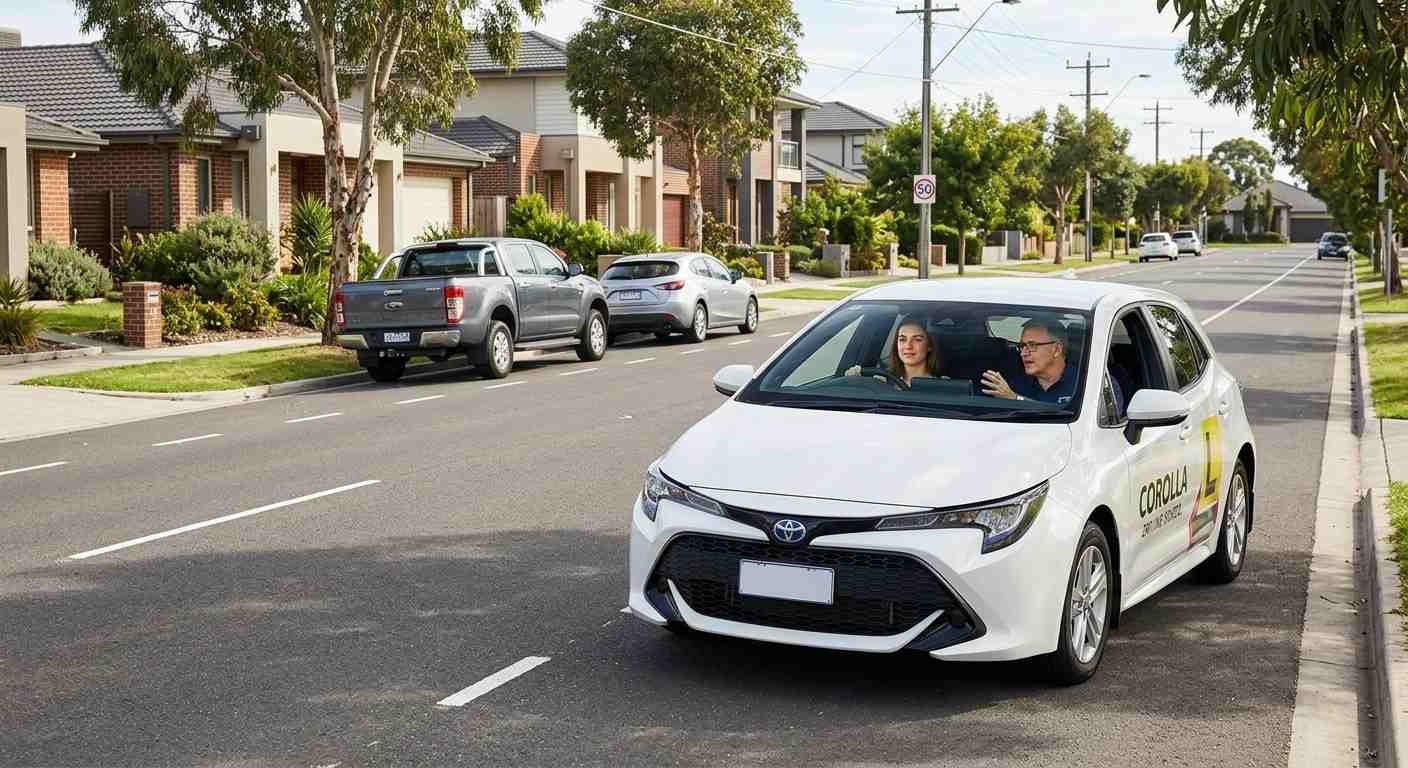
Finding a quiet road to practise on can make driving practice much more comfortable, particularly when you’re still building confidence on Melbourne’s roads. Areas with lighter traffic, straightforward intersections, good visibility, and lower-speed streets provide a more manageable environment for practising without the pressure of heavy traffic.
Melbourne has plenty of residential streets, suburban areas, and quieter road sections that can be suitable for beginner drivers. However, the best place to practise depends on your current experience and the skills you want to improve, whether that’s turning, parking, lane positioning, roundabouts, or simply becoming more comfortable behind the wheel.
In this guide, we’ll look at some of the best quiet roads and areas in Melbourne for beginner drivers, along with what each area is best suited for, when to practise, and how to progress to busier roads as your confidence grows.
What Makes a Road Suitable for Beginner Drivers?
A suitable practice road should give beginner drivers enough space and time to make decisions without dealing with unnecessarily complex traffic conditions. When choosing a quiet road in Melbourne, consider these factors:
- Low Traffic Volume: Roads with lighter traffic give beginners more time to observe their surroundings, practise steering and braking, and respond to other road users.
- Lower Speed Limits: Lower-speed streets give beginners more time to identify hazards, make decisions, and maintain safe vehicle control.
- Simple Intersections: Roads with straightforward intersections, clear signs, and good visibility are useful for practising turns, stop signs, give-way rules, and observation.
- Good Visibility: Look for roads with clear sightlines and fewer sharp bends, blind corners, or obstacles that can make it harder to identify approaching vehicles and pedestrians.
- Fewer Parked Cars: Streets with fewer parked vehicles can provide better visibility and make it easier to maintain a safe road position.
- Different Road Features Nearby: Having roundabouts, intersections, residential streets, and slightly busier roads nearby allows beginners to gradually increase the difficulty of each practice session.
Best Quiet Areas in Melbourne for Beginner Driving Practice
Melbourne has several suburban areas where beginner drivers can practise on residential streets with relatively simple layouts and lower traffic conditions. The best choice depends on where you live, your current driving ability, and the skills you want to practise.
1. Quiet Roads in Western Melbourne
Point Cook, Tarneit, Truganina, Williams Landing, and Wyndham Vale have newer residential areas with broad streets and generally straightforward layouts. These areas can be useful for practising basic road positioning, turns, stop signs, give-way rules, and observation before moving to busier roads.
For learners in Melbourne’s west, these suburbs also provide opportunities to gradually progress from quieter residential streets to roads with more traffic and different intersection types.
2. Quiet Roads in Northern Melbourne
Bundoora, Mill Park, Greensborough, and Eltham offer a mix of residential streets, gentle slopes, intersections, and quieter local roads. This variety can help learners build basic skills and gradually introduce situations such as hill starts, roundabouts, and more active suburban traffic.
Bundoora is particularly useful for progression because the area combines quieter residential streets with busier roads and roundabouts, allowing learners to increase the difficulty of their practice as their confidence develops.
3. Quiet Roads in Eastern Melbourne
Doncaster, Donvale, Mitcham, Nunawading, Vermont, and Vermont South have residential areas that can be suitable for beginner practice. Learners can use quieter streets to work on steering, speed control, intersections, parking, and observation before moving onto larger arterial roads.
Vermont and Nunawading can also provide a useful transition between quiet residential driving and busier suburban conditions, giving learners opportunities to increase route complexity as their skills improve.
4. Quiet Roads in Melbourne’s South and Bayside
Cheltenham, Highett, Mentone, Parkdale, Mordialloc, and surrounding residential areas offer a range of local streets that can be suitable for practice. Learners can focus on basic road skills on quieter streets before progressing to roads with heavier traffic, shopping areas, and more complex intersections.
When choosing a practice route in these suburbs, look for streets away from major arterial roads and select a time when traffic conditions are manageable. The goal is to create a route that matches your current ability rather than choosing a location simply because it is close by.
Where Should a Beginner Driver Practise First?
Beginner drivers should start in quiet, low-speed areas with little or no traffic before progressing to roads with more vehicles and complex intersections. In Victoria, recommended early practice locations include quiet local streets, new housing developments, car parks, sporting-ground access roads, and industrial areas.
A simple progression can help build confidence without making the practice route unnecessarily difficult:
- Start in a quiet, open area: Practise basic vehicle control, starting, stopping, steering, and reversing where there is little traffic.
- Move to quiet residential streets: Once basic control is comfortable, practise maintaining your position, checking mirrors, turning, and responding to signs.
- Add simple intersections: Introduce T-intersections, stop signs, give-way signs, and left turns before moving to busier junctions.
- Practise quiet roundabouts: When ready, include smaller roundabouts to develop observation, speed control, and giving-way skills.
- Gradually increase traffic: As driving becomes more consistent, progress to busier suburban roads, larger intersections, and higher-speed routes rather than moving to them too quickly.
The best starting point is therefore a quiet area that matches the driver’s current ability. As confidence and control improve, the practice route can gradually include different road layouts and traffic conditions.
What to Practise on Quiet Roads
Quiet roads are useful for practising the core skills that help beginner drivers become comfortable in everyday traffic. Once basic vehicle control is established, use these roads to build confidence with:
- Starting and stopping: Practise moving off smoothly, slowing down, and stopping safely at the kerb or intersections.
- Steering and road positioning: Maintain a safe position on the road while driving through straight sections and gentle curves.
- Mirror and head checks: Build the habit of checking mirrors and blind spots before changing position, turning, or moving away from the kerb.
- Turns at intersections: Practise left and right turns at simple intersections while following signs, markings, and give-way rules.
- Roundabouts: Start with quiet, simple roundabouts to practise approaching at a safe speed, giving way, choosing the correct lane, and exiting safely.
- Parking and reversing: Use suitable quiet locations to practise parallel parking, reversing from a parking space or driveway, and three-point turns.
- Hazard awareness: Look for pedestrians, cyclists, parked vehicles, driveways, and other potential hazards while maintaining a safe speed and following distance.
- Speed control: Practise choosing a safe and legal speed based on the road, visibility, traffic, and surrounding conditions.
As these skills become consistent, gradually introduce busier roads and more complex intersections. Victorian learner guidance recommends progressing from quiet, low-speed roads to more challenging traffic situations as experience develops.
When Should You Move From Quiet Roads to Busier Roads?
Move to busier roads once you can consistently control the car, follow road rules, check for hazards, and handle basic intersections without needing frequent guidance. Victorian learner guidance recommends gradually increasing the complexity of drives as experience develops, rather than moving into heavier traffic before you are ready.
Before progressing, make sure you can:
- Control your speed: Maintain a safe and legal speed without frequent corrections.
- Manage intersections: Handle stop signs, give-way signs, traffic lights, and simple roundabouts confidently.
- Check mirrors and blind spots: Complete regular mirror and head checks before turning or changing position.
- Maintain a safe road position: Stay correctly positioned while passing parked vehicles, turning, and driving through curves.
- Identify hazards: Notice pedestrians, cyclists, vehicles, and other potential hazards early.
- Keep a safe following distance: Leave enough space to respond safely when traffic slows or stops.
- Make safe decisions: Choose suitable gaps when entering traffic and respond calmly to changing road conditions.
Once these skills become consistent, start with moderately busy suburban roads, then progress to larger intersections, multi-lane roads, and heavier traffic. You can also practise roads that are normally busy during peak periods at quieter times before gradually experiencing them during busier periods.
Best Times to Practise on Melbourne Roads
Choosing the right time can make driving practice easier, especially when you are still becoming comfortable with traffic and intersections. For beginners, start with quieter periods and gradually practise during busier conditions as your skills improve. Victorian learner guidance recommends using roads that are normally busy at peak times during quieter parts of the day before progressing to heavier traffic.
- Late morning: After the morning peak, traffic is often easier to manage, making it a useful time for practising on suburban roads.
- Early afternoon: This can be suitable for practising on familiar routes when traffic conditions are manageable.
- Weekends: Quieter residential areas may provide a good setting for basic practice, although shopping areas and popular destinations can still become busy.
- Avoid peak-hour traffic at first: Morning and afternoon peak periods can involve heavier traffic, lane changes, and more complex situations. Introduce these conditions once you are ready.
- Practise during different conditions as you progress: Once you are comfortable with quiet roads, gradually include busier times, different road environments, and eventually night driving to build broader experience.
The best time ultimately depends on your experience and the specific area you choose. Start with conditions that allow you to focus on driving safely, then increase the level of traffic and complexity as your confidence develops.
Tips for Planning a Beginner Driving Practice Route
A well-planned route should match the learner’s current ability and introduce new situations gradually. Victorian learner guidance recommends starting with quiet, low-speed roads and gradually increasing route complexity as the learner gains experience.
- Choose a familiar starting point: Begin from an area the learner already knows so they can focus on driving rather than finding their way.
- Keep the first route simple: Start with straight roads and simple left turns before introducing right turns, roundabouts, or busier intersections.
- Include different road features: Choose a route with suitable intersections, gentle curves, parking opportunities, and other features that match the skills you want to practise.
- Plan for gradual progression: Increase traffic, road speed, and intersection complexity only when the learner is comfortable with the current level.
- Avoid unnecessary distractions: Keep the route easy to follow and avoid introducing navigation or other distractions while the learner is still developing basic skills.
- Choose a suitable time: Practise during a period when traffic conditions are manageable, then gradually introduce busier times as the learner becomes more confident.
- Set one or two goals per drive: For example, focus on intersections during one session and parking or roundabouts during another. This keeps each practice session focused.
- Review the route afterwards: Discuss what went well and which situations need more practice before choosing a more challenging route.
Conclusion
Finding the right quiet road can make driving practice easier and help beginner drivers build confidence at a comfortable pace. Areas with lighter traffic, lower speed limits, clear visibility, and simple intersections provide a useful starting point before progressing to busier roads.
If you’re based in Truganina or Western Melbourne, you can start your lessons with Nirvana Driving and practise on real roads across Truganina and Melbourne’s western suburbs. Our instructors can guide you from quieter streets to busier roads, intersections, roundabouts, and other real driving situations while helping you develop the practical skills and confidence needed to prepare for your driving test and work towards your licence.
FAQs
How Many Hours Should You Practise on Quiet Roads?
There is no fixed number of hours every beginner driver needs to spend on quiet roads. Practise until you can consistently control the vehicle, follow road rules, manage basic intersections, and respond to common hazards before progressing to busier roads.
Do You Need a Driving Instructor to Practise on Quiet Roads?
You can practise on quiet roads with an eligible supervising driver who meets Victoria’s learner-driver requirements. A professional driving instructor can also provide structured guidance, correct driving habits, and help you progress towards more challenging roads and your driving test.
What Are the Best Quiet Areas in Melbourne for Beginner Drivers?
Point Cook, Tarneit, Truganina, Williams Landing, Bundoora, Mill Park, Doncaster, Mitcham, Cheltenham, and other residential suburbs may offer suitable areas for beginner practice. Choose a location based on your current ability, traffic conditions, road layout, and the skills you need to practise.
What Time Is Best to Practise Driving on Quiet Roads?
Late morning and early afternoon can be suitable times to begin practising because traffic is often easier to manage than during peak periods. As your confidence improves, gradually practise in different traffic conditions to build broader driving experience.
When Should a Beginner Driver Move From Quiet Roads to Busier Roads?
Move to busier roads once you can consistently control the vehicle, manage basic intersections, maintain a safe road position, and identify common hazards. Start with moderately busy suburban roads before progressing to larger intersections, multi-lane roads, and heavier traffic.