
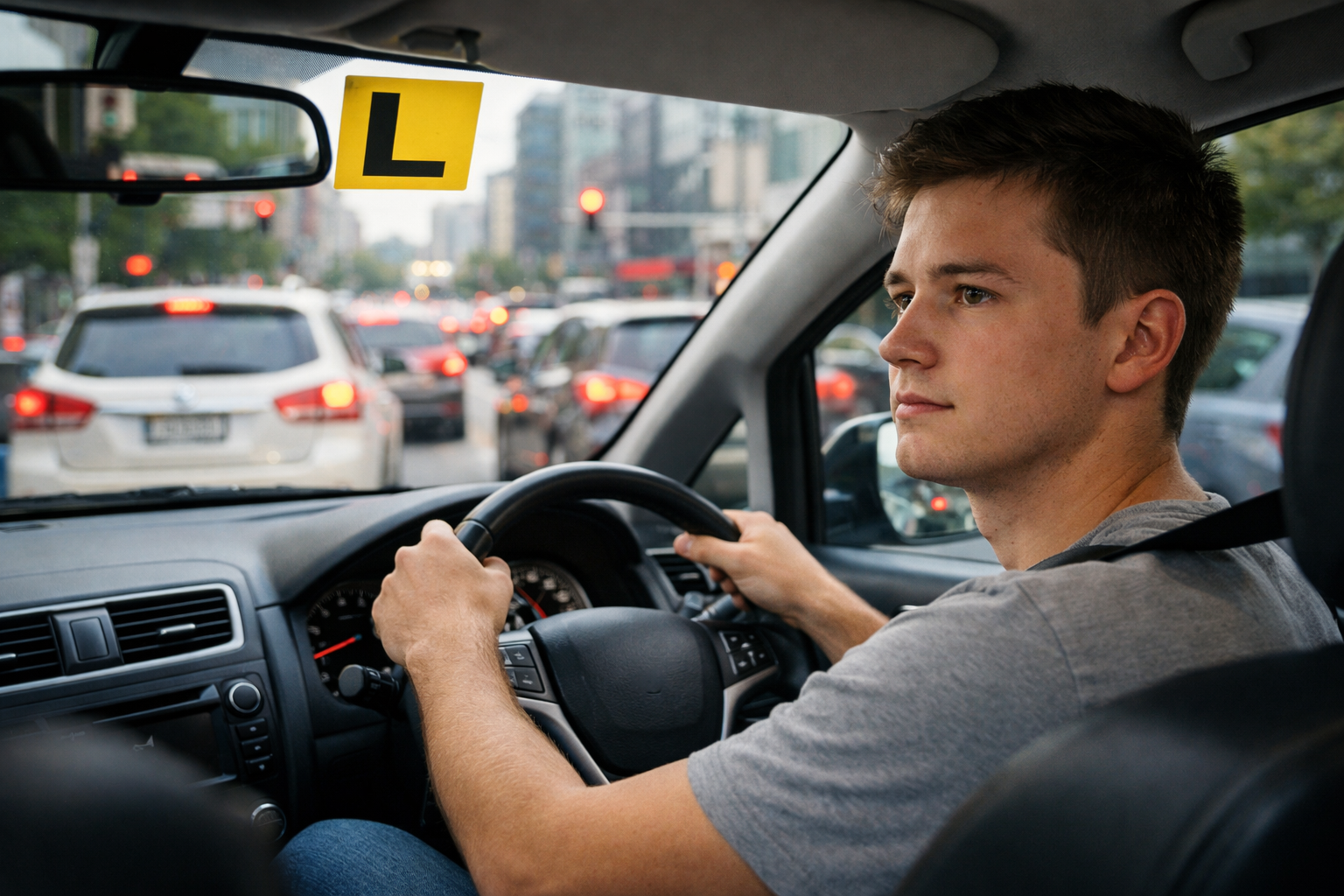
Driving in heavy traffic can feel difficult when you are still learning. You face slow-moving vehicles, frequent stops, and pressure from other drivers around you. Because of this, it is easy to feel nervous or lose confidence.
However, you can handle heavy traffic with the right approach. Small actions like controlling your speed, keeping a safe distance, and using your brakes and clutch smoothly make a big difference.
In this guide, you will learn how to drive in heavy traffic safely and confidently. You will also understand what to do when you are stuck in a traffic jam, the key rules to follow, and the common mistakes you should avoid.
Highlights
- To drive safely in busy traffic, the core principles are defensive driving, maintaining situational awareness, and practicing patience.
- Use indicators early and stick to one lane to keep your driving predictable.
- Avoid common mistakes like tailgating, sudden braking, and aggressive driving.
How to Drive in Busy Traffic Safely?
To drive safely in heavy traffic, stay calm, alert, and maintain a safe distance from other vehicles while controlling your speed smoothly. Anticipate traffic changes, use signals clearly, and practice defensive driving to reduce risk and stress.
Stay Alert and Watch Traffic Ahead
Always stay alert and keep your eyes on the road ahead. Traffic can change suddenly, so you need to notice early signs of slowing or stopping vehicles. Looking ahead helps you prepare instead of reacting late. It also reduces the need for sudden braking. Staying alert keeps you in control of your driving.
Maintain a Safe Following Distance
Keep a safe distance from the vehicle in front of you at all times. This gives you more time to react when traffic slows down. In heavy traffic, cars stop frequently, so space is very important. A safe gap helps you avoid collisions. It also makes your driving smoother and less stressful.
Control Your Speed and Avoid Sudden Movements
Frequent acceleration and hard braking can make traffic more chaotic and dangerous. Instead, aim to drive smoothly by maintaining a steady speed that matches the flow of traffic. Gradual acceleration and gentle braking improve safety and reduce stress. This also helps in saving fuel and reducing vehicle wear.
Use Indicators Early and Clearly
Always use indicators before changing lanes or turning. This gives other drivers enough time to understand your next move. Clear signals reduce confusion on the road. It also helps traffic flow more smoothly. Good signaling keeps everyone safer.
Choose the Right Lane and Stick to It
Select your lane based on your route and stay in it as much as possible. Frequent lane changes increase risk and rarely save time. Staying in one lane makes your driving predictable. It also helps other drivers adjust around you. Consistency improves safety in heavy traffic.
Be Prepared for Sudden Stops
Expect vehicles ahead to stop suddenly at any time. Keep your foot ready to brake when needed. Staying prepared helps you react quickly without panic. It also reduces the risk of hitting the car in front. Anticipation is key in heavy traffic.
Use Mirrors Frequently and Check Blind Spots
Expect vehicles ahead to stop suddenly at any time. Keep your foot ready to brake when needed. Staying prepared helps you react quickly without panic. It also reduces the risk of hitting the car in front. Anticipation is key in busy traffic.
Stay Calm and Patient Throughout the Drive
Expect vehicles ahead to stop suddenly at any time. Keep your foot ready to brake when needed. Staying prepared helps you react quickly without panic. It also reduces the risk of hitting the car in front. Anticipation is key in busy traffic.
Keep Both Hands on the Steering Wheel
Maintaining proper control of your vehicle is crucial in busy conditions. Keeping both hands on the wheel ensures better handling and quicker reactions. It also helps you stay prepared for sudden changes in traffic. Avoid multitasking or distractions while driving.
Drive Defensively
Defensive driving means being prepared for the mistakes of others. Always assume that other drivers may act unpredictably and give yourself enough space to react. Stay cautious, follow traffic rules, and avoid risky situations. This approach greatly reduces the chances of accidents in heavy traffic.
Common Mistakes to Avoid in Busy Traffic
Many drivers make simple mistakes like tailgating, frequent lane changes, or aggressive driving, which increase risk and reduce control. By staying patient, maintaining distance, and driving smoothly, you can avoid these errors and handle heavy traffic more safely.
Tailgating (Driving Too Close)
Following too closely is one of the most dangerous habits in heavy traffic. It reduces your reaction time and significantly increases the risk of rear-end collisions. The safest approach is the “Tyres and Tarmac Rule”: always keep enough space to see the rear tires of the car ahead touching the road. Maintaining this gap allows smoother braking and safer driving.
Riding the Clutch (Manual Cars)
Many manual car drivers rest their foot on the clutch in stop-and-go traffic, which causes premature wear and a burning smell. This habit, known as riding the clutch, reduces control and can be costly to repair. Instead, shift into neutral at complete stops and engage the clutch only when moving. Proper clutch control makes traffic driving safer and more comfortable.
Late Merging
Merging too late can confuse other drivers and disrupt traffic flow. It often causes sudden braking and creates tension on the road. Other drivers may not give you enough space if you merge at the last moment. Instead, plan your lane change early and signal in advance. Early merging keeps traffic moving smoothly.
Frequent Lane Changes
Constantly switching lanes rarely saves time and significantly increases the risk of collisions. Frequent lane changes also stress surrounding drivers and create confusion. Choose a lane that matches your direction and speed and stick to it unless there is a clear reason to switch. Consistent lane choice makes your driving predictable and safer.
Aggressive Driving
Aggressive behaviors like honking excessively, tailgating, or cutting off other drivers are common in heavy traffic. Such actions escalate stress and create unsafe conditions. Always remain calm, patient, and drive predictably. Practicing self-control helps maintain safety for you and other road users.
Conclusion
Driving in heavy traffic becomes easier when you follow the right techniques. When you stay alert, keep a safe distance, and drive smoothly, you reduce risks and stay in control. At the same time, avoiding common mistakes like tailgating and sudden braking helps you drive more safely.
As a learner, regular practice is key to building confidence in heavy traffic. With proper guidance and real-world experience, you can improve faster and handle traffic situations with ease. Learning from experienced instructors, like those at Nirvana Driving School, can further support your journey toward becoming a safe and confident driver. Call 045-053-0126 or book your driving lesson online with Nirvana Driving!
Frequently Asked Questions
How to drive a manual car in heavy traffic?
Driving a manual car in heavy traffic requires effective clutch control, keeping the car in first gear to creep, and maintaining a large gap to avoid frequent, jerky stops. Use the engine’s idling speed in first gear to move slowly without gas, and only engage the clutch to the biting point, fully stopping only when necessary to reduce wear.
How to control the clutch in heavy traffic?
Controlling a clutch in heavy traffic involves utilizing the “biting point” to creep forward slowly in first gear without constantly stopping and starting. Use minimal or no gas, letting the clutch out slowly to move at a walking pace, and push it back in immediately if you get too close to the car ahead.
How do you reduce stress while driving in heavy traffic?
Reducing stress in heavy traffic involves staying calm, accepting delays, and minimizing, not increasing, frustration. Key techniques include deep breathing, listening to calming audio (podcasts or music), leaving early, maintaining a safe following distance, reducing distractions, and practicing mindful “zipped merging” rather than racing.
What is the best time to avoid heavy traffic?
To avoid heavy traffic, the best times to travel are generally late at night, early in the morning before 6:00 a.m., or during the mid-morning to early-afternoon window, typically between 10:00 a.m. and 3:00 p.m.
What is the best way to handle aggressive drivers in traffic?
The best way to handle aggressive drivers is to remain calm, avoid engaging with them, and create as much distance as possible between your vehicles. Prioritizing your safety over “winning” a traffic confrontation is essential to de-escalating potential road rage.