
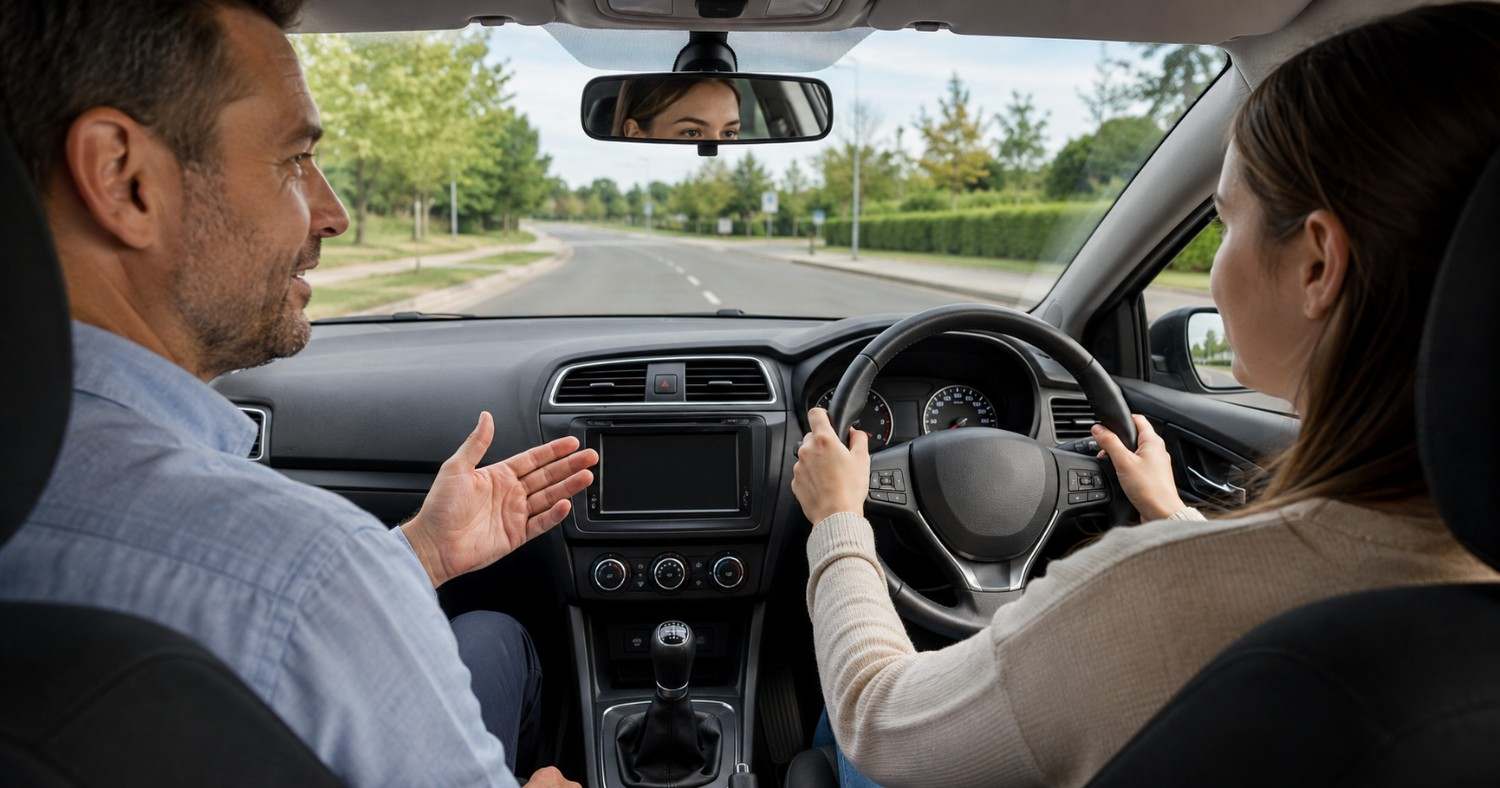
Car control is one of the first skills every learner driver needs to build. It means knowing how to use the steering wheel, brakes, accelerator, mirrors, indicators, gears, and other vehicle controls safely.
Good car control helps you drive smoothly and stay confident behind the wheel. It also helps you stop safely, turn correctly, keep the car in position, and react better in different road situations.
This guide explains the basic car controls every learner driver should know. It also covers why car control matters and common mistakes to avoid.
Key Highlights
- Car control in driving means safely and smoothly using the vehicle’s controls, such as the steering wheel, pedals, gears, mirrors, indicators, and brakes, to manage the car in different road situations.
- Good car control helps learner drivers steer, stop, turn, park, and manage speed with more confidence.
- Learners should understand both movement controls and safety controls before driving in real traffic.
- Poor car control can lead to jerky steering, harsh braking, stalling, rolling back, and poor lane position.
Basic Car Controls Learners Need to Understand
1. Seat, Head Restraint, and Seatbelt Adjustment
A safe driving position starts with the seat, head restraint, and seatbelt. The seat should allow you to reach the pedals comfortably while keeping good control of the steering wheel. The head restraint should sit close to the back of your head, and the seatbelt should fit firmly across your shoulder and lap. When these are adjusted correctly, it becomes easier to steer, brake, check mirrors, and stay protected in an emergency.
2. Steering Wheel
The steering wheel controls the direction of the car. Smooth steering helps you stay in your lane, turn safely, park accurately, and move through bends without losing control. Learners should avoid sharp or rushed steering, as this can make the car unstable and harder to position correctly on the road.
3. Accelerator Pedal
The accelerator pedal controls the car’s speed. Pressing it gently helps the car move off smoothly and build speed in a controlled way. Learners should avoid pressing the accelerator too hard, especially when moving off, turning, driving uphill, or joining faster traffic.
4. Brake Pedal
The brake pedal slows the car down or brings it to a stop. Smooth braking gives you better control and gives other road users more time to react. Learners should practise braking early and gradually, rather than waiting too long and stopping suddenly.
5. Clutch Pedal for Manual Cars
In a manual car, the clutch pedal is used when moving off, stopping, and changing gears. Good clutch control helps prevent stalling, rolling back, and jerky movement. Learning the biting point is especially important for hill starts, slow traffic, parking, and tight manoeuvres.
6. Gear Lever
The gear lever helps control how the car moves at different speeds. In a manual car, learners need to choose the correct gear for moving off, slowing down, turning, and stopping. In an automatic car, learners should understand the basic gear positions, such as Park, Reverse, Neutral, and Drive.
7. Handbrake or Parking Brake
The handbrake or parking brake keeps the car secure when it is parked or stopped. It is also useful during hill starts and longer stops. Some cars have a traditional handbrake lever, while newer cars may have an electronic parking brake button.
8. Indicators
Indicators tell other road users what you plan to do. They should be used before turning, changing lanes, merging, pulling over, moving off from the kerb, or exiting a roundabout. Signalling early helps other drivers, cyclists, and pedestrians understand your intention.
9. Mirrors
Mirrors help you see what is happening behind and beside your car. The rear-view mirror and side mirrors should be adjusted before driving. Learners should check their mirrors before braking, turning, changing lanes, merging, or pulling over.
10. Blind Spot Checks
Blind spots are areas around the car that cannot be fully seen in the mirrors. Before changing lanes, merging, turning, or moving off from the kerb, learners should briefly turn their head to check these areas. This helps avoid missing vehicles, cyclists, or motorcycles beside the car.
11. Hazard Warning Lights
Hazard warning lights make all indicators flash at the same time to warn other road users of a problem or danger. They may be used if the car breaks down, stops unexpectedly, or creates a temporary hazard. Learners should know where the hazard button is before driving.
12. Headlights and Fog Lights
Headlights help you see the road and help other road users see you. Learners should know how to use low beam, high beam, and fog lights correctly. Fog lights should only be used when visibility is poor, such as in fog, heavy rain, dust, or smoke.
13. Windscreen Wipers and Washers
Windscreen wipers and washers keep the windscreen clear in rain, dust, or dirt. Learners should know how to turn the wipers on, change their speed, and use washer fluid. Clear visibility is essential for safe driving in changing weather.
14. Demisters and Air Conditioning
Demisters and air conditioning help clear fog or condensation from the windows. A foggy windscreen can make it difficult to see the road, traffic, signs, and pedestrians. Learners should know how to clear the front and rear windows before driving.
15. Dashboard Warning Lights
Dashboard warning lights alert the driver to important vehicle issues. These may include engine problems, low oil pressure, battery faults, brake warnings, seatbelt reminders, or overheating. Learners should understand the most common warning lights and never ignore a serious warning symbol.
16. Horn
The horn is used to warn another road user of danger. It should not be used to express anger or frustration. A short horn warning may be useful if another driver, cyclist, or pedestrian has not seen you and there is a risk of danger.
17. Ignition or Start/Stop Button
The ignition or start/stop button starts and switches off the car. Before starting, learners should check that the car is in the correct gear position, the brake is applied, and the parking brake is engaged. In some manual cars, the clutch must also be pressed before the engine starts.
18. Reverse Camera and Parking Sensors
Reverse cameras and parking sensors help drivers judge distance when reversing or parking. They are useful support features, but they should not replace mirrors, shoulder checks, and looking around the vehicle. The driver is still responsible for checking that the area is safe.
19. Cruise Control and Speed Limiter
Cruise control helps the car maintain a set speed, while a speed limiter helps stop the car from going above a selected speed. These features can support driving on suitable roads, but the driver must still watch the speed limit, traffic, road conditions, and be ready to brake or steer at any time.
20. Fuel Gauge, Temperature Gauge, and Basic Dashboard Information
The fuel gauge shows how much fuel is left in the car, while electric vehicles show battery range. The temperature gauge or warning display helps identify overheating problems. Learners should also understand basic dashboard information such as the speedometer, gear display, odometer, and warning messages.
Improve Your Car Control Skills
Learn smooth steering, braking, acceleration, gear control, and safe use of vehicle controls with professional driving lessons.
Book Your Driving LessonCommon Car Control Mistakes Learners Make
1. Jerky Steering: Many learners turn the wheel too quickly or steer more than needed. This can make the car drift, cut corners, or feel unstable. Good steering should feel smooth and controlled.
2. Braking Too Late or Too Hard: Late braking can make the drive feel rushed and unsafe. It can also surprise drivers behind you. Learners should slow down early and apply the brake smoothly.
3. Pressing the Accelerator Too Suddenly: Sudden acceleration can make the car jerk forward. Smooth pressure on the accelerator helps the car move gently and build speed safely.
4. Poor Clutch Control in Manual Cars: Manual car learners may release the clutch too fast or press the accelerator at the wrong time. This can cause stalling, rolling back, or rough movement.
5. Using the Wrong Gear: Choosing the wrong gear can make the car struggle, jerk, or lose power. Manual learners should match the gear with the road speed and driving situation.
6. Looking Too Close to the Car: Some learners focus only on the road near the bonnet. Looking further ahead helps with smoother steering, earlier braking, and better hazard awareness.
7. Poor Lane Position: Learners may drive too close to the kerb, lane line, parked cars, or oncoming traffic. Good lane position shows better control and road awareness.
8. Forgetting Mirror Checks: Learners sometimes brake, turn, or change position without checking mirrors first. Mirror checks help you understand what is happening behind and beside your car.
9. Stalling or Rolling Back on Hills: Hill starts need good timing between the brake, accelerator, clutch, and handbrake. Regular practice helps learners move off smoothly without rolling back.
10. Relying Too Much on Car Features: Reverse cameras, parking sensors, and cruise control can help, but they should not replace basic driving skills. Learners still need mirrors, head checks, smooth steering, and proper speed control.
Conclusion
Car control is the basis of safe and confident driving. When learners understand how to use the steering, brakes, accelerator, mirrors, indicators, gears, and other controls smoothly, driving becomes easier and safer. These skills also help learners avoid common mistakes, stay calm in traffic, and feel more prepared for different road conditions.
For learners who need proper guidance, Nirvana Driving can help build these skills step by step. With structured driving lessons and instructor support, you can improve your car control, gain confidence behind the wheel, and prepare better for your driving test. Book your driving lesson today with Nirvana Driving!
FAQs
1. How long does it take to improve car control?
The time needed to improve car control depends on how often you practise and how quickly you understand each skill. Some learners become smoother after a few lessons, while others may need more time with steering, braking, clutch control, or parking.
2. Should I learn car control in an automatic or manual car?
This depends on your driving goals. Automatic cars are usually easier for beginners because there is no clutch pedal, while manual cars require more coordination between the clutch, gears, brake, and accelerator.
3. Why does my car feel jerky when I drive?
A car may feel jerky if the accelerator, brake, clutch, or gears are not used smoothly. With practice, learners can improve pedal control and make the car move more gently.
4. Can nervous drivers struggle more with car control?
Yes, nervous drivers may press the pedals too suddenly, steer too sharply, or rush decisions. Calm practice with an instructor can help build confidence and smoother control.
5. Do I need to know every dashboard symbol before driving?
You do not need to memorise every symbol at once. However, you should understand important warning lights, such as brakes, engine, oil pressure, battery, seatbelt, temperature, and fuel. Ask your instructor if any warning lights appear.
6. Does the car control change in rain or on wet roads?
Yes, wet roads need smoother control. You should brake earlier, accelerate gently, steer carefully, and leave more space between other vehicles. Sudden braking or sharp steering can reduce grip and make the car harder to control.