
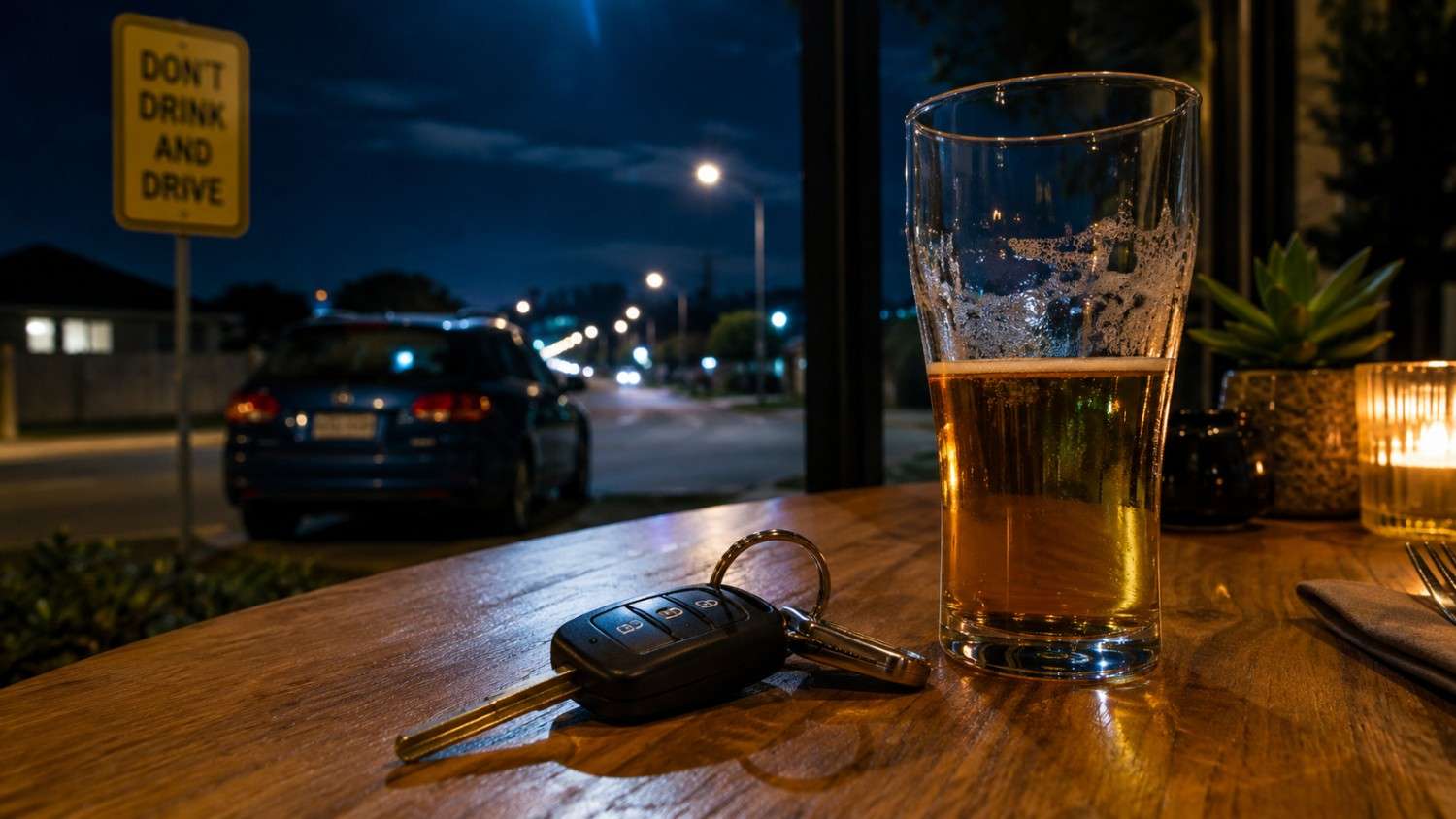
After a night out, a few drinks at dinner, or a weekend celebration, many drivers ask the same question: how long after drinking can I drive? It is an important question, especially because alcohol can stay in your system longer than many people expect.
In Australia, drink driving rules are strict, and the amount of alcohol in your body can affect more than just whether you are over the legal limit. It can also affect how quickly you react, how well you judge distance, and how safely you respond to other road users.
This guide explains what Australian drivers need to know about drink driving limits and possible penalties.
Key Takeaways
- There is no universal “safe time” to drive after alcohol, as every person processes it differently.
- Your BAC can be affected by drink strength, serving size, food, medication, body composition and how long you were drinking.
- Rules like “one drink per hour” or “two drinks in the first hour” should not be used to judge whether you can drive.
- Feeling sober is not a reliable sign that alcohol has left your system.
- Online BAC tools and personal breathalysers can be inaccurate, so they should only be treated as rough estimates.
- The body needs time to clear alcohol; quick fixes like coffee, showers or water do not speed up the process.
- If you drank heavily or late at night, alcohol may still be present the next morning.
- Learners, P-platers and zero-BAC drivers should avoid driving after any alcohol.
- When drinking is involved, the safest plan is to use a taxi, rideshare, public transport or another lift home.
What Is the Legal Drink Driving Limit in Australia?
In Australia, the legal drink driving limits are based on your blood alcohol concentration (BAC), which measures the amount of alcohol in your bloodstream. The limits vary depending on your driver’s licence type and the type of vehicle you are driving.
General Full Licence Holders
For most full licence holders, the legal BAC limit is 0.05%. This means you must not have more than 0.05 grams of alcohol per 100 millilitres of blood while driving. Exceeding this limit is considered drink driving and is an offence under Australian road laws.
Learner and Provisional Drivers
For learner drivers and most provisional (P1 and P2) licence holders, Australia has a zero alcohol limit (0.00%). This means any detectable amount of alcohol in your system while driving is illegal. This rule is in place because new drivers have less experience and are more vulnerable to impairment.
Commercial and Heavy Vehicle Drivers
Drivers of heavy vehicles, public passenger vehicles, and some commercial transport services are also usually required to maintain a 0.00% BAC limit. This includes truck drivers, bus drivers, and taxi or rideshare drivers in many states and territories.
How Long After Drinking Can You Drive?
There is no exact number of hours that guarantees you can drive safely or legally after drinking. Alcohol affects everyone differently, and your BAC can depend on how much you drank, how quickly you drank, your body size, whether you ate, and the strength of the drinks.
Even if you feel sober, alcohol may still be in your system. Your BAC can also continue rising for a period after your last drink, which means driving soon after drinking can still be risky.
For learner drivers, P-platers and anyone on a zero BAC limit, the safest rule is not to drive after drinking any alcohol. For full licence drivers, being under the legal limit does not always mean you are safe to drive. If there is any doubt, arrange another way home or wait until you are completely alcohol-free.
Can You Drive the Morning After Drinking?
You can drive the morning after drinking only if your BAC has returned to the legal limit for your licence type. The problem is that you cannot know this by how you feel. You may feel awake, but alcohol can still be in your bloodstream.
This is common after heavy drinking, late-night drinking, or drinking over many hours. Your body needs time to break down alcohol, and sleep does not speed up that process. Coffee, water, food, or a shower may help you feel fresh, but they do not lower your BAC faster.
What Are the Penalties for Drink Driving in Australia?
Drink driving penalties in Australia depend on your BAC level, licence type, state or territory, and whether it is your first offence. The penalty is not based on whether you had one glass, two glasses, or more. Police and courts look at your BAC reading and the legal limit that applies to your licence.
For example, in NSW, a first low-range, special-range, or novice-range drink driving offence can lead to a $704 penalty notice, immediate licence suspension, and a 3-month suspension. If the matter goes to court, the maximum fine can be $2,200, and the court may order a licence disqualification instead of the penalty notice suspension.
In Queensland, first-time drink driving penalties can be more serious depending on the BAC level. A learner or provisional driver caught over 0.00 but under 0.05 BAC may face a licence disqualification of 3 to 9 months, a maximum fine of $2,336, and up to 3 months imprisonment. A full licence driver with a BAC of 0.05 to under 0.10 may face a 1 to 9 month disqualification, a maximum fine of $2,336, and up to 3 months imprisonment. Higher BAC levels can lead to larger fines, longer disqualification, and possible jail.
In Western Australia, a full licence driver with a BAC of 0.05 to under 0.08 may receive a $1,000 infringement for a first offence. If the matter goes to court, a BAC of 0.05 to under 0.07 can lead to a court penalty of up to $1,250. A BAC of 0.08 to under 0.09 can lead to a fine between $750 and $2,250 and a minimum 6-month disqualification. A BAC of 0.15 or higher can lead to a fine between $1,700 and $3,750 and a minimum 10-month disqualification for a first offence.
In Victoria, drink driving can lead to heavy fines, licence loss, a compulsory behaviour change program, alcohol interlock conditions, and a zero-alcohol driving condition for at least 3 years after relicensing. Serious offences can also lead to imprisonment.
Conclusion
Drink driving laws in Australia are strict for a reason: even a small amount of alcohol can affect your judgement, reaction time and ability to drive safely. Because BAC limits, penalties and zero-alcohol rules vary by licence type and location, the safest choice is to avoid driving after drinking altogether. Plan ahead, arrange another way home and only get behind the wheel when you are sure you are alcohol-free and safe to drive.
FAQs
1. What does BAC mean?
BAC means Blood Alcohol Concentration. It measures how much alcohol is in your bloodstream. In Australia, drink driving rules use BAC to decide whether a driver is within the legal alcohol limit.
2. How long does alcohol stay in your system before driving?
There is no fixed time for everyone. Alcohol can stay in your system for several hours, depending on how much you drank, how quickly you drank, your body size, food intake, and your metabolism.
3. Can you drive after one drink?
You should not assume one drink is safe. One drink can still affect your reaction time and judgement. Learner and P-plate drivers must have 0.00 BAC, so they should not drive after any alcohol.
4. How many drinks can you have and still drive?
There is no safe number of drinks that applies to every driver. Drink size, alcohol strength, food intake, and body type can all affect your BAC. The safest choice is not to drive after drinking.
5. Does coffee help you sober up before driving?
No. Coffee may make you feel more awake, but it does not lower your BAC faster. Food, water, sleep, and showers also do not remove alcohol from your body faster. Only time does.
6. Can BAC calculators tell you if you are safe to drive?
BAC calculators only give rough estimates. They cannot confirm whether you are safe or legal to drive because they cannot measure every factor that affects your BAC.
7. Can learner drivers drive after drinking alcohol?
No. Learner drivers must have a 0.00 BAC when driving. This means any detectable amount of alcohol can break the licence rules and lead to penalties.
8. Can P-platers drive after drinking alcohol?
Most P-plate drivers in Australia must follow a zero BAC rule. This means they should not drink any alcohol before driving.
9. What is the safest rule after drinking?
The safest rule is simple: if you drink, do not drive. Plan another way home, use public transport, book a taxi or rideshare, or ask a sober person for a lift.