
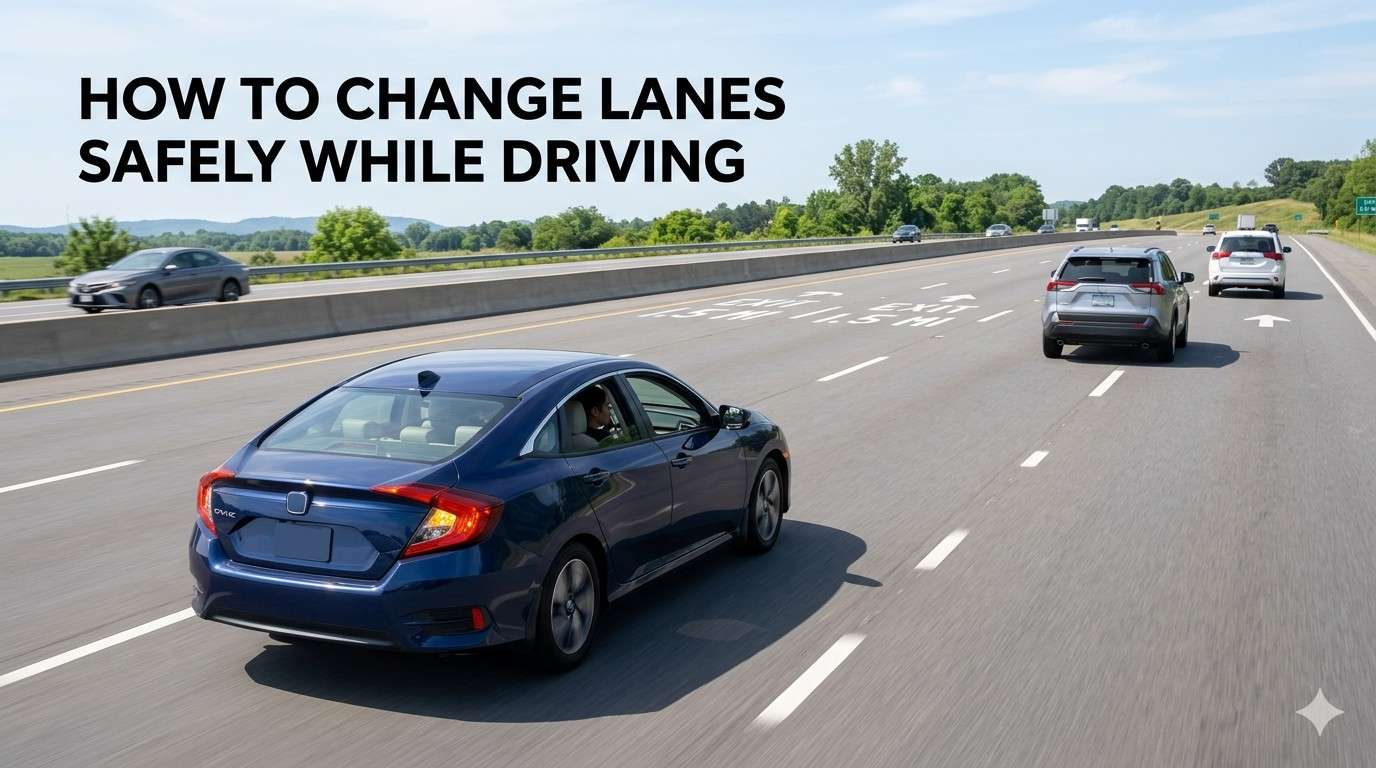
Changing lanes is a common part of driving, but it can become risky when drivers move without checking properly. A missed blind spot, a late signal, or poor judgment of distance can quickly lead to sudden braking, close calls, or unsafe situations on busy roads.
This becomes even more serious on highways, freeways, and in heavy traffic, where vehicles are moving at different speeds and drivers have less time to react. A rushed lane change can surprise other road users and make it harder to maintain a safe flow of traffic.
This guide explains how to change lanes safely while driving, including when to signal, how to check blind spots, and how to judge distance before moving. It also covers common mistakes to avoid on highways, freeways, and busy roads.
When Should You Change Lanes?
A lane change should be made when it helps you navigate the road safely and efficiently. Common situations include overtaking a slower vehicle, moving into the correct lane for an upcoming turn or exit, avoiding road hazards, merging with traffic, or following lane directions and road signs. On highways, drivers may also need to change lanes to allow merging vehicles to enter the roadway safely.
The decision to change lanes should always be based on traffic conditions and available space in the target lane. Before moving, ensure there is a safe gap between vehicles and that the lane change can be completed smoothly without causing other drivers to brake or alter their course.
You may also read: What is a Slip Lane in Australia?
How to Change Lanes Correctly?
Changing lanes correctly requires a safe, step-by-step process: Signal your intention, check your Mirrors, check your Blind spot, and move smoothly. Always give way to cars in the new lane, and maintain your speed so you do not disrupt traffic.
Step 1: Check the Road Ahead
Start by looking at the road in front of you to decide whether a lane change is necessary and safe. You may need to change lanes to pass a slower vehicle, prepare for a turn, move toward an exit, or avoid an obstruction.
Also check lane markings, road signs, intersections, traffic lights, and roadworks. If the lane markings do not allow you to change lanes, or if traffic ahead is slowing suddenly, wait until it is safer.
Step 2: Use Your Mirrors Effectively
Check your rear-view mirror first to see what is happening behind your vehicle. This helps you notice whether another driver is approaching quickly or following too closely.
Next, check the side mirror on the side you want to move toward. Your side mirror helps you see vehicles in the next lane, but it does not show every area beside your car, so it should always be followed by a blind spot check.
Step 3: Signal Before Changing Lanes
Turn on your indicator before you start moving into the next lane. Signalling tells other road users what you intend to do and gives them time to adjust their speed or position.
You should signal early enough to give a clear warning, but not so early that other drivers become confused about when you are actually moving. After signalling, do not move immediately; first, confirm that the lane is clear and that there is enough space.
Step 4: Check Your Blind Spot
A blind spot is an area beside your vehicle that may not be fully visible in your mirrors. Before changing lanes, quickly turn your head toward the lane you want to enter and check over your shoulder.
This step is especially important because cars, motorcycles, cyclists, or smaller vehicles can be hidden beside you. Keep the blind spot check quick so you do not take your attention away from the road ahead for too long.
Step 5: Judge the Distance and Speed of Traffic
Before moving, make sure there is a safe gap in the lane you want to enter. A safe gap is not only about how much space you can see; it also depends on how fast the vehicles in that lane are moving.
If a vehicle is coming up quickly from behind, wait for it to pass before changing lanes. You should not move into a gap if it forces another driver to brake suddenly, slow down sharply, or swerve.
Step 6: Adjust Your Speed Carefully
Keep your speed steady as much as possible when preparing to change lanes. Sudden braking or speeding up aggressively can make your movement harder for other drivers to predict.
In some situations, you may need to gently adjust your speed to match the flow of traffic in the lane you are entering. The goal is to move into the lane smoothly without disrupting nearby vehicles.
Step 7: Move Smoothly Into the Lane
Once the lane is clear, steer gently into the new lane. Avoid sharp steering, drifting slowly across lane markings, or making a sudden movement at the last second.
A smooth lane change helps other drivers understand your movement and keeps your vehicle stable. Keep both hands controlled on the steering wheel and continue watching the road ahead as you move.
Step 8: Keep a Safe Following Distance
After you are in the new lane, check that you have enough space between your vehicle and the one in front. Leaving a safe following distance gives you more time to react if traffic slows down.
Do not move too close behind another vehicle just to fit into a lane. If the gap is too small, it is safer to wait for a better opportunity.
Step 9: Cancel Your Indicator
Once the lane change is complete, make sure your indicator is turned off. Leaving it on can confuse other drivers and make them think you are planning another turn or another lane change.
After cancelling the indicator, continue driving steadily and keep checking traffic around you. This helps you stay aware of any changes in speed, position, or road conditions.
Ready to improve your lane-changing skills and road confidence?
Book a driving lesson and learn safe driving habits with experienced instructors.
Get StartedCommon Lane Change Mistakes to Avoid
Failing to check blind spots, not using turn signals, and making abrupt movements are the most common lane change mistakes to avoid. Other frequent mistakes include changing speed during the maneuver, merging into intersections, and assuming a signal gives you automatic right-of-way.
1. Not Signalling Before Moving: Changing lanes without signalling gives other drivers no warning about your intention. Always use your indicator before moving so nearby drivers have time to react.
2. Signalling Too Late: Turning on your signal at the same time you move does not give other road users enough warning. Signal early enough to show your intention before you start changing lanes.
3. Forgetting to Check Blind Spots: Relying only on mirrors can be dangerous because some areas beside your vehicle may not be visible. Always do a quick shoulder check before moving into another lane.
4. Cutting Off Another Vehicle: Moving into a lane too close to another vehicle can force the driver to brake suddenly. Wait for a safe gap before changing lanes.
5. Changing Multiple Lanes at Once: Crossing several lanes in one movement can be risky because traffic conditions may change quickly. It is safer to change one lane at a time and check your mirrors and blind spots before each move.
6. Braking Suddenly During a Lane Change: Sudden braking can confuse drivers behind you and increase the chance of a close call. Try to keep a steady speed and adjust smoothly when needed.
7. Drifting Between Lanes: Slowly drifting across lane markings without clear control can make your movement unpredictable. Make a clear and smooth lane change only when it is safe.
8. Forgetting to Cancel the Indicator: Leaving your indicator on after changing lanes can confuse other drivers. Once you are fully in the new lane, make sure the signal is turned off.
You may also read: How to Safely Merge Lanes in Australia?
Conclusion
Changing lanes safely comes down to awareness, timing, and control. Before moving into another lane, always check the road ahead, use your mirrors, signal clearly, check your blind spot, and wait for a safe gap before steering smoothly into position.
These habits are especially important on highways, freeways, and in heavy traffic, where vehicles move at different speeds and drivers have less time to react. Avoiding common mistakes such as late signalling, sudden braking, or changing lanes without checking properly can make your driving safer and more confident.
For learners who want to build better road awareness and improve their lane-changing skills, professional driving guidance can make a big difference. Nirvana Driving can help new and nervous drivers practise safe lane changes, mirror checks, blind spot awareness, and real-road decision-making with confidence. Book your driving lesson today with Nirvana Driving!
FAQs
1. How to Know When It Is Safe to Change Lanes?
It is safe to change lanes when there is a clear gap in the target lane, no vehicle is in your blind spot, and your movement will not force other drivers to slow down or adjust suddenly.
2. How to Judge Distance When Changing Lanes?
Judge distance by checking how much space exists ahead and behind in the target lane and whether your vehicle can merge without reducing the following driver’s safe stopping distance.
3. Is it safer to speed up or slow down before changing lanes?
It is generally safer to match the speed of the target lane rather than speeding up or slowing down suddenly, as smooth speed alignment helps maintain traffic flow and control.
4. How do lane changes differ on highways compared to city streets?
Highway lane changes usually happen at higher speeds, so you need more space, earlier signalling, and extra attention to fast-approaching vehicles. City lane changes often require more awareness of intersections, parked cars, cyclists, pedestrians, and turning vehicles.
5. How long should you signal before changing lanes?
You should signal a few seconds before moving to give other drivers enough time to notice your intention and adjust their position if needed.
6. How to check blind spots before a lane change?
Check blind spots by doing a quick shoulder glance toward the lane you intend to enter after using your mirrors, ensuring no hidden vehicles or motorcycles are present.
7. How to judge distance when changing lanes?
Look for a gap that gives you enough room in front and behind your vehicle. If another vehicle is closing the gap quickly, wait until it passes before changing lanes.
8. How to use mirrors effectively when changing lanes?
Use your rearview mirror to monitor traffic behind and side mirrors to assess adjacent lanes, checking them continuously to track vehicle positions before and during the lane change.