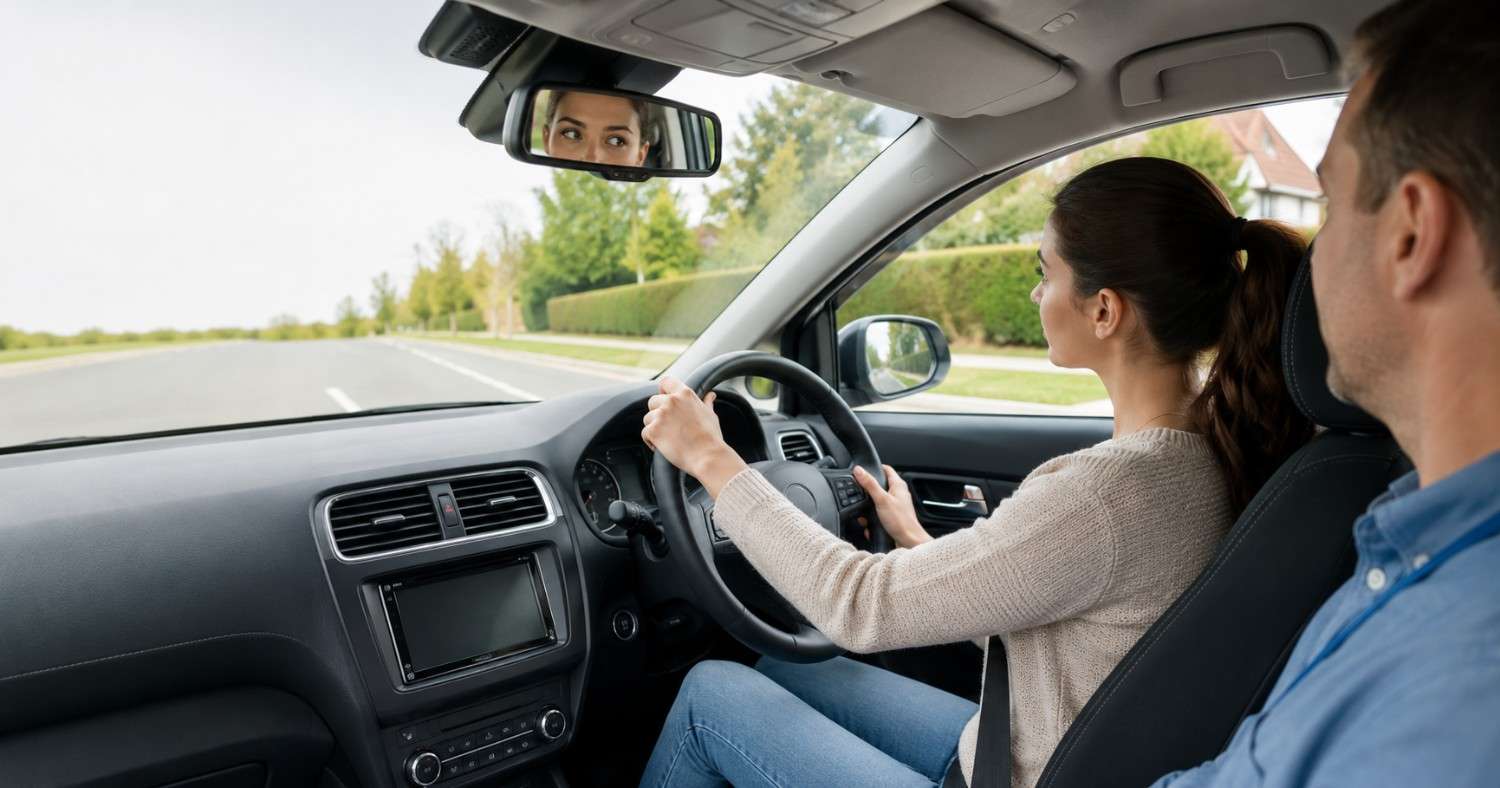
Checking your mirrors properly is one of the first habits you should build as a driver. It helps you understand what is happening behind and beside your car. It also helps you make safer choices before you move, turn, brake, or change lanes.
Many learner drivers focus too much on the road ahead. That is common during early lessons. However, safe driving needs full road awareness. You need to watch the front, sides, and rear of your vehicle.
Your mirrors help you spot cars, cyclists, motorbikes, pedestrians, and other road users early. When you check them at the right time, you get more time to react. As a result, you drive with better control and more confidence.
Why Mirror Checks Are Important While Driving
Mirror checks help you stay aware of your surroundings. They show you what other road users are doing around your car. This matters because traffic can change quickly.
For example, a car behind you may follow too closely. A cyclist may ride beside you. A motorbike may enter your blind spot. If you do not check your mirrors, you may miss these risks.
Good mirror use also helps you drive smoothly. You can slow down, turn, merge, and change lanes without surprising others. This makes your driving safer and easier to read.
Mirror checks are also important for learner drivers. Your driving instructor and test examiner will watch how you use your mirrors. They want to see that you check them at the right time, not just now and then.
Types of Mirrors in a Car
Most cars have three main mirrors. Each mirror helps you see a different part of the road.
1. Rear-view Mirror
The rear-view mirror sits inside the car. It shows the road behind you through the back window.
You should use this mirror often while driving. It helps you see vehicles behind you before you slow down, brake, turn, or change speed.
2. Side Mirrors
Side mirrors sit on the left and right sides of your car. They help you see traffic beside and behind your vehicle.
You should use side mirrors before turning, changing lanes, merging, parking, or moving away from the kerb.
When Should You Check Your Mirrors?
You should check your mirrors before any action that may affect another road user. This includes changes in speed, position, or direction.
1. Before Moving Off
Before you move away from the kerb or a parking spot, check your mirrors first. Start with your rear-view mirror. Then check your side mirrors.
After that, check your blind spot. This helps you see cars, cyclists, pedestrians, or motorbikes near your vehicle.
Once it is safe, signal and move off smoothly.
2. Before Slowing Down or Braking
Always check your rear-view mirror before you slow down. This helps you see how close the vehicle behind you is.
If a car follows too closely, brake gently when possible. This gives the driver behind you more time to react.
3. Before Turning
Check your mirrors before turning left or right. Use your rear-view mirror first. Then check the side mirror on the side you plan to turn.
For example, before a left turn, check your rear-view mirror and left side mirror. Also watch for cyclists, pedestrians, and vehicles near the kerb.
4. Before Changing Lanes
Changing lanes needs careful mirror checks. First, check your rear-view mirror. Then check the side mirror for the lane you want to enter.
Next, check your blind spot. If the lane is clear, signal and move across smoothly. Do not rush the move.
5. Before Merging
Merging can feel hard for learner drivers. However, good mirror use makes it easier.
Check your mirrors early. Look for a safe gap. Then check your blind spot before you move into traffic.
6. Before Overtaking
Before you overtake, check your mirrors carefully. You need to know what is behind you and beside you.
Another driver may already be overtaking. A fast vehicle may also approach from behind. Mirror checks help you avoid unsafe moves.
7. Before Opening Your Car Door
Mirror checks matter even after you park. Before opening your door, check your mirror and blind spot.
This helps you avoid opening your door into cyclists, motorbikes, or passing vehicles. This simple habit can prevent serious accidents.
Missing Mirror Checks While Driving?
Learn how to check your mirrors at the right time, spot blind spots early, change lanes safely, and build better road awareness with expert driving lessons.
Book Your Driving LessonHow to Check Mirrors Properly While Driving
Proper mirror checking is simple. However, you need to practise it often. Use quick glances, not long stares.
1. Check the Rear-view Mirror First
In many driving situations, check your rear-view mirror first. It gives you a clear view of what is behind your car.
This is useful before slowing down, braking, turning, merging, or changing lanes.
2. Check the Correct Side Mirror
After checking your rear-view mirror, check the side mirror linked to your next move.
If you plan to turn left, check your left mirror. If you plan to move right, check your right mirror.
This helps you see vehicles, cyclists, or motorbikes beside your car.
3. Check Your Blind Spot
Mirrors cannot cover everything. So, check your blind spot before moving sideways.
Turn your head briefly and look over your shoulder. Then return your eyes to the road ahead.
Do this before changing lanes, merging, or moving away from the kerb.
4. Use Quick Glances
Do not stare at your mirrors for too long. A mirror check should take only a quick glance.
Your eyes should move between the road ahead, mirrors, signs, lanes, and traffic. This keeps you aware without losing focus.
5. Check Early
Many learners check mirrors too late. This gives them less time to react.
Check your mirrors before you act. Then signal, position your car, and make the move safely.
The Mirror-Signal-Manoeuvre Routine
The Mirror-Signal-Manoeuvre routine is also called MSM. It is a simple driving routine that helps you make safe moves.
It means:
Mirror: Check your mirrors first.
Signal: Signal if other road users need to know your plan.
Manoeuvre: Make your move only when it is safe.
This routine helps other road users understand what you plan to do. It also helps you avoid sudden or unsafe movements.
For example, before changing lanes, check your mirrors first. Then signal. After that, check your blind spot and move only when the lane is safe.
Do not signal before checking your mirrors. You need to know if the move is safe before you show your intention.
Common Mirror Checking Mistakes
Mirror checks are easy to forget when you are learning. However, small mistakes can create risk on the road.
1. Checking Mirrors Too Late
Some drivers check mirrors while they are already turning or changing lanes. This can be unsafe.
You should check before you start the move. Early checks give you more time to plan.
2. Forgetting Blind Spots
Side mirrors do not show everything. A car, cyclist, or motorbike can hide in your blind spot.
Always check your blind spot before moving sideways.
3. Looking Too Long
Mirror checks should be quick. If you stare at a mirror, you may miss what happens in front of you.
Use short glances and return your eyes to the road ahead.
4. Only Checking One Mirror
Do not rely on one mirror only. Each mirror shows a different part of the road.
Use your rear-view mirror, side mirrors, and blind spot checks together.
5. Not Checking Before Braking
Many drivers forget to check the rear-view mirror before braking. This can be risky when another vehicle follows closely.
A quick rear-view mirror check helps you slow down more safely.
Tips to Build Better Mirror Habits
Good mirror habits take time. At first, you may need to remind yourself often. With practice, it becomes natural.
Start by checking your mirrors before every change in speed or direction. This includes slowing down, stopping, turning, merging, and changing lanes.
Also, keep your eyes moving. Do not stare straight ahead for too long. Safe drivers scan the road, mirrors, signs, lanes, and traffic around them.
Practise the Mirror-Signal-Manoeuvre routine during every drive. This builds a clear pattern in your mind.
You can also ask your driving instructor for feedback. They can tell you if you check too late, miss blind spots, or look away for too long.
Most importantly, stay calm. Mirror checks are not about rushing your eyes around. They are about building awareness and making safe choices.
Conclusion
Checking your mirrors properly is a key part of safe driving. It helps you stay aware, make better decisions, and react early to road changes.
You should check your rear-view mirror, side mirrors, and blind spots at the right time. You should also use quick glances and follow the Mirror-Signal-Manoeuvre routine.
These habits may feel difficult at first. However, regular practice makes them easier. Over time, you will feel more confident when turning, braking, merging, changing lanes, and driving in traffic.
If you want to improve your mirror checks and road awareness, professional driving lessons can help. Nirvana Driving helps learner drivers practise safe mirror habits in real driving situations. With the right guidance, you can build safer driving skills and feel more confident behind the wheel. Book your driving lesson today with Nirvana Driving!
FAQs
1. How often should you check your mirrors while driving?
You should check your mirrors often while driving, especially before changing speed or direction. Check them before braking, turning, merging, stopping, or changing lanes.
2. Which mirror should you check first?
In most cases, check your rear-view mirror first. Then check the side mirror linked to your next move.
3. Should you check mirrors before braking?
Yes, you should check your rear-view mirror before braking. This helps you see how close the vehicle behind you is.
4. Do you need to check blind spots if you use mirrors?
Yes, you still need to check blind spots. Mirrors cannot show every area around your vehicle.
5. What is the Mirror-Signal-Manoeuvre routine?
Mirror-Signal-Manoeuvre means you check your mirrors first, signal your intention, and then make your move safely.
6. Can poor mirror checks cause accidents?
Yes, poor mirror checks can increase accident risk. You may miss cars, cyclists, motorbikes, or pedestrians near your vehicle.