
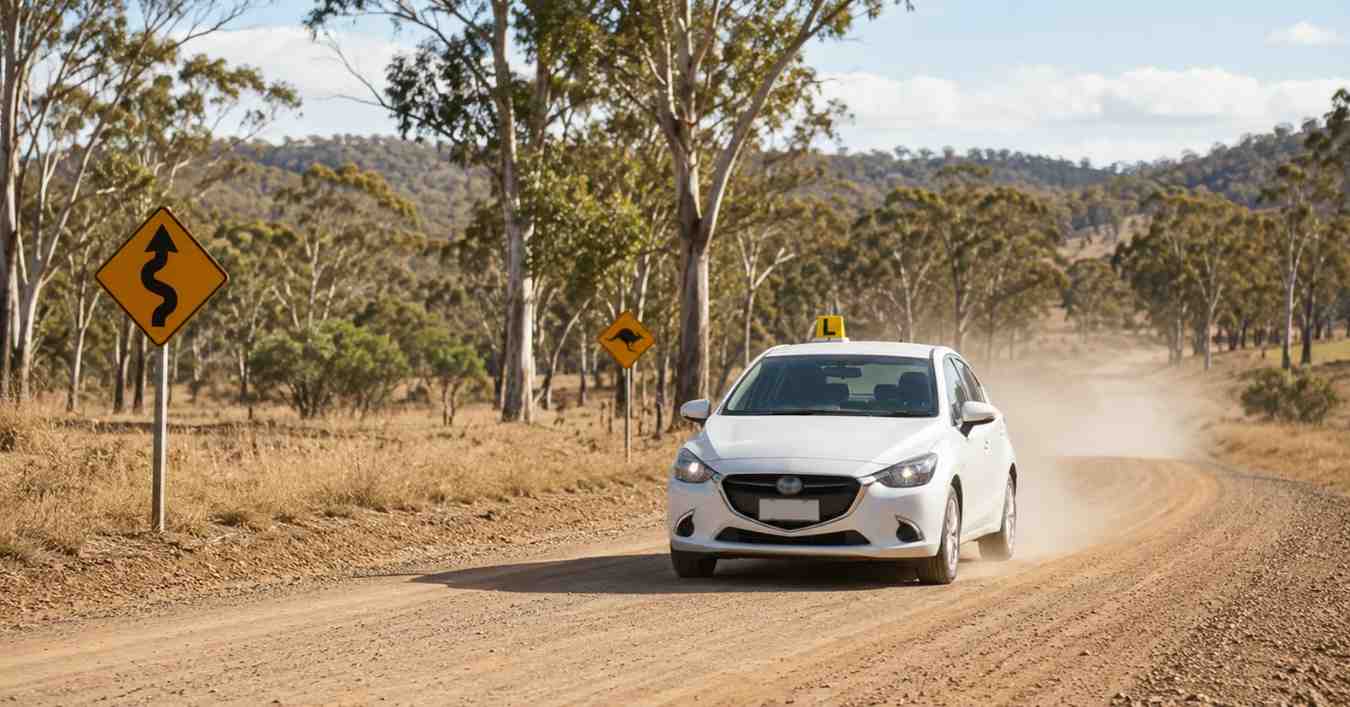
Driving on dirt roads is very different from driving on sealed roads. The surface can be loose, dusty, uneven, or slippery, which means drivers need to slow down and stay extra alert.
In Australia, dirt and gravel roads are common in rural, regional, and outdoor travel areas. Learner drivers may also come across them during country drives, road trips, or visits to unfamiliar places.
This guide explains how to drive safely on dirt roads in Australia. It covers speed control, braking, steering, vehicle checks, and practical tips to help learner drivers stay safer and more confident.
Key Highlights
- Dirt roads have less grip than sealed roads, so drivers need to slow down and use smooth control.
- Loose gravel, dust, potholes, corrugations, and soft road edges can make the vehicle harder to handle.
- Braking distance can increase on dirt and gravel, especially on bends, hills, or wet surfaces.
- Drivers should check tyres, brakes, lights, mirrors, fuel, and the spare tyre before driving on dirt roads.
- Extra space is important because dust, flying stones, and sudden hazards can reduce safety.
What Makes Dirt Roads Different From Sealed Roads?
Dirt roads are different from sealed roads because the surface is loose, uneven, and more likely to change. Unlike bitumen or asphalt, dirt and gravel roads can shift under the tyres, which means the vehicle may not grip the road as strongly.
1. Less Tyre Grip: Sealed roads usually give tyres a firmer and more stable surface. Dirt roads often have loose gravel, sand, dust, or small stones, which can reduce traction and make the car feel less steady.
2. Longer Stopping Distance: Vehicles may take longer to stop on dirt or gravel roads. This is why drivers need to brake earlier and avoid sudden braking, especially when travelling downhill, around bends, or on wet dirt surfaces.
3. More Dust and Lower Visibility: Dust is one of the biggest differences on dirt roads. A vehicle ahead can create a dust cloud that makes it hard to see the road, oncoming traffic, animals, or hazards.
4. Uneven Road Surface: Dirt roads often have bumps, corrugations, potholes, ruts, and loose edges. These can affect steering control and may make the car bounce or pull slightly if the driver is going too fast.
5. Changing Road Conditions: A sealed road usually stays more consistent, but a dirt road can change quickly. Weather, traffic, roadworks, heavy vehicles, and water can make the same road feel different from one day to the next.
6. Softer Road Edges: Many dirt roads have soft or uneven shoulders. If a driver moves too close to the edge, the tyres may lose grip or the vehicle may become harder to control.
7. Higher Risk of Skidding: Loose dirt and gravel can make skidding more likely, especially during sudden braking, sharp steering, or fast cornering. Smooth and gentle control is much safer on these surfaces.
8. More Flying Stones: Vehicles on gravel roads can throw up small stones. These can damage windscreens, lights, paint, and tyres, so drivers should keep more distance from other vehicles.
9. Fewer Road Markings: Many dirt roads do not have clear lane lines, centre lines, or sealed shoulders. Drivers need to stay alert, keep to the left, and be ready for oncoming vehicles, especially on narrow roads or blind corners.
10. Different Driving Style Required: Dirt roads require a calmer and smoother driving style. Drivers should slow down, steer gently, brake early, and avoid sudden movements to keep better control of the vehicle.
How to Prepare Your Vehicle Before Driving on Dirt Roads
Before you drive on dirt roads, check whether your vehicle can handle loose, rough, and dusty surfaces. A small check before the trip can help you avoid tyre damage, poor visibility, braking issues, or getting stuck far from help.
1. Check Your Tyres
Your tyres need enough tread to grip loose dirt and gravel. Worn tyres can slide more easily, especially when you brake, turn, or drive over corrugations.
Also, check your tyre pressure before the trip. Some dirt and gravel roads may need pressure adjustment, but the right pressure depends on your vehicle, tyre type, load, and road condition. If you lower tyre pressure for rough roads, drive slower and reinflate the tyres before returning to normal sealed-road driving.
2. Inspect Your Spare Tyre
Do not only check the four tyres on the road. Check your spare tyre as well.
Make sure it has enough air, good tread, and no visible damage. Also, check that you have a working jack, wheel brace, and any lock-nut tool your vehicle needs. A flat tyre on a remote dirt road can become a serious problem if your spare tyre is not ready.
3. Check Brakes, Lights, and Indicators
Dirt roads can reduce braking grip, so your brakes must work well before you start the trip. If your car shakes, pulls to one side, or makes noise when braking, get it checked before driving on unsealed roads.
Also, clean and test your headlights, brake lights, tail lights, and indicators. Dust can cover lights quickly, and other drivers need to see you clearly, especially in low visibility.
4. Clean Your Windscreen and Mirrors
Dust, glare, and loose stones can affect your view on dirt roads. Clean your windscreen, side mirrors, rear-view mirror, and windows before you leave.
Check your wipers and washer fluid too. You may need them if dust, mud, insects, or light rain reduces visibility.
5. Secure Loose Items Inside the Car
Rough dirt roads can shake the vehicle more than sealed roads. Loose items can move around and distract the driver.
Secure bags, bottles, tools, and other items before driving. Keep important items within easy reach, but do not place anything where it can roll under the pedals.
6. Check Fuel or Battery Range
Dirt roads can take longer than expected because you may need to drive more slowly. Before leaving, check your fuel level or EV battery range.
Add extra range for delays, detours, weather changes, or road closures. In remote areas, fuel stations and charging points may be far apart.
7. Prepare for Dust and Stone Chips
Dust can cover lights, windows, and number plates. Loose stones can also chip your windscreen or damage paint.
Keep a safe distance from other vehicles and avoid following too closely. After the drive, check your windscreen, tyres, lights, and number plates before continuing on sealed roads.
Build Confidence on Different Road Conditions
Get professional driving lessons and practise safe speed control, smooth braking, steering control, and hazard awareness in real Australian driving situations.
Book Your Driving LessonBest Tips for Driving Safely on Dirt Roads
Driving safely on dirt roads requires patience, awareness, and smooth vehicle control. Dirt and gravel roads can change quickly, so drivers should adjust their speed, braking, and steering to suit the conditions.
1. Reduce Speed Before the Surface Changes
Slow down before moving from a sealed road onto dirt or gravel. The tyres can lose grip quickly when the surface changes, especially if there is loose gravel, sand, mud, or dust.
A safe speed is not always the posted speed limit. Choose a speed that gives you enough time to stop, steer, and react to hazards.
2. Keep Extra Space Around Your Vehicle
Leave a bigger gap between your car and the vehicle in front. Dirt roads can increase stopping distance, and extra space gives you more time to respond.
A larger gap also helps you avoid dust clouds and flying stones. If visibility drops, slow down and stay back until you can see clearly.
3. Use Smooth Braking and Acceleration
Brake earlier than you would on a sealed road. Loose dirt and gravel can make the vehicle take longer to stop.
Avoid harsh braking or sudden acceleration. Gentle pedal control helps the tyres maintain grip and keeps the vehicle more stable.
4. Steer Calmly and Avoid Sudden Movements
Sharp steering can cause the vehicle to slide or lose traction on loose surfaces. Keep your steering smooth, especially around bends, potholes, soft edges, and rough sections.
If the car starts to slide, do not panic. Ease off the accelerator, look where you want to go, and steer gently.
5. Slow Down Before Corners and Hills
Reduce your speed before entering a corner, not while you are already turning. Gravel can build up on bends and make the surface more slippery.
Use lower gears on steep hills or rough sections when needed. This helps control speed without relying too much on the brakes.
6. Manage Dust and Visibility
Dust can hide potholes, animals, oncoming vehicles, road edges, and bends. Keep your headlights on in dusty, shaded, or low-visibility conditions so other drivers can see you.
Avoid overtaking in dust unless the road ahead is completely clear. If you cannot see properly, stay back and wait.
7. Be Careful Around Oncoming Vehicles and Road Edges
Many dirt roads are narrow and may not have clear lane markings. Slow down when another vehicle approaches and move left only when it is safe.
Avoid driving too close to soft or uneven edges. If you need to move over, reduce speed first and keep the vehicle steady.
8. Watch for Wildlife and Livestock
Animals can appear suddenly on rural and regional roads. Be extra careful near farms, bushland, warning signs, and during dawn or dusk.
If an animal appears, brake safely and avoid swerving sharply. Sudden swerving can cause a more serious loss of control.
9. Take Extra Care After Rain
Wet dirt roads can become slippery, muddy, or boggy. Some sections may look safe but can be difficult to drive on once tyres lose grip.
Never drive through floodwater. Dirt roads can wash away underneath, and water can hide deep holes or damaged surfaces.
10. Plan Ahead Before Travelling
Check the weather, road conditions, fuel stops, and mobile phone coverage before using rural or remote dirt roads. Let someone know your route if you are travelling far from town.
Good planning helps you avoid unsafe roads, poor visibility, sudden delays, and areas where help may be far away.
11. Practise With a Qualified Driving Instructor
Learner drivers may not be used to loose, uneven, or dusty road surfaces. A qualified instructor can help learners practise speed control, braking, steering, and hazard awareness in real driving conditions.
Professional training helps learners build safer habits and become more confident drivers.
Conclusion
Driving safely on dirt roads comes down to preparation, patience, and smooth control. When drivers slow down, check their vehicle, manage dust, brake early, and adjust to changing road conditions, they can reduce risk and feel more confident on unsealed roads.
For learner drivers, these skills are easier to build with proper guidance. Nirvana Driving helps learners practise real-road awareness, safe braking, speed control, and confident decision-making. These habits can make learners safer in different Australian driving conditions and help them feel more prepared to pass their driving test. Book your driving lesson today with Nirvana Driving!
FAQs
1. What speed should I drive on a dirt road?
You should drive at a speed that suits the road conditions, not just the posted speed limit. If the road is dusty, wet, rough, narrow, or full of loose gravel, it is safer to slow down.
2. Why does my car feel unstable on gravel?
A car may feel unstable on gravel because the tyres have less grip on loose stones. Smooth steering, gentle braking, and steady speed can help keep the vehicle under control.
3. Should I brake differently on dirt roads?
Yes, you should brake earlier and more smoothly on dirt roads. Sudden or harsh braking can cause the tyres to slide, especially on loose or wet surfaces.
4. Is it safe to drive on dirt roads after rain?
Dirt roads can become slippery, muddy, or boggy after rain. If the road looks unsafe, flooded, or closed, it is better to wait or choose another route.
5. Do I need a 4WD to drive on dirt roads?
Not always. Many dirt roads can be driven in a standard car if conditions are safe, but rough, steep, muddy, or remote tracks may need a more suitable vehicle.
6. What should I do if my car starts to slide on dirt?
Stay calm and avoid sudden braking or sharp steering. Ease off the accelerator, look where you want to go, and steer gently until the car becomes stable again.
7. Can learner drivers practise on dirt roads?
Yes, learner drivers can practise on dirt roads when it is safe, and they are properly supervised. Professional lessons can help learners build better speed control, braking, steering, and hazard awareness.