
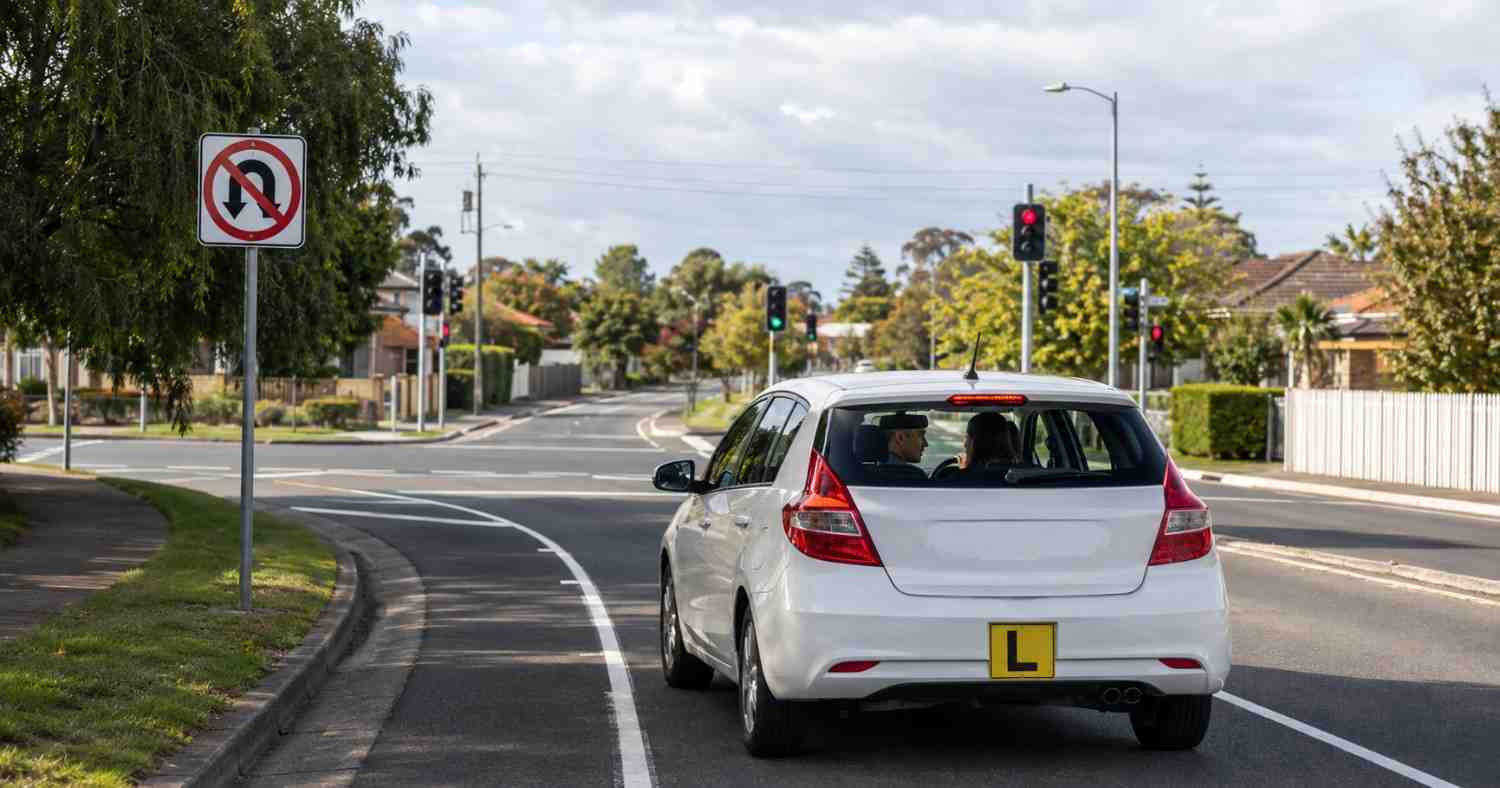
Making a U-turn may seem simple. However, it is one of the more misunderstood road rules in Victoria. Many drivers are unsure where U-turns are allowed. Others are not sure whether they can make one at traffic lights or who must give way.
Knowing the rules is important for all drivers. This includes learner drivers, new motorists, and experienced drivers who want to avoid mistakes. U-turn rules can change depending on signs, road markings, intersections, median openings, visibility, and traffic conditions.
This guide explains the key U-turn rules in Victoria. It covers where U-turns are legal, where they are banned, who must give way, and how to turn safely.
Key Highlights
- U-turns are generally allowed in Victoria unless a sign, road marking, or safety rule prohibits them.
- Drivers can usually make a U-turn at traffic lights if there is no No U-turn sign.
- A No right turn sign also means a U-turn is not allowed.
- U-turns are not permitted across single or double continuous centre lines.
- The driver making the U-turn must give way to all vehicles and pedestrians.
- A U-turn should only be made when there is a clear view and enough space to complete it safely.
- If the turn may block traffic or create a risk, drivers should choose another turning point.
U-Turn Laws in Victoria
In Victoria, U-turns are generally allowed unless a sign, road marking, or safety rule prohibits them. Drivers can usually make a U-turn at intersections, including traffic lights, if there is no No U-turn sign. However, a U-turn is not allowed where there is a No right turn sign or where the driver would need to cross single or double continuous centre lines.
Even when a U-turn is legal, it must be done safely. The driver must have a clear view of the road, indicate before turning, and give way to all vehicles and pedestrians. They must also make sure the turn can be completed without blocking or disrupting traffic. If the location is unsafe or unclear, it is better to choose another place to turn around.
How to Perform a Safe U-Turn?
To make a safe U-turn, first check that it is allowed, choose a safe location, signal early, and carefully check mirrors and blind spots before turning. Only proceed when the road is clear, give way to all traffic and pedestrians, and complete the turn smoothly before continuing in the new direction.
Step 1: Check if the U-turn is allowed
Look for No U-turn signs, No right turn signs, and continuous centre lines. Do not make a U-turn if signs or road markings prohibit it.
Step 2: Choose a safe location
Make sure the road is wide enough, and visibility is clear. Avoid narrow roads, sharp bends, crests, heavy traffic, or places where your vehicle could block others.
Step 3: Check mirrors and blind spots
Check your mirrors before slowing down. Look over your shoulder to check blind spots. Watch for vehicles, cyclists, motorcyclists, and pedestrians.
Step 4: Indicate early
Use your indicator before starting the manoeuvre. This gives other road users enough time to understand what you plan to do.
Step 5: Position your vehicle correctly
Move into the correct position for the turn. At an intersection, wait safely until the road is clear. Do not cut across traffic suddenly.
Step 6: Give way to all road users
Give way to all vehicles and pedestrians before making the U-turn. This includes oncoming traffic, vehicles from side streets, slip-lane traffic, cyclists, and pedestrians.
Step 7: Turn smoothly and safely
Start the U-turn only when there is a safe gap. Keep control of the vehicle and avoid sudden or rushed movements.
Step 8: Complete the turn without blocking traffic
Make sure you can finish the turn safely. Do not begin if you may stop halfway or obstruct other road users.
Step 9: Rejoin the traffic flow
Straighten the vehicle after the turn. Check your mirrors, adjust your speed, and continue safely in the new direction.
Step 10: Choose another option if unsure
If the location feels unsafe or the rules are unclear, do not take the risk. Keep driving and find a safer place to turn around.
Learn Safe U-Turn Techniques with Confidence
Master how to do U-turn, road positioning, and real-world decision-making with expert driving guidance designed for Victoria’s road conditions.
Book Your Driving Lesson TodayCommon U-Turn Mistakes and How to Avoid Them
Common U-turn mistakes include failing to give way, poor observation, wrong positioning, misjudging traffic gaps, and ignoring road signs or road conditions. These can be avoided by carefully checking the road, using proper observation, waiting for a safe gap, and only completing the U-turn when it can be done smoothly and safely.
1. Failing to Give Way Properly
One of the most serious errors drivers make is not giving way to all traffic and pedestrians before starting the U-turn. This often leads to near-misses or collisions with vehicles approaching from either direction.
How to avoid it:
Always treat a U-turn as a “give way to everyone” manoeuvre. Do not enter the turn until the road is fully clear and no road users will be forced to slow down or stop.
2. Poor Observation Before Turning
Drivers sometimes rely only on mirrors and fail to check blind spots or properly scan both directions of traffic. This can result in missing fast-approaching vehicles, cyclists, or pedestrians.
How to avoid it:
Use a full observation routine: mirrors → indicator → shoulder check → final scan. Maintain awareness throughout the entire manoeuvre, not just before starting.
3. Choosing an Unsafe Location
Attempting a U-turn in areas with limited visibility, heavy traffic, or tight road space is a common cause of unsafe situations. Blind corners, hill crests, and narrow streets increase risk significantly.
How to avoid it:
Only perform U-turns where you have clear visibility in both directions and enough space to complete the turn smoothly. If conditions feel uncertain, continue driving and find a safer location.
4. Misjudging Traffic Gaps
Many drivers underestimate the speed or distance of oncoming vehicles and commit to a gap that is too small. This often forces sudden braking or incomplete turns.
How to avoid it:
Wait for a larger, clearly safe gap rather than rushing. If there is any doubt, do not proceed. A U-turn should be smooth and unhurried.
5. Incorrect Vehicle Positioning
Poor positioning before the turn, such as being too far left, too far right, or entering too late, can reduce control and increase conflict with other traffic.
How to avoid it:
Move into the correct lane early and maintain a stable position. Plan the manoeuvre well in advance so other drivers can predict your movement.
6. Ignoring Road Signs and Markings
Some drivers forget to check for No U-turn signs, No Right Turn signs, or continuous centre lines. These restrictions exist to prevent dangerous turning situations.
How to avoid it:
Always check road signs and markings before committing to the turn. If restrictions are present, do not attempt the manoeuvre under any circumstances.
7. Stopping or Hesitating Mid-Turn
Stopping halfway through a U-turn or hesitating after entering the manoeuvre can confuse other drivers and increase collision risk.
How to avoid it:
Only begin when you can complete the turn in one controlled movement. Maintain steady steering and avoid unnecessary stopping once the turn has started.
8. Failing to Monitor Surroundings During the Turn
Some drivers focus only on steering and forget to continue scanning for pedestrians, cyclists, or changing traffic conditions.
How to avoid it:
Keep scanning throughout the entire manoeuvre. Awareness should continue until the vehicle is fully aligned in the new direction.
Conclusion
U-turns are allowed in many situations in Victoria, but they must always be done safely and legally. Drivers need to check signs, road markings, visibility, and traffic conditions before starting the manoeuvre. They must also give way to all vehicles and pedestrians.
For learner drivers, practising U-turns with proper guidance can build confidence and improve control on the road. Nirvana Driving School helps learners understand Victorian road rules, perform manoeuvres safely, and prepare for the skills needed to pass the driving test. Book your driving lesson today with Nirvana Driving!
FAQs
1. Can you do a U-turn on a one-way street in Victoria?
Yes, U-turns can generally be made on a one-way street if there are no signs or road markings prohibiting it. However, drivers must still ensure the manoeuvre is safe and does not interfere with other road users or intersecting traffic.
2. Are U-turns allowed at roundabouts?
No, U-turns are not performed at roundabouts. Instead, you should continue around the roundabout and exit in the correct direction. Attempting a U-turn at a roundabout can create confusion and increase crash risk.
3. Do you need a special signal when doing a U-turn?
No special signal is required, but you must use a standard right indicator to show your intention before and during the manoeuvre. Clear and early signalling is essential so that other drivers understand your movement.
4. What should you do if another driver tries to block your U-turn?
If another vehicle prevents you from completing a U-turn, you should stop and reassess rather than forcing the manoeuvre. Never insist on completing the turn if it creates a risk or conflict with other road users.
5. Is a U-turn the same as a three-point turn?
No. A U-turn is usually completed in one continuous turning movement. A three-point turn involves moving forward, reversing, and then moving forward again to face the opposite direction. Both manoeuvres require good observation, control, and safe judgement.