
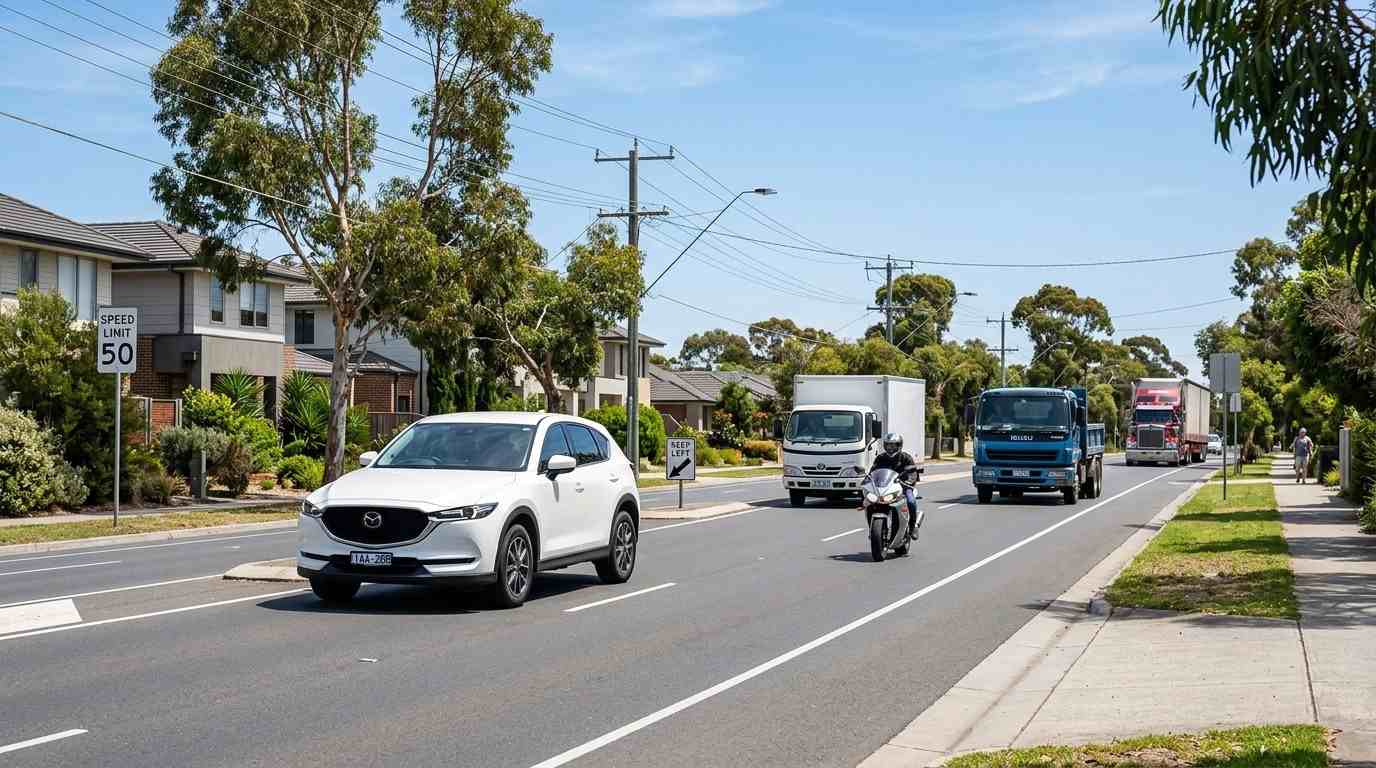
If you’re planning to drive in Victoria, it’s important to understand which Victorian driver licence class you need for the vehicle you want to drive. Victoria has different licence classes for cars, motorcycles, buses, trucks and heavy vehicle combinations, with each class covering specific types of vehicles.
Whether you’re getting your first licence, upgrading your current licence or considering a heavy vehicle licence, knowing the differences between the VIC driver licence classes can help you understand your options and the requirements that apply to each one.
In this guide, we’ll explain the main Victorian driver licence classes, what vehicles you can drive with each class, and how they differ so you can identify the licence that matches your driving needs.
Key Takeaways
- Victoria has different driver licence classes based on the type of vehicle you’re licensed to drive.
- Class C is the standard licence class for cars and other light vehicles.
- Class R covers motorcycles.
- LR, MR and HR are different heavy vehicle licence classes, based on the type and size of vehicle.
- HC and MC cover heavy vehicle combinations, including certain prime mover and trailer combinations.
- Your current licence class determines which vehicles you can legally drive.
- Additional eligibility, training and testing requirements may apply when upgrading to another licence class.
What Are Driver Licence Classes in Victoria?
A driver licence class identifies the type of vehicle you’re authorised to drive in Victoria. The class you need depends primarily on the vehicle you intend to operate, so a standard car licence does not automatically allow you to drive every type of truck, bus or motorcycle.
Victorian licence classes range from Class C for cars and light vehicles through to Class MC for multi-combination heavy vehicles. There is also Class R for motorcycles, while LR, MR, HR and HC cover different categories of heavy vehicles and combinations.
It’s also useful to distinguish a licence class from a licence stage. For example, learner permits, P1 licences, P2 licences and full licences describe a driver’s licensing stage, while Class C or Class R identifies the vehicle category they are licensed to drive.
Understanding this difference makes it easier to work out which licence you need and whether you need to upgrade your existing licence before driving a particular vehicle.
Different Victorian Driver Licence Classes
1. Class C Licence
A Class C licence is the standard Victorian licence class for driving cars and other light vehicles. It generally covers vehicles such as passenger cars, utes and vans within the applicable weight and seating limits.
For most people learning to drive a car, the Class C licence is the relevant licence class. Drivers can choose to learn in an automatic or manual vehicle, depending on their needs and the type of vehicle they intend to drive.
If you plan to drive a standard passenger vehicle for personal use, a Class C licence is generally the licence class you’ll be looking at.
2. Class R Licence
Class R is the Victorian motorcycle licence class. It allows appropriately licensed riders to operate motorcycles subject to the applicable Victorian licensing requirements.
Motorcycle licensing has its own learner, training and testing requirements. These differ from the process for obtaining a standard car licence.
If you’re planning to ride a motorcycle rather than drive a car, understanding the Class R pathway is important before beginning your training.
3. Light Rigid (LR) Licence
A Light Rigid (LR) licence is intended for certain light rigid vehicles, including applicable small trucks and buses.
The LR class is relevant when the vehicle falls outside the vehicles covered by a standard car licence but remains within the LR vehicle limits.
Drivers considering an LR licence should check the specific vehicle they intend to drive and the current Victorian eligibility requirements before choosing this licence class.
4. Medium Rigid (MR) Licence
A Medium Rigid (MR) licence covers a category of rigid vehicles that is larger than those covered by an LR licence.
MR licences are commonly relevant to drivers operating medium-sized trucks and certain buses. The distinction between LR and MR is based on the vehicle characteristics and applicable licensing requirements.
If you’re considering a truck-driving career, checking the vehicle you intend to operate is the best way to determine whether MR is the appropriate licence class.
5. Heavy Rigid (HR) Licence
A Heavy Rigid (HR) licence allows eligible drivers to operate heavier rigid vehicles within the requirements of the class.
HR licences are commonly associated with heavy trucks and buses and can be useful for people pursuing driving roles in transport, logistics, passenger services and other industries requiring heavy rigid vehicles.
Because HR is a higher heavy vehicle licence class, drivers must meet the relevant eligibility, training and assessment requirements before obtaining it.
6. Heavy Combination (HC) Licence
A Heavy Combination (HC) licence is designed for eligible drivers operating certain heavy vehicle combinations, such as a prime mover towing a single semi-trailer.
The HC class is particularly relevant to freight and transport drivers who need to operate vehicle combinations rather than a single rigid vehicle.
If you’re considering moving from rigid trucks into combination vehicles, HC may be the next licence class relevant to your career, depending on your existing licence and eligibility.
7. Multi Combination (MC) Licence
A Multi Combination (MC) licence is the highest heavy vehicle licence class in Victoria and covers eligible multi-combination vehicles.
This can include vehicle combinations such as B-doubles and road trains, subject to the applicable requirements.
MC licences are generally relevant to experienced heavy vehicle drivers working in areas such as long-haul freight and specialised transport. Drivers must meet the relevant eligibility and assessment requirements before obtaining an MC licence.
Victorian Driver Licence Classes Comparison
The following table provides a quick overview of the main VIC licence classes and the types of vehicles they cover.
| Licence Class | Vehicle Category | Examples |
| C | Car and light vehicles | Cars, utes and vans |
| R | Motorcycle | Motorcycles |
| LR | Light rigid | Certain light trucks and buses |
| MR | Medium rigid | Certain medium trucks and buses |
| HR | Heavy rigid | Certain heavy trucks and buses |
| HC | Heavy combination | Prime mover and semi-trailer combinations |
| MC | Multi combination | B-doubles, road trains and other applicable combinations |
Conclusion
Understanding Victorian driver licence classes helps you determine which licence you need for the vehicle you want to drive. From the everyday Class C car licence and Class R motorcycle licence to LR, MR, HR, HC and MC heavy vehicle classes, each category has its own vehicle requirements and licensing pathway.
Once you know which licence class you need, the next step is developing the skills and confidence to drive safely in Victoria. Nirvana Driving provides professional driving lessons tailored to different experience levels, helping learners and drivers improve their vehicle control, understand Victorian road rules, and build confidence on local roads.
Whether you are preparing for a licence test or looking to become a safer driver, Nirvana Driving can help you prepare with practical, personalised driving lessons.
Call 0450530126 or book your driving lesson online with Nirvana Driving today!
FAQs
1. What are the different driver licence classes in Victoria?
The main Victorian driver licence classes are C, R, LR, MR, HR, HC and MC. Class C covers cars and light vehicles, Class R covers motorcycles, while LR through MC cover different categories of rigid and combination heavy vehicles.
2. What can I drive with a Class C licence in Victoria?
A Class C licence allows eligible drivers to operate cars and other light vehicles within the class requirements. This can include passenger vehicles, utes and vans that meet the applicable weight and seating limits.
3. What is the difference between LR, MR and HR licences in Victoria?
LR, MR and HR are different heavy rigid vehicle licence classes. They cover progressively different vehicle categories based on factors such as vehicle mass, axle configuration and the type of vehicle being driven. The correct class depends on the vehicle you intend to operate.
4. What is the difference between an HC and MC licence?
An HC licence covers certain heavy vehicle combinations, such as a prime mover towing a semi-trailer. An MC licence covers eligible multi-combination vehicles, including vehicle combinations such as B-doubles and road trains.
5. Which licence do I need to drive a truck in Victoria?
The required licence depends on the type and specifications of the truck. Some smaller rigid trucks may fall under LR, while larger rigid trucks may require MR or HR. Combination vehicles may require HC or MC.
6. Can I upgrade my Victorian driver licence to another class?
Yes, eligible drivers can apply to upgrade their licence class when they meet the requirements for the class they want to obtain. Depending on the licence class, this can involve minimum experience requirements, training and a practical assessment.
7. How do I know which Victorian driver licence class I need?
Start by identifying the vehicle you want to drive, including its type, weight, seating capacity and configuration. You can then check the Victorian licensing requirements for the corresponding class. If you’re unsure, a qualified driving instructor or the relevant Victorian licensing authority can help you determine the appropriate pathway.