
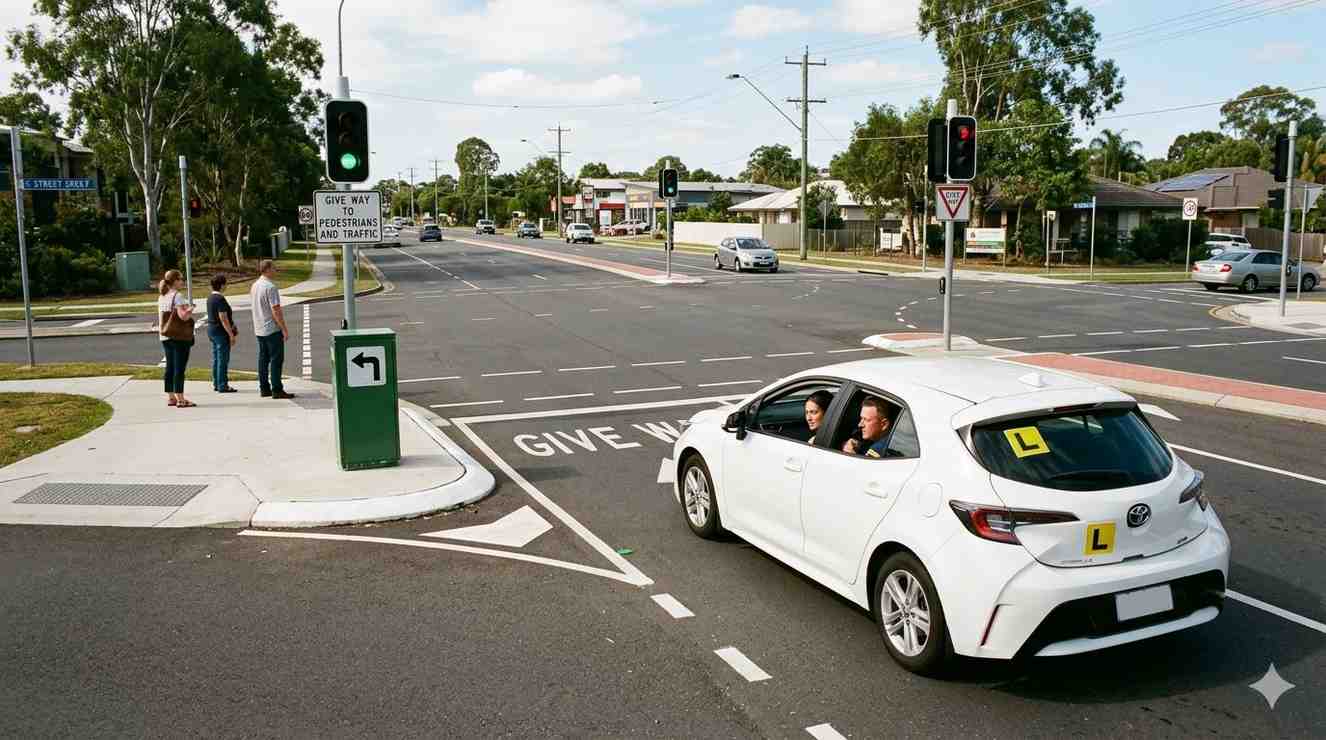
Slip lanes are common on Australian roads, but many drivers are unsure who has priority when using them.
This confusion can put pedestrians, cyclists, and other vehicles at risk, especially when drivers assume a slip lane gives them automatic right of way.
A slip lane is a separate lane for vehicles turning left, usually divided by a painted or raised island. It helps traffic flow, but drivers must still slow down, check for people crossing, follow signs, and give way where required.
This guide explains everything you need to know about slip lanes in Australia in detail, including how they work, the road rules that apply, common safety risks, and best practices for drivers.
Key Highlights
- A slip lane is a separate lane or section of road that allows vehicles to turn left without moving through the main part of an intersection.
- In Australia, slip lanes are most commonly used for left turns and are often separated by a painted island, raised traffic island, or road markings.
- Drivers using a slip lane do not have automatic right of way and must still slow down, check for hazards, and give way where required.
- Drivers must watch carefully for pedestrians, cyclists, and mobility-device users who may be crossing or about to cross the slip lane.
- Safe slip lane driving depends on proper signalling, speed control, observation, and following road signs, traffic signals, and give-way rules.
What Is a Slip Lane?
A slip lane is a dedicated lane that allows vehicles to turn onto another road without passing through the main intersection. It is typically separated from other traffic lanes by a painted or raised traffic island and is designed to enable smoother traffic movement by allowing turning vehicles to bypass traffic signals or queues.
In Australia, slip lanes are commonly used to facilitate left turns at intersections, although they can also be found at roundabouts, highway exits, and other road layouts where traffic efficiency is a priority. By separating turning traffic from through traffic, slip lanes help reduce congestion, improve intersection capacity, and minimise delays for motorists.
Practise Slip Lanes with Confidence
Learn safe turning, give-way rules, and real-road slip lane situations with professional driving lessons designed for learner drivers.
Book a LessonHow does Slip Lane Work?
When a driver approaches an intersection and wants to turn left, the slip lane provides a separate path for that turn. Instead of waiting in the main traffic lane, the driver moves into the slip lane, slows down, checks for hazards, and enters the road they are turning into when it is safe.
Although a slip lane can make turning easier, it does not give drivers automatic priority. Drivers must still follow road signs, obey traffic signals, check blind spots, and give way where required.
Types of Slip Lanes
The main types of slip lanes include left-turn slip lanes, signalised slip lanes, unsignalised slip lanes, and roundabout slip lanes. In Australia, left-turn slip lanes are the most common, helping vehicles turn left while still requiring drivers to give way where necessary.
1. Right-Turn Slip Lanes
Right-turn slip lanes are commonly found in countries where vehicles drive on the right side of the road. They allow drivers to make a right turn without entering the main intersection, helping reduce delays and improve traffic movement.
2. Left-Turn Slip Lanes
In Australia, left-turn slip lanes are the most common type. These lanes enable drivers to turn left through a separate lane that bypasses the main intersection, often allowing traffic to continue moving while yielding to pedestrians and other road users when required.
3. Signalised Slip Lanes
Some slip lanes are controlled by traffic signals to manage vehicle, pedestrian, and cyclist movements safely. Drivers must obey the traffic lights before proceeding through the slip lane.
4. Unsignalised Slip Lanes
Unsignalised slip lanes operate without traffic lights and typically rely on give-way signs or road markings. Drivers must assess traffic conditions and give way to pedestrians, cyclists, and other vehicles when necessary.
5. Roundabout Slip Lanes
These slip lanes are located at roundabouts and allow vehicles to bypass the roundabout when making certain turns. They help reduce congestion and improve traffic flow, particularly at busy intersections with high turning volumes.
You may also read: Roundabout Rules: A Complete Guide to Safe Driving
Do You Have to Use a Slip Lane?
If a slip lane is provided for a left turn, drivers are generally expected to use it because it is designed as the safest and most efficient path to separate turning vehicles from through traffic. In many cases, road markings and lane design guide or effectively direct drivers into the slip lane when turning left.
However, it may not always be strictly mandatory if signage or markings allow a left turn from the main lane or if the slip lane is temporarily unusable due to conditions like road works. Regardless of the situation, drivers must still give way to pedestrians in the slip lane and to all traffic on the road they are entering.
Who Gives Way in a Slip Lane?
In a slip lane, the driver using the slip lane must give way to all pedestrians who are crossing or about to cross the slip lane. The slip lane driver must also give way to any vehicles already on the road they are entering, including traffic turning right into that same road.
At the same time, other vehicles do not give way to a slip lane driver unless they are already in the slip lane or affected by the turn. The key rule is that control of the slip lane is secondary to pedestrian safety and the priority of traffic on the main road.
Common Mistakes Drivers Make in Slip Lanes
The most common mistakes drivers make in slip lanes include failing to give way to pedestrians, entering too fast, poor observation, misjudging traffic gaps, incorrect use of lane markings, and not signalling properly. These errors usually happen because drivers treat slip lanes as simple shortcuts instead of controlled areas that require full awareness of pedestrians, cyclists, and surrounding traffic.
1. Not giving way to pedestrians
Many drivers wrongly assume slip lanes are free-flow zones. In reality, they must always give way to pedestrians crossing or about to cross the slip lane.
2. Entering the slip lane too fast
Drivers often approach slip lanes at speed, reducing reaction time. This increases the risk of missing pedestrians, cyclists, or merging traffic.
3. Poor observation before turning
Some drivers focus only on the exit road and fail to check their surroundings properly. This can lead to near-misses with pedestrians or vehicles already in the lane.
4. Misjudging gaps in traffic
Drivers sometimes enter the main road too early or too late due to incorrect gap assessment. This creates confusion and increases crash risk.
5. Incorrect use of lane markings
Some drivers cross painted islands or drift into the slip lane too early. This can conflict with other vehicles and break lane discipline rules.
6. Failing to signal properly
Not indicating before entering or exiting a slip lane confuses other road users. Proper signalling is essential for safe and predictable movement.
7. Treating slip lanes as optional shortcuts
Drivers sometimes ignore slip lanes and turn from the main lane when not allowed. This defeats the design purpose and can be illegal in certain setups.
8. Ignoring cyclists and vulnerable road users
Cyclists and pedestrians are often overlooked in slip lanes. Drivers must actively look for them, especially in urban or high-footfall areas.
Safe Driving Tips for Using a Slip Lane
When using a slip lane, drivers should slow down before entering, indicate early, and check all directions before turning. It is important to look for pedestrians and cyclists first, then check traffic on the road being entered. Drivers should avoid rushing through the lane, crossing painted islands, or stopping across pedestrian crossing areas.
A slip lane should always be treated as a controlled turning area, not a shortcut. Even when the road looks clear, drivers should follow signs and signals, give way where required, and only enter the road when there is a safe gap in traffic.
Conclusion
Slip lanes are designed to make left turns smoother and improve traffic flow, but they must be used with care. Drivers should never assume they have the automatic right-of-way. The safest approach is to slow down, check for pedestrians and cyclists, follow road signs and signals, and give way to traffic on the road they are entering.
To build safer driving habits and understand real road situations with confidence, professional guidance can make a big difference. Nirvana Driving helps learners understand Australian road rules, including slip lane use, give-way decisions, and safe turning techniques, so they can drive more confidently and responsibly on the road. Book your driving lesson today with Nirvana Driving!
FAQs
1. Do you always have to give way in a slip lane?
Yes. Drivers in a slip lane must always give way to pedestrians crossing the slip lane and to all traffic on the road they are entering. This applies even if there are no traffic lights or marked crossings.
2. Can you stop in a slip lane?
Yes, you can stop in a slip lane if required to give way or ensure it is safe to proceed. Slip lanes are not free-flow lanes, and stopping is often necessary to avoid pedestrians or traffic conflicts.
3. Are slip lanes the same as turning lanes?
No. A slip lane is physically separated from the main road by an island, while a turning lane is usually part of the main carriageway. Slip lanes allow smoother turns but come with separate give-way rules.
4. Do pedestrians always have priority in slip lanes?
Yes, within the slip lane itself, pedestrians always have priority. Drivers must wait until pedestrians have fully cleared the path before proceeding.
5. What happens if you don’t use a slip lane?
If a slip lane is provided and clearly marked for turning, not using it may lead to unsafe driving practices or potential rule violations depending on the road layout and signage.
6. Are slip lanes dangerous?
Slip lanes can be risky if drivers do not slow down or fail to check for pedestrians and cyclists. Most incidents happen due to inattention or misunderstanding of the give-way rules rather than the design itself.