
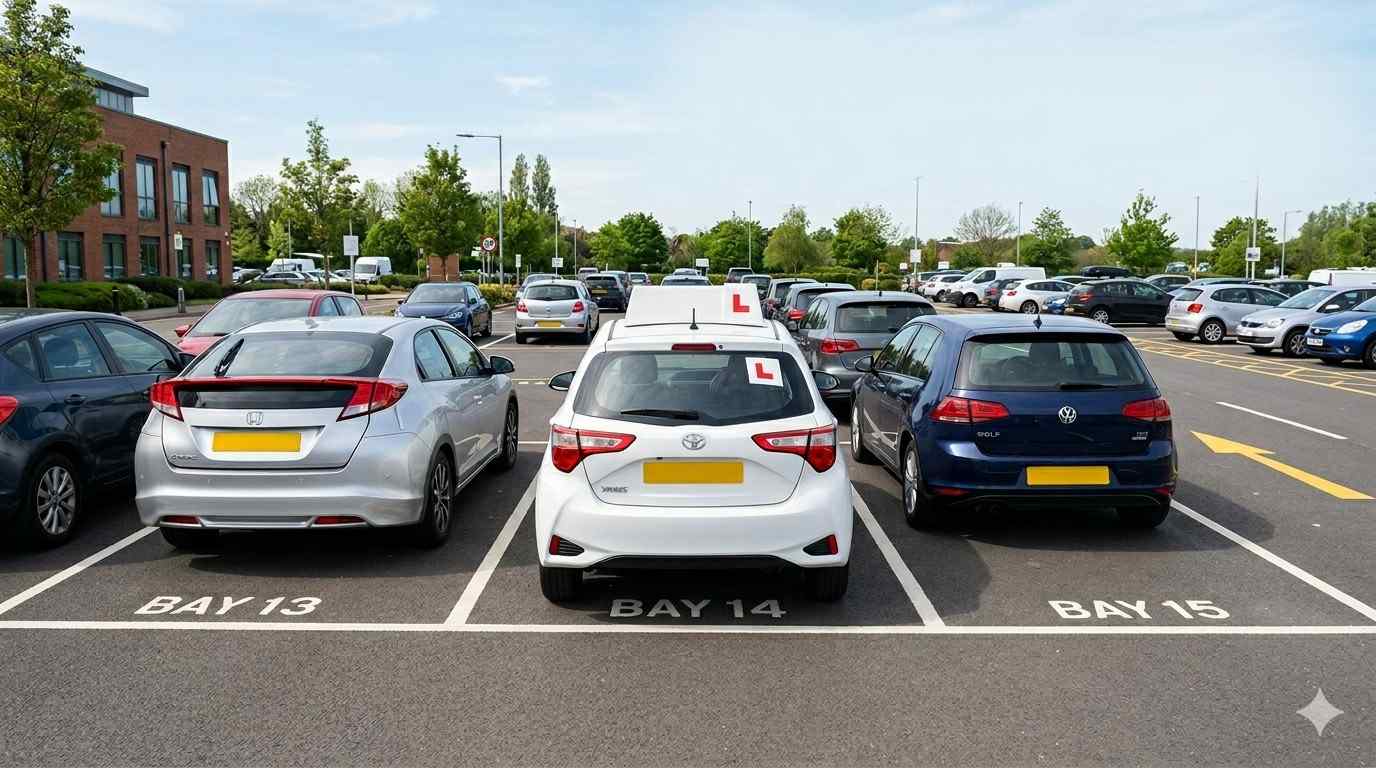
Perpendicular parking is one of the most common parking methods you use in car parks, shopping centres, schools, offices, and roadside parking bays. In this method, you park your car at a 90-degree angle to the driving lane. Your car sits straight between two marked lines, either by driving forward into the space or reversing into it.
Many learner drivers find perpendicular parking easier than parallel parking. However, it still needs slow speed, clear steering, proper mirror checks, and good control. If you turn too early, turn too late, or rush the move, your car may end up crooked or too close to another vehicle.
In this guide, you will learn what perpendicular parking means, the main types, how to do it step by step, how it differs from parallel parking, and the best tips to park safely and confidently.
Key Highlights
- Perpendicular parking means parking your car at a 90-degree angle to the driving lane or kerb.
- The two main types are forward perpendicular parking and reverse perpendicular parking.
- Forward perpendicular parking helps you enter a bay easily.
- Reverse perpendicular parking helps you leave the space more safely.
- Good perpendicular parking needs slow speed, mirror checks, steering control, and clear reference points.
What Is Perpendicular Parking?
Perpendicular parking is a parking method where you park your car at a 90-degree angle to the road, kerb, or driving lane. Your car sits straight between two marked parking lines, usually in a car park, shopping centre, school, office, or public parking area.
You can enter a perpendicular parking space by driving forward or reversing into it. This parking method looks simple, but it still needs slow speed, proper mirror checks, clear steering, and good control to keep your car centred inside the bay.
Types of Perpendicular Parking
Perpendicular parking has two main types: forward perpendicular parking and reverse perpendicular parking. In both methods, you park your car at a 90-degree angle to the driving lane or curb. The main difference is how you enter the parking space. In forward parking, you drive into the space from the front. In reverse parking, you back into the space and leave by driving forward.
1. Forward Perpendicular Parking
Forward perpendicular parking, also called head-in perpendicular parking, means you drive straight into the parking bay. Drivers often use this method in shopping centres, office car parks, schools, and public parking areas.
This type feels easier for many new drivers because the car moves forward into the space. You can see the parking bay clearly through the windscreen. However, you still need to control your speed, signal early, and turn at the right point. If you turn too early or too late, your car may stop too close to one parking line.
Here is how to do forward perpendicular parking:
1. Choose a clear parking bay and check that there is enough space on both sides.
2. Slow down, signal early, and position your car slightly away from the parked vehicles.
3. Start turning when your car reaches the right reference point, such as the parking line or side mirror point.
4. Enter the bay slowly while checking both sides to keep your car centred.
5. Straighten your wheels, move forward gently, and stop once your car sits fully inside the lines.
2. Reverse Perpendicular Parking
Reverse perpendicular parking means you drive past the bay first, then reverse into the space. Many driving guides also call this reverse bay parking. In this method, you use your mirrors, blind spot checks, and reference points to guide the car between the lines.
This type may feel harder at first. However, it gives you better control when leaving the parking space because you can drive forward into the lane. That makes it useful in busy car parks, narrow lanes, and spaces where reversing out may feel risky.
Here is how to do reverse perpendicular parking:
1. Choose a safe parking bay, signal early, and drive slightly past the space.
2. Check your mirrors, blind spots, and surrounding traffic before you start reversing.
3. Reverse slowly and turn the steering wheel toward the parking bay at the right reference point.
4. Watch both side mirrors and adjust your steering to keep your car between the lines.
5. Straighten your wheels, reverse fully into the bay, and correct your position if needed.
You may also read: What Is Angle Parking?
How to Do Perpendicular Parking?
To do perpendicular parking correctly, choose a suitable space, approach slowly, signal, position your car, check your surroundings, turn smoothly into the bay, straighten the wheels, and centre the vehicle between the lines. The key to good perpendicular parking is slow speed, careful observation, and small corrections when needed.
Step 1: Choose a Suitable Parking Space
Start by looking for a parking space that is wide enough for your vehicle. If you are a beginner, choose a space with fewer cars around it so you have more room to practise. Make sure there are no pedestrians, shopping trolleys, cyclists, or obstacles near the bay before you begin.
Step 2: Approach the Space Slowly
Drive slowly toward the parking area and keep your car at a safe distance from the row of parked vehicles. Moving slowly gives you more time to judge the space and make small steering corrections. Avoid rushing, because speed is one of the main reasons drivers park at the wrong angle.
Step 3: Signal Your Intention
Use your indicator to show other drivers that you are going to park. This is especially important in busy car parks where vehicles may be moving behind or beside you. Signalling early helps other road users understand your next move.
Step 4: Position Your Car Correctly
Before turning into the bay, position your car slightly away from the parking space. This gives the front of your vehicle enough room to swing into the bay. If you start too close to the parked cars, the turn may become too sharp, and your vehicle may not line up properly.
Step 5: Check Mirrors and Blind Spots
Before turning, check your mirrors, blind spots, and the area around the parking space. Look for pedestrians, moving cars, cyclists, and any objects near the bay. Do not rely only on parking sensors or a reversing camera; always use your own observations as well.
Step 6: Turn Into the Parking Space
When your car reaches the correct turning point, steer smoothly into the parking space. Aim for the centre of the bay rather than looking only at one parking line. Keep your speed very low and continue checking both sides of the vehicle as you enter.
Step 7: Straighten the Steering Wheel
As the car begins to line up with the parking bay, start straightening the steering wheel. This helps the vehicle move forward evenly between the lines. If the car is angled too much to one side, stop and make a small correction instead of forcing the vehicle into the space.
Step 8: Centre the Car Between the Lines
Once inside the bay, check that your car is positioned evenly between both parking lines. There should be enough space on each side for doors to open safely. If your car is too close to one side, reverse slightly and adjust your position.
Step 9: Move Fully Into the Bay
Drive forward slowly until your vehicle is completely inside the parking space. Make sure the front or rear of your car is not sticking out into the driving lane. Stop before touching the kerb, wall, parking barrier, or another vehicle.
Step 10: Secure the Car
After parking, straighten your wheels, apply the parking brake, and put the car in park or the correct gear. Before opening the door, check for nearby vehicles, cyclists, and pedestrians.
Step 11: Reverse Out Safely When Leaving
If you park front-first, you will usually need to reverse out when leaving. Before reversing, check behind the car, both sides, mirrors, blind spots, and the driving aisle. Reverse slowly and stop if another vehicle or pedestrian approaches. Once the front of your car is clear of nearby vehicles, turn the steering wheel and drive away safely.
Master Perpendicular Parking with Confidence
Learn how to park safely in car parks, shopping centres, and marked bays with professional guidance.
Book Your Parking Lesson TodayParallel Parking vs Perpendicular Parking
The difference between parallel parking and perpendicular parking is that in parallel parking, the car is parked in line with the curb or road, while in perpendicular parking, the car is parked at a 90-degree angle to the curb, road, or parking aisle.
| Aspect | Parallel Parking | Perpendicular Parking |
|---|---|---|
| Parking position | In line with the curb | At a 90-degree angle to the lane |
| Common location | Roadsides and streets | Car parks and parking bays |
| Space layout | One car behind another | Cars parked side by side |
| Entry method | Usually reverse into the space | Forward or reverse into the bay |
| Difficulty level | Often harder for learners | Usually easier with practice |
| Main skill needed | Judging length and curb distance | Judging width, angle, and lines |
You may also read: What is Reverse Parallel Parking?
Perpendicular Parking Tips
Perpendicular parking becomes easier when you stay calm, move slowly, and use clear reference points. You do not need to rush the turn. Instead, focus on control, spacing, and safety.
1. Slow Down Before You Turn
Always reduce your speed before entering the parking space. Slow speed gives you more time to steer, check your mirrors, and stop if needed. If you enter too fast, you may turn too early or cross the parking lines.
2. Use Your Indicator Early
Signal before you turn into the parking bay. This tells other drivers and pedestrians what you plan to do. It also reduces confusion in busy car parks.
3. Keep Enough Space From Parked Cars
Do not drive too close to the row of parked cars before turning. Keep enough side space so your car has room to enter the bay smoothly. If you stay too close, your turn may become too sharp.
4. Use a Simple Reference Point
Use your side mirror, front door, or parking line as a guide before turning. For many cars, the side mirror can help you judge when to start the turn. However, every car has a different size. So, adjust your reference point through practice.
5. Check Both Sides While Entering
Do not only look at one parking line. Check both sides as you enter the bay. This helps you keep your car in the centre and avoid getting too close to nearby vehicles.
6. Straighten Your Wheels Early
Once your car enters the space, straighten your steering wheel. This helps your car move straight into the bay. If you keep turning for too long, your car may stop crooked.
7. Do Not Rely Only on the Reverse Camera
A reverse camera can help, but it should not be your only guide. Use your mirrors, blind spot checks, and direct observation too. This is important because cameras may not show every object, person, or vehicle around your car.
8. Correct Your Position If Needed
If your car does not sit straight, adjust it. Move forward or reverse slowly, then straighten your car again. Do not leave the car over the line or too close to another vehicle.
9. Practise in an Empty Car Park
Practise in a quiet car park before trying busy spaces. Start with wider bays. Then, move to tighter spaces once your control improves. Regular practice helps you understand your car’s size and turning point.
10. Stay Calm in Tight Spaces
If the space feels too tight, take your time. Stop, check your mirrors, and adjust your angle. If the space is not safe or wide enough, choose another bay. Safe parking matters more than forcing your car into a difficult spot.
Conclusion
Perpendicular parking is an essential driving skill that helps drivers park safely and confidently in car parks, shopping centres, supermarkets, offices, and marked parking bays. By understanding the correct steps, using slow speed, checking mirrors and blind spots, and keeping the car centred between the lines, learners can avoid common mistakes and improve their overall parking control.
For drivers who want to build this skill with proper guidance, Nirvana Driving can help make the learning process easier and more practical. With professional instruction and real driving practice, learners can improve their parking technique, understand safe road habits, and gain the confidence needed for everyday driving situations. Book your driving lesson today with Nirvana Driving!
FAQs
1. Is perpendicular parking the same as bay parking?
Yes, perpendicular parking is often called bay parking when the vehicle is parked inside a marked parking bay. It can be done by driving forward into the bay or reversing into it.
2. Is reverse perpendicular parking better than forward parking?
Reverse perpendicular parking can be better in busy car parks because it allows you to drive forward when leaving the space. This gives you a clearer view of pedestrians, vehicles, and the driving lane.
3. Why is perpendicular parking difficult for beginners?
Perpendicular parking can be difficult for beginners because it requires correct steering timing, good positioning, slow speed, and careful judgment of the parking lines. With practice, it becomes much easier.
4. What mistakes do drivers most often make during perpendicular parking?
Drivers most often make mistakes like turning too early or too late, parking over the lines, moving too fast, and forgetting to check mirrors and blind spots during perpendicular parking.